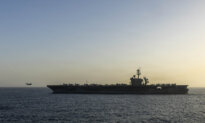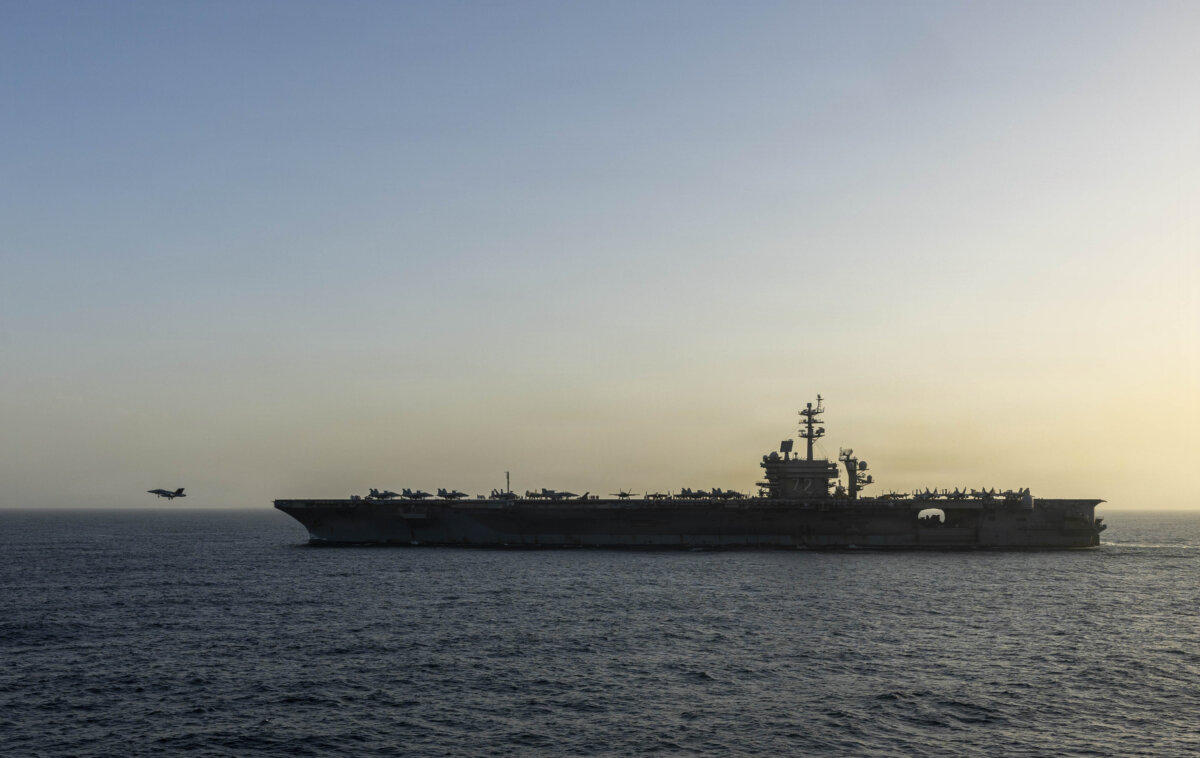

U.S. Central Command (CENTCOM) said on April 22 that it has instructed 31 vessels in the vicinity of the Strait of Hormuz to turn around or return to port as part of its ongoing blockade against Iran.
CENTCOM denied media reports of several commercial vessels evading the blockade in the Gulf of Oman, which President Donald Trump ordered on April 13. Talks between the United States and Iran that have yet to achieve a deal.
“Over [the] past 24 hours, media reports have alleged that several commercial ships evaded the blockade,” CENTCOM said in its April 22 post on X. “These reports are inaccurate.”
The United States said the commercial vessels M/V Hero II, M/V Hedy, and M/V Dorena, did not bypass the blockade.
Iranian-flagged tankers Hero II and Hedy are anchored in Chah Bahar, Iran, after they were intercepted by U.S. forces earlier this week, CENTCOM said, and were prevented from evading “as part of a flotilla” to funnel “millions of barrels of oil to the market.”
“Dorena has been under the escort of a U.S. Navy destroyer in the Indian Ocean after previously attempting to violate the blockade,” CENTCOM wrote on X.
As of this writing, marine traffic through the Strait of Hormuz appeared to be limited.
“The U.S. military has global reach,” CENTCOM said. “American forces are operating and enforcing the blockade across the Middle East and beyond.”
As part of the blockade, the U.S. military said that on April 19 it had fired upon an Iranian-flagged cargo vessel that was bound for Iran’s Bandar Abbas port. CENTCOM released footage of U.S. marines rapelling from helicopters onto the ship.
Both the United States and Iran have accused each other of violating the ceasefire, which was set to expire at 8 p.m. ET on April 22 before Trump extended it to allow Iranian officials to submit a proposal. Both sides have also warned that they are prepared to continue fighting if a deal is not reached.
“Based on the fact that the Government of Iran is seriously fractured, not unexpectedly so and, upon the request of Field Marshal Asim Munir, and Prime Minister Shehbaz Sharif, [both] of Pakistan, we have been asked to hold our Attack on the Country of Iran until such time as their leaders and representatives can come up with a unified proposal,” Trump said in an April 21 post on Truth Social, directing the U.S. military to continue its blockade.
A second round of talks between the United States and Iran was set to begin on April 21 before the ceasefire expired, but an Iranian regime spokesman said on April 22 that the country has yet to decide whether to enter renewed negotiations.
“We entered the negotiations in good faith and with seriousness, but the negotiating party [the United States] has shown disregard and lack of good faith,” Iranian foreign ministry spokesman Esmaeil Baqaei said on state-run television.
That statement was made hours after Trump announced the ceasefire extension.
Also only hours after the president’s announcement, Iran claimed to have captured two vessels in the Strait of Hormuz for what the regime said were violations of maritime safety rules. Iranian news agencies additionally said Iran’s Revolutionary Guard attacked a third ship in the key waterway on April 22.
 Friends Read Free
Copy
Facebook
Tweet
Friends Read Free
Copy
Facebook
Tweet