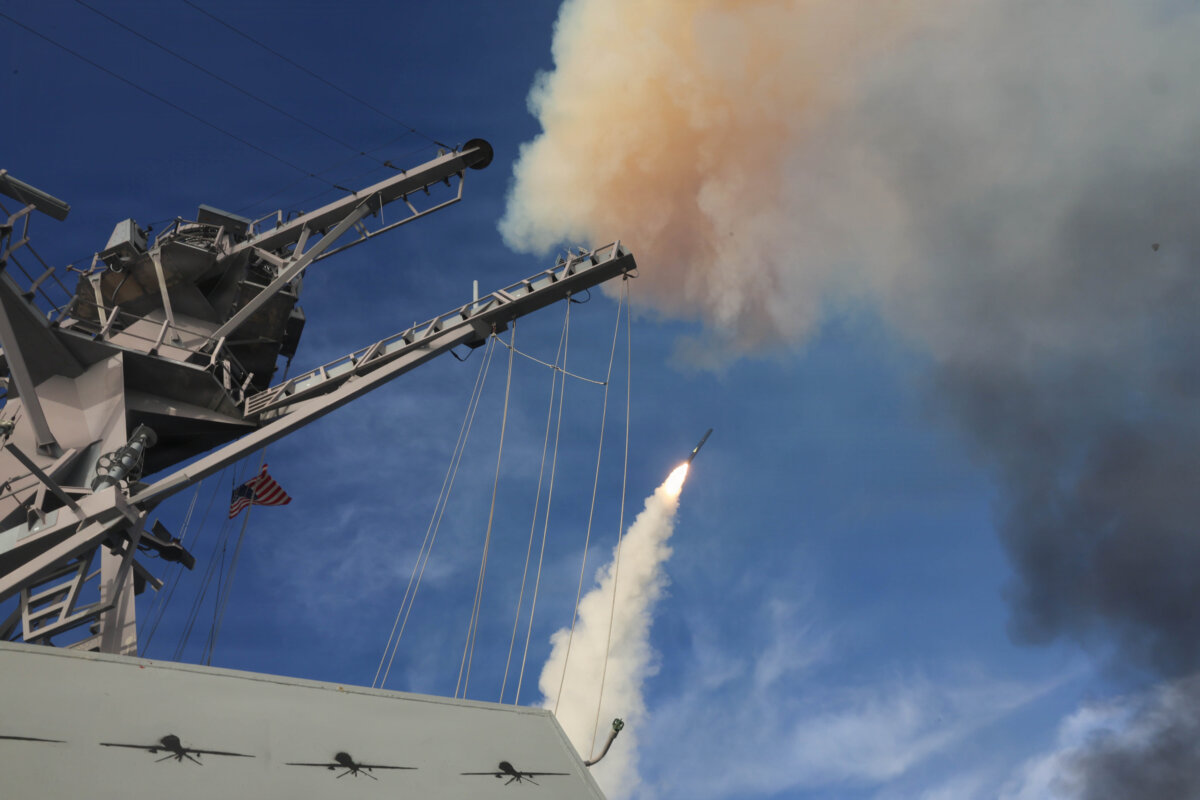

The Iran war and continued aid to Ukraine have depleted U.S. weapons inventories that could take three or more years to replenish, according to an analysis released on May 27 by the Center for Strategic and International Studies (CSIS).
The stockpile drawdown has raised concerns about whether the United States could defend itself in a conflict against China in the near future if one were to arise, the CSIS report states.
Some of the weapons most used in the conflict that now need to be replaced are the Tomahawk cruise missiles, used for long-range precision strikes, and the Patriot and Terminal High Altitude Area Defense interceptors that defend against missiles and drones.
The Pentagon rejected concerns raised in the report, saying that it has what it needs for any conflict that might arise, according to chief Pentagon spokesman Sean Parnell.
“America’s military is the most powerful in the world and has everything it needs to execute at the time and place of the President’s choosing,” Parnell told The Epoch Times in an email. “We have executed multiple successful operations across combatant commands while ensuring the U.S. military possesses a deep arsenal of capabilities to protect our people and our interests.”
President Donald Trump has also boosted defense spending in the $1.5 trillion fiscal year 2027 defense budget to pay for more munitions and replace what was used in Operation Epic Fury. The funding is also expected to build inventories above prewar levels.
The Trump administration also signed framework agreements with the arms industry to expand munitions production capacity, which could speed up future deliveries, CSIS said.
“The United States has enough munitions for any plausible scenario in the Iran war, but the depleted inventories have created a window of vulnerability for a potential Western Pacific conflict,” CSIS senior adviser Mark Cancian and research associate Chris Park wrote in the analysis. “The time needed to rebuild those inventories has thus become a major concern.”
Secretary of War Pete Hegseth said on May 1 in testimony before Congress that it would take “months and years,” depending on the weapon system, to replenish the inventories.
The analysis by CSIS supports Hegseth’s assessment.
According to the report, the United States could replace more than 1,000 Tomahawk cruise missiles by late 2030 or early 2031. Terminal High Altitude Area Defense systems could be replaced by late 2029.
About 1,400 Patriot interceptors have been used, which could be replaced by mid-2029, according to the report.
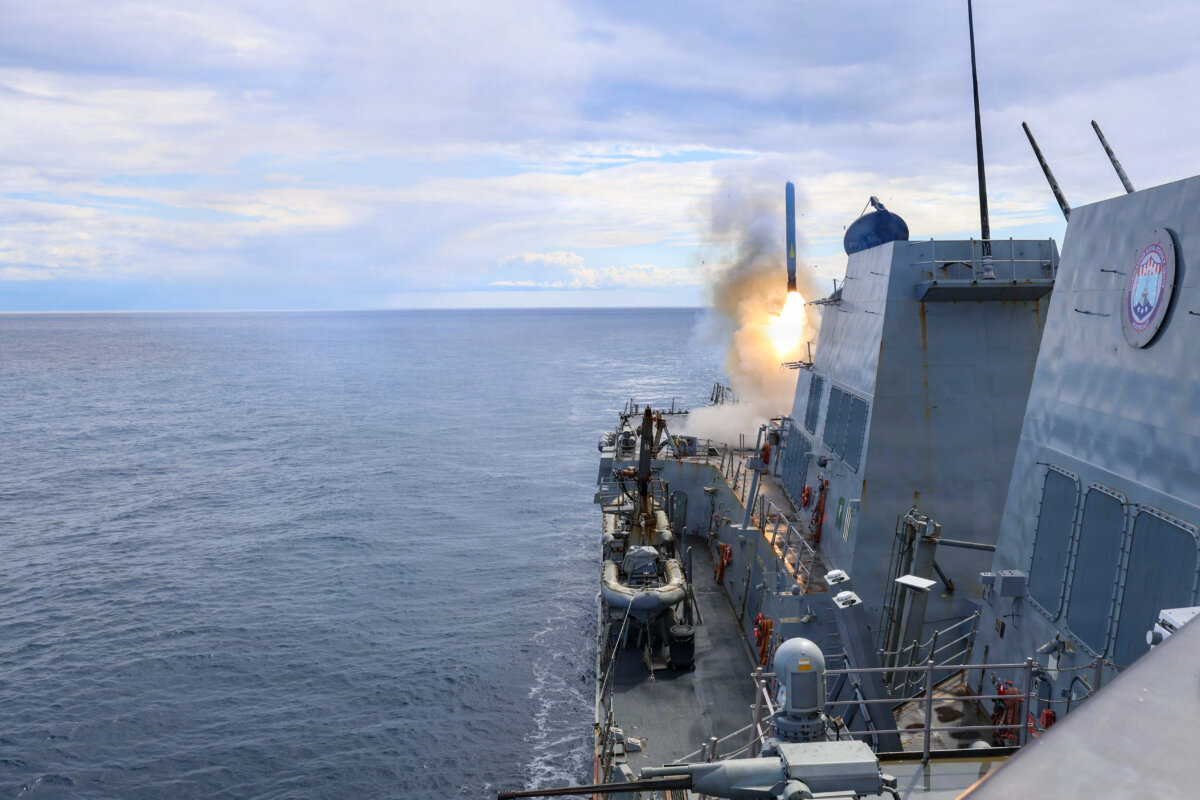
Providing weapons and munitions to help Ukraine defend itself against Russia has added to the stockpile depletion, according to CSIS.
Allied countries—particularly NATO members in Europe—continue to make promises to supply Ukraine with U.S.-made weapons systems and munitions.
“Alongside replenishing its own stocks, the United States also has to fulfill orders from allies and partners,” Cancian and Park wrote. “Decisions on how to allocate new production have already created bilateral friction, and this friction will continue for the next few years as demand outpaces supply.”
The military aid for Ukraine is ordered through a NATO program, the Prioritized Ukraine Requirements List initiative, which allows partner countries to buy U.S. weaponry.
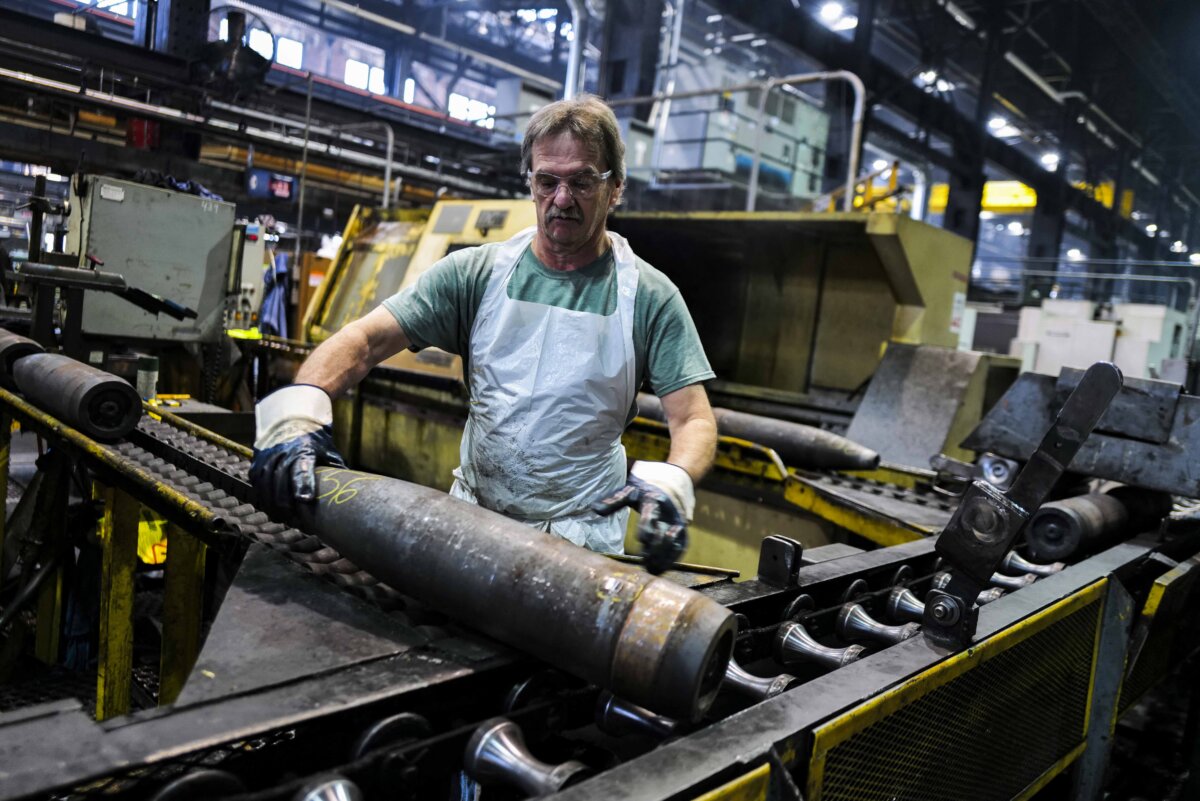
Trump appeared to confirm in March that the United States took into consideration diverting Ukraine aid to the Middle East.
The CSIS analysis concludes that the United States could fund the replacement of its weapons and munitions but that bringing production online and building inventories to previous levels could take several years.
“The [Department of War] will need to make plans for dealing with this gap,” Cancian and Park wrote. “The situation in the Western Pacific is not all bleak, however. … China is deeply aware that it has no recent combat experience and that it performed poorly in its last war—against Vietnam in 1979.
“That difference in experience may preserve deterrence until munitions inventories are restored.”
 Friends Read Free
Copy
Facebook
Tweet
Friends Read Free
Copy
Facebook
Tweet