The U.S. State Department has warned Americans about the risks of investing in Nicaragua following a significant government seizure of border land.
“The Murillo-Ortega regime’s massive seizure of all land within 15 kilometers of Nicaragua’s borders upends scores of communities and puts at risk the lives and livelihoods of thousands of people across our region,” the department’s Bureau of Western Hemisphere Affairs (WHA) wrote in a statement on X on Aug. 9.
“Any American considering investing in Nicaragua should beware,” the WHA added.
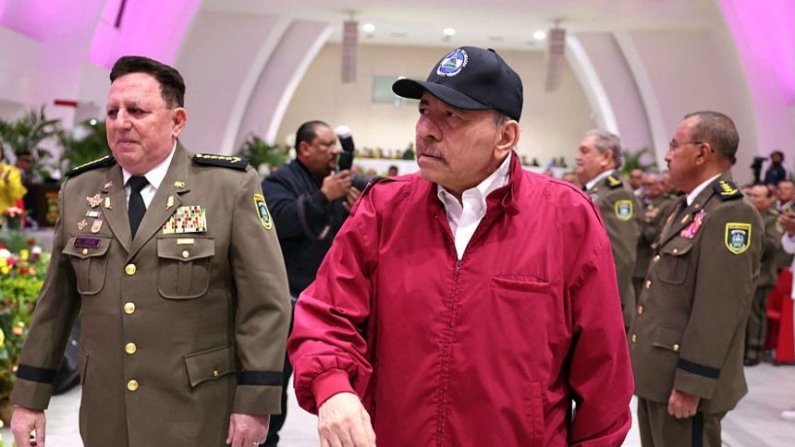
The Nicaraguan socialist government, led by Daniel Ortega, his wife Rosario Murillo, and the Sandinista National Liberation Front (FSLN), has been criticized internationally for its authoritarianism, repression, and corruption since coming to power in 1979.
The State Department’s warning comes after the Nicaraguan National Assembly unanimously approved the Border Territory Law (Law No. 1258) on Aug. 5.
The law establishes “a strip of 15 kilometers from the borders into the interior of the country as a strategic reserve zone and state property,” according to the state media outlet El 19 Digital. According to the outlet, the definition of border territory allows the state to act with greater legal and operational capacity.
Juan Sebastián Chamorro, an economist and pre-candidate for the Nicaraguan presidency in 2021, who was arrested by the Sandinista regime after announcing his candidacy, described the new law as theft.
“Today’s theft, which transfers some 18,000 square kilometers (approximately 1,230 km of borders by 15 km wide) to the state, constitutes the largest confiscation in a single day in the history of Nicaragua,” he said on Aug. 5 in a post on X.
“It will have devastating effects on property rights and investments,” he added.
A coalition of social and political movements known as Unidad Nacional Azul y Blanco (UNAB) said the new law “is a massive confiscation” that will affect 27 municipalities, thousands of homes and farms, as well as investments in the area.
“It is another example of the legal uncertainty that Nicaraguans experience in all areas,” said UNAB via X on Aug. 6. “Only in a democracy will there be full legal certainty for all.”
 Friends Read Free
Copy
Facebook
Tweet
Friends Read Free
Copy
Facebook
Tweet