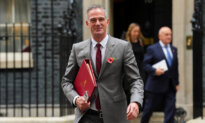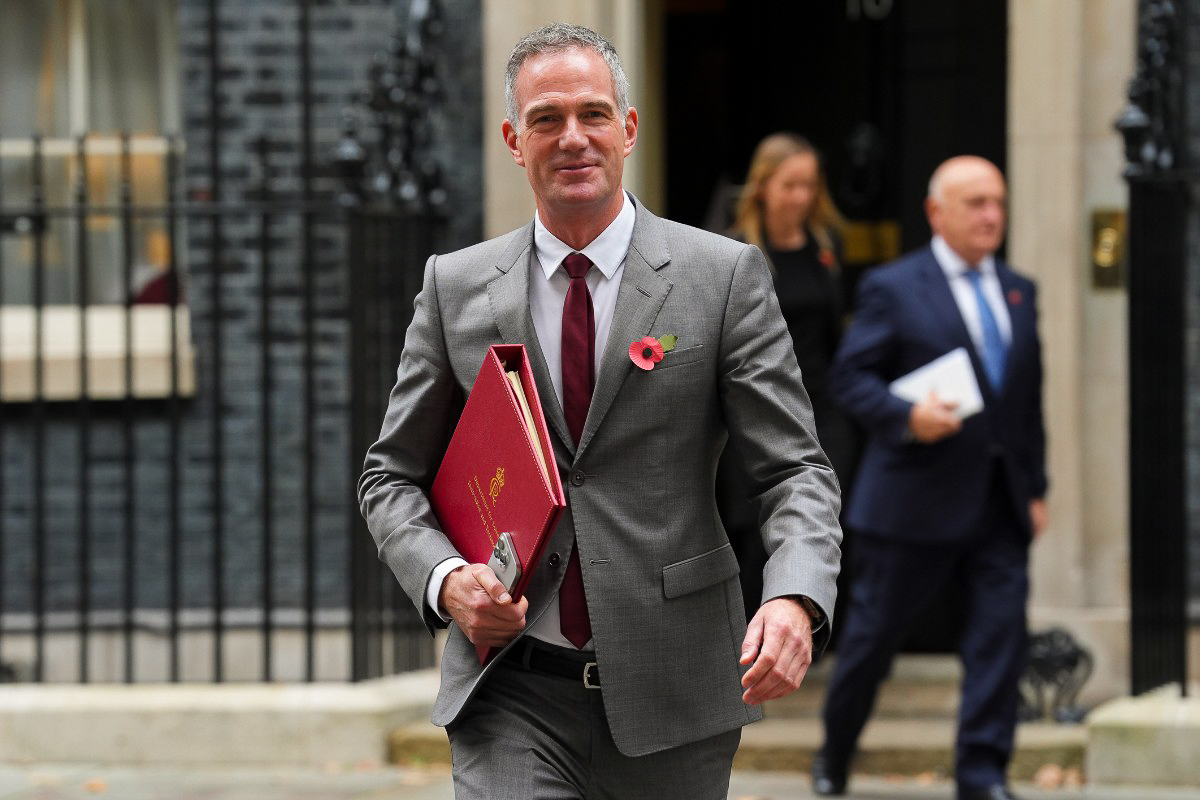

UK Secretary of State for Business and Trade Peter Kyle said he was confident that the trade deal the UK agreed on with the United States in 2025 still stands, after U.S. President Donald Trump announced 10 percent global tariffs.
“It was the best deal, and it remains the best deal, and the fundamental terms that we had negotiated with the United States remain in place,” Kyle told the International Agreements Committee of the UK Parliament on Feb. 24.
On Feb. 20, the U.S. Supreme Court ruled that the International Emergency Economic Powers Act did not grant Trump the power to impose tariffs on U.S. trading partners.
The United States then began to collect a temporary new tariff of 10 percent on Feb. 24 based on a different statutory authority.
Kyle told the committee that after his team had heard the news of the Supreme Court ruling, they contacted their counterparts in the United States and “were able to ascertain at least the direction of travel.”
“I can say with some confidence … that the [deal] that we have negotiated stands,” Kyle said.
Trump and UK Prime Minister Keir Starmer announced on May 8, 2025, that they had agreed on the general terms of the U.S.–UK Economic Prosperity Deal, which was then signed by the two world leaders on June 16, 2025.
Speaking on the sidelines of the G7 summit in Canada, Trump told reporters: “We signed it, and it’s done. It’s a fair deal for both.”
Among other arrangements, the deal provides “American companies unprecedented access to British markets while bolstering the national security and economy of the United States,” according to the executive order Trump signed for the implementation of the trade agreement.
Negotiations for a UK–U.S. free trade agreement had been stalled since the fall of 2020 but were revived in February 2025, following Starmer’s visit to the White House.
EU Puts Ratification on Hold
The trade secretary’s remarks come after the European Union earlier this week put on hold the ratification process of the U.S.–EU trade deal after Trump announced the new temporary global tariff.
Bernd Lange, chairman of the European Parliament’s International Trade Committee, said in a statement on Feb. 23 that the ruling by the Supreme Court had implications for the proposed trade deal and that a “key instrument” used by the United States to initially strike the Turnberry Deal in Scotland in 2025 is “no longer available.”
The Supreme Court’s decision prompted the Trump administration to look at alternative legal avenues to impose tariffs.
New temporary global trade tariffs of 10 percent took effect at midnight on Feb. 24, invoked through Section 122 of the Trade Act of 1974.
Trump initially said he would impose a tariff of 15 percent. However, hours before midnight on Feb. 24, U.S. Customs and Border Protection said in a memo to importers that the original 10 percent tariff would take effect on Feb. 24 for “imported articles of every country for a period of 150 days, unless specifically exempt.”
Trump has not yet issued a new directive to increase the global tariff to 15 percent.
During his Feb. 24 State of the Union address, Trump said that countries are happy with the deals that the United States made with them.
“I used these tariffs, took in hundreds of billions of dollars to make great deals for our country, both economically and on a national security basis,” Trump said.
“Everything was working well. Countries that were ripping us off for decades are now paying us hundreds of billions of dollars. … And yet these countries are now happy, and so are we. We made deals, the deals are all done, and they’re happy.”
Emel Akan and Andrew Moran contributed to this report.
 Friends Read Free
Copy
Facebook
Tweet
Friends Read Free
Copy
Facebook
Tweet