
U.S. Under Secretary of State Sarah Rogers has again spoken out on diversity, equity, and inclusion (DEI) policies in Canada, this time commenting on a tribunal ruling that found views opposing “systemic racism” theories are not grounded in political or legal principles.
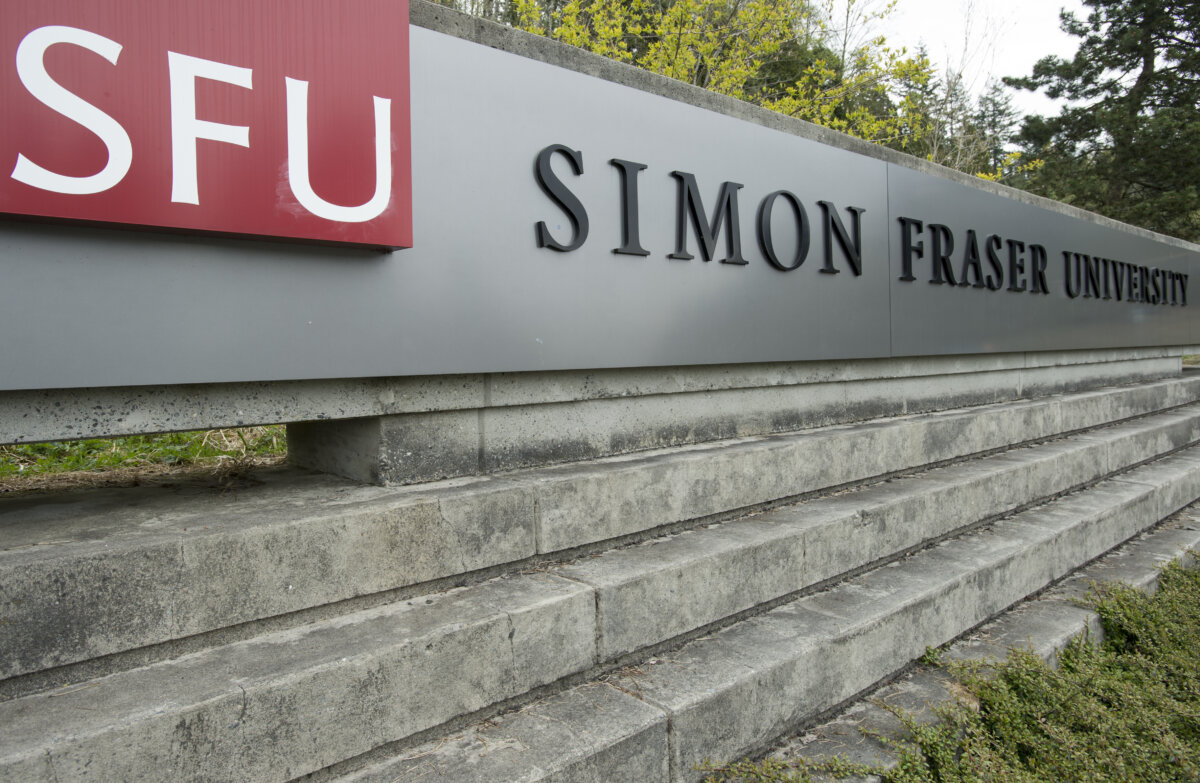
The decision involves a Simon Fraser University political science professor who was denied a job because he did not support DEI.
The B.C. human rights tribunal decided against holding a hearing on the issue last month. Adjudicator Devyn Cousineau said in her April 15 ruling that the educator had no reasonable likelihood of proving that he was denied the position because of his political views, because opposition to DEI did not constitute a political stance under the law.
Rogers posted a portion of the tribunal’s decision on social media to accompany her comments on the case.
“The court’s reasoning here is that if you reject ‘systemic racism’ theories, and resulting DEI prescriptions, your views bear no apparent relation to politics or law,” she said in a May 13 post. “Thus, those views are unprotected in Canada.”
Rogers last year also criticized a report by UK-based Global Disinformation Index (GDI), which labelled “digital denialism” of Canadian residential schools as an example of “hate speech” that harms democracy.
Tribunal Ruling
The B.C. human rights tribunal was asked to hear the case of Josh Gordon, who had taught at Simon Fraser University’s school of public policy from 2014 to 2021 on several contracts.
He applied for a tenure-track position in 2021 and was one of three shortlisted candidates out of 45, according to tribunal documents.
The interview process included a sample lecture, and interviews with faculty members, staff, students, and the director. Candidates were then ranked by nine faculty members in a secret ballot vote, and five ranked Gordon as their last choice.
He was eliminated despite having “significantly more teaching experience than the other candidates” and instructing sought-after courses, according to the ruling, noting that he was deemed unqualified for the role due to his lack of support for DEI.
DEI in Canada is used to address what proponents identify as “systemic discrimination” in the workplace. The federal government has said the practice is meant to remove systemic barriers “to ensure everyone can succeed, moving beyond simple equality to provide tailored support.”
“Dr. Gordon noted he was inclusive of diverse voices in his classes and treated everyone equally, but his statement did not have a level of detail comparable to that of other candidates on how they promoted inclusivity in the classroom and how they incorporated EDI topics in their teaching,” the ruling said. “His EDI statement and answers to EDI-related questions during his interviews were deemed less fulsome and detailed than those of the other candidates.”
Gordon filed a complaint with the tribunal, alleging that the university’s decision not to hire him for the position was discrimination based on his political beliefs, which he says violates the Human Rights Code.
The school argued that Gordon did not identify any political beliefs protected by the code, adding that his political beliefs were not a factor in the decision not to hire him. The university also said its DEI expectations “were a bona fide occupational requirement.”
The issue the tribunal had to consider was whether Gordon would be able to establish that one of the reasons he was not hired was because of his political beliefs, the adjudicator wrote.
If the issue had proceeded to a hearing, the university would have been required to demonstrate that compliance with DEI was essential for the position, but the tribunal ruled against a hearing, saying Gordon had no likelihood of success because his opposition to DEI wasn’t a political position.
The adjudicator said Gordon’s allegations “touch on issues that may be described as ‘political’ in the broad and colloquial sense of the word.”
She said his “description of his proposed political belief lacks both the necessary cohesion and cogency, and connection to some kind of government action or mode of social cooperation through governance, required to trigger the protection of political belief” under the Human Rights Code.
“It invites the Tribunal to stretch the scope of the protection beyond what its plain meaning and purpose can bear, extending in a potentially unlimited way to beliefs and opinions across a range of social issues,” Cousineau wrote, adding that just because a belief is “political” in the everyday sense of the word, does not mean it meets the political expectation under the code.
Rogers, in her social media post, pointed to Cousineau’s wording about Gordon’s views being unrelated to politics, law, or government action.
The under secretary of state said the adjudicator’s ruling amounts to saying only some views are protected in Canada.
B.C. Conservative MP Scott Anderson agreed. He posted his own reaction to the ruling on social media.
“Intentionally pretending to treat disagreement with the party line as some kind of weird mental aberration is straight up gaslighting,” the Vernon-Lake Country-Monashee MP said on Facebook. “We have to stop this tendency and demand freedom of thought and belief. We’re supposed to have it already.”
The Epoch Times was unable to reach Gordon for comment on the tribunal’s ruling and the university declined to comment.
 Friends Read Free
Copy
Facebook
Tweet
Friends Read Free
Copy
Facebook
Tweet