
Venezuela suspended energy cooperation with Trinidad and Tobago on Oct. 27 after the twin-island nation allowed a U.S. Navy guided-missile destroyer to dock in its waters for joint military training.
Venezuelan President Nicolas Maduro said in televised remarks that he had authorized the suspension of Venezuela’s energy cooperation agreements with Trinidad and Tobago, including a 2015 accord for joint natural gas exploration in waters between the two nations.
Maduro said that his decision was prompted by what he described as Trinidad Prime Minister Kamla Persad-Bissessar’s threat to turn the island nation into “the U.S. empire’s aircraft carrier against Venezuela.”
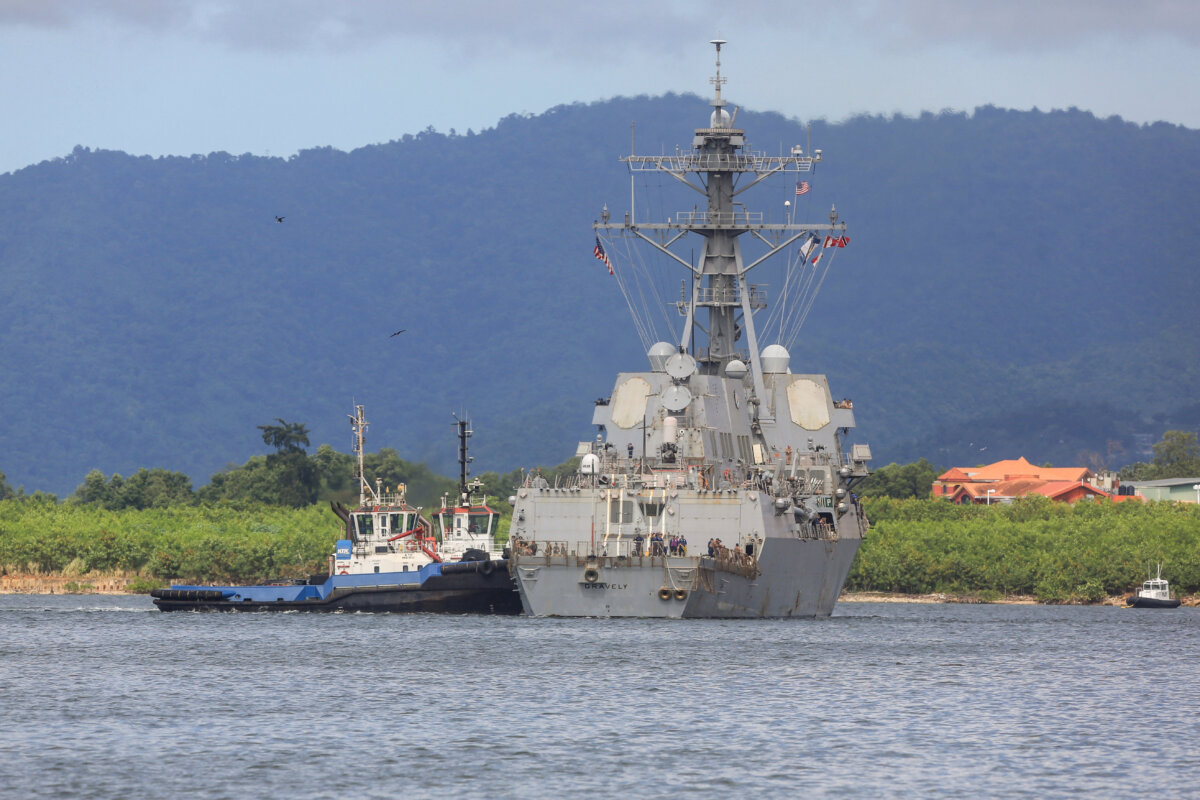
The USS Gravely docked in the capital of Trinidad and Tobago on Oct. 26 to take part in a joint military exercise with the country’s defense forces. The U.S. warship is expected to remain in port until Oct. 30.
Persad-Bissessar on Oct. 27 told CNC3, a local television station, that Venezuela’s suspension of energy cooperation deals will have no impact on Trinidad and Tobago’s energy sector.
“Our future does not depend on Venezuela and never has. We have our plans and projects to grow our economy both within the energy and non-energy sectors,” she said.
Persad-Bissessar noted that her government seeks to maintain “peaceful relations” with Venezuela and remains committed to upholding regional stability.
Trinidad and Tobago, located off the northeastern coast of Venezuela, is caught in regional tensions as Washington increases pressure on Caracas, including through tariffs on countries that buy Venezuelan oil and military operations targeting drug-trafficking vessels.
The United States has said the deployment of its warship to Trinidad and Tobago was part of its security cooperation with the island nation.
‘Military Provocation’
Venezuela strongly condemned the joint exercises. Vice President Delcy Rodríguez on Oct. 26 said they pose a “serious threat” to stability in the Caribbean.
Venezuela said Trinidad was engaging in a “military provocation” in coordination with the CIA and alleged that a false flag attack was underway in the waters between Trinidad and Venezuela.
A false flag attack is an operation in which an act is carried out in such a way that a different party appears responsible.
“A false flag attack is underway in waters bordering Trinidad and Tobago or from Trinidadian or Venezuelan territory to generate a full military confrontation with our country,” Venezuela’s government said in the statement.
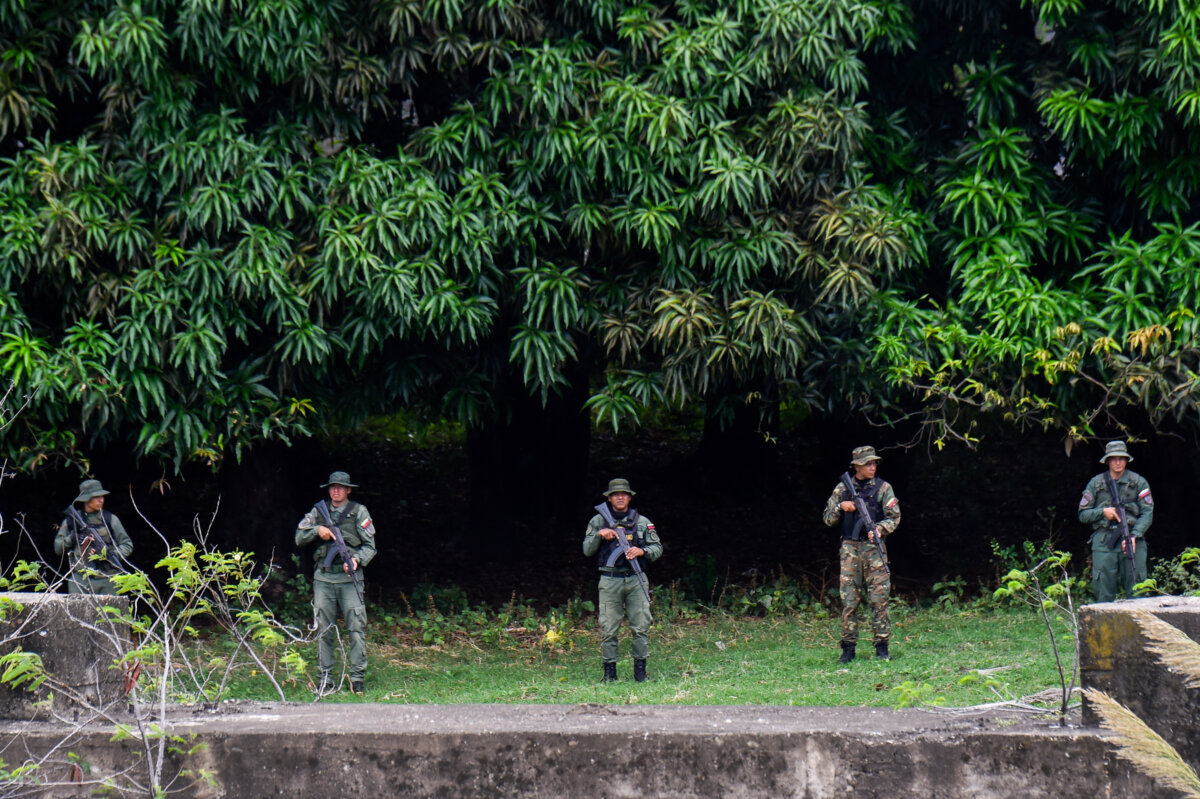
The Venezuelan government also claimed to have captured “a mercenary group with direct information from the U.S. intelligence agency.”
Venezuela said the alleged false flag attack was intended to “generate a full military confrontation” against it, but it did not provide any details to support its claim.
The Epoch Times reached out to the CIA for comment but did not receive a response.
Just a week before the warship’s arrival, the U.S. embassy issued a notice on Oct. 18 advising U.S. citizens to stay away from U.S. government facilities in Trinidad and Tobago, citing a “heightened state of alert.”
U.S. citizens living in Trinidad were urged to remain vigilant and report any suspicious activity to local authorities.
Earlier this month, U.S. President Donald Trump confirmed reports that he authorized the CIA to carry out covert operations in Venezuela.
The U.S. military has, in recent weeks, conducted lethal strikes against boats in the Caribbean Sea that U.S. officials said were carrying illegal drugs to the United States.
U.S. War Secretary Pete Hegseth said on Oct. 24 that the U.S. military conducted its 10th strike on a boat linked to Tren de Aragua in the Caribbean Sea, killing six suspected drug traffickers onboard.
The U.S. military also deployed the USS Gerald R. Ford aircraft carrier on Oct. 24 to the Southern Command area of responsibility—which encompasses Central America, South America, and the Caribbean—in support of counter-narcotics operations in the region.
U.S. President Donald Trump has accused Maduro of involvement in drug trafficking into the United States. Maduro and Venezuelan officials have rejected the accusations.
Reuters and Bill Pan contributed to this report.
 Friends Read Free
Copy
Facebook
Tweet
Friends Read Free
Copy
Facebook
Tweet