
News Analysis
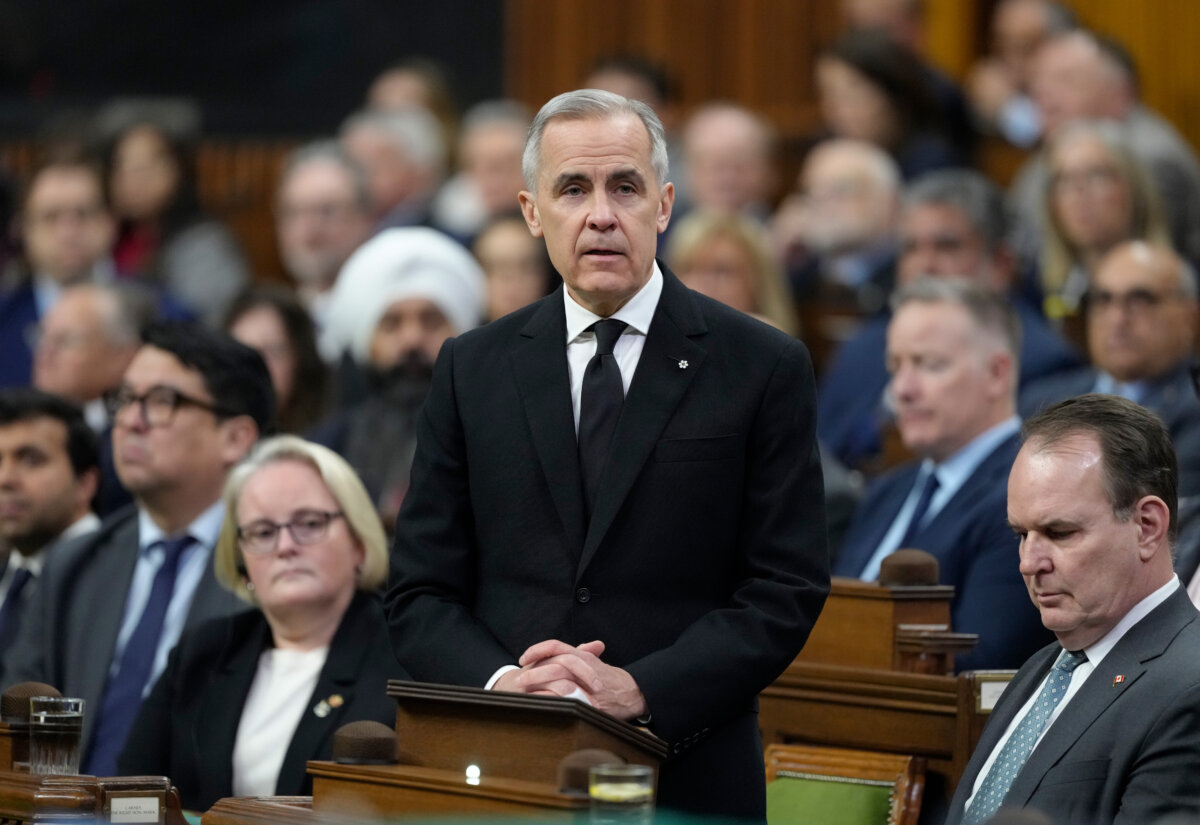
The Liberal government secured a majority following the April 13 byelection wins and recent floor-crossings, and the focus now turns to what happens in Parliament under this new framework.
Some of the key advantages of having a majority government include not having to worry about votes of confidence in the House of Commons, being better able to plan long-term, and facing fewer obstacles when passing legislation.
The Liberals had fallen three seats shy of a majority in the general election of April 2025. Their majority government now comes nearly one year later, following significant changes in the House of Commons including defections, resignations, and Supreme Court intervention. This is the first time in Canadian history that a minority government has gained a majority after floor-crossings.
With a majority, the Liberals will be able to remain in government for at least another three years if they choose to, with the next mandated election to take place at the latest in October 2029. This is pending no party affiliation changes negatively affecting them, an unlikely scenario given the ongoing rumours about more opposition MPs mulling crossing the floor.
It also depends on how the Liberals read the political winds, as they could still call a snap election before 2029 to ride a popularity wave and clinch a stronger majority, and govern for another four years. Ontario Premier Doug Ford took that path in early 2025 to capitalize on tensions with the United States and won his gamble, securing a third straight majority.
In the minority Parliament, there was significant uncertainty over whether the Liberals could secure confidence votes on the November 2025 budget. This persisted even as opposition parties showed little appetite for another election so soon after their April 2025 defeats.
More recently in the new year, media speculation was rife about whether Prime Minister Mark Carney would call a snap election to reach a majority. This will now likely be put to rest for some time, but perhaps not indefinitely.
Committees
Along with giving the Liberals room to breathe, the majority will remove obstacles to implement their agenda.
Government House Leader Steven MacKinnon said the government will continue to work collaboratively with other parties to advance legislation through Parliament, even with a majority. How that approach will unfold remains to be seen.
“We think the times require and demand that we work with other parties on these solutions. We want to be a unifying government,” MacKinnon told CBC News during the Liberal Party convention over the weekend. Carney also made similar remarks in his statement after securing a majority, saying his party will “work with all parties and solicit all perspectives in Parliament.”
While MacKinnon emphasized cooperation and unity, he also accused Conservatives of obstructing work in committees, saying they reduced “issues to caricature rather than debating them.”
Conservatives, meanwhile, have accused Liberals of “censorship” for curtailing debates on their hate crime Bill C-9 in recent weeks after securing the support of the Bloc Québécois.
The bill, currently in the Senate, seeks to remove the religious defence to hate speech in the Criminal Code. Tories say this jeopardizes freedom of speech and religion, while the Liberals say those rights are protected by the Charter.
It remains to be seen if the Liberals will now use their majority in the House to reshape the structure of committees, in order to expedite review of their bills.
House committees play a key role in reviewing legislation by hearing from ministers, government officials, and expert witnesses, and by proposing amendments. They can also become stumbling blocks for the governing party if bills are delayed by the opposition employing delay tactics.
Currently, most committees are composed of five MPs from the Liberal Party, four MPs from the Conservative Party, and one MP from the Bloc Québécois. With a majority, the Liberals could attempt to amend the standing orders through a House vote in order to gain the upper hand in committees, and hence speed up bill reviews or block investigations.
Upcoming Legislation
After the controversy around Bill C-9 and the battles with Tories in committee meetings in recent months, changing the structure of committees is likely an issue the Liberals will ponder.
Especially as the government is poised to introduce its third attempt to legislate on what it calls “online harms.”
The previous attempts to pass online harms legislation failed due to an election call in 2021 and Parliament’s prorogation in 2025, leading to the bills dying on the order paper. Both times, Conservatives and civil liberties advocates criticized the bills as posing a risk to freedom of expression.
The latest attempt came via Bill C-63 in the previous Parliament. It included components to keep children safe online and also to tackle “hate” by introducing stiff penalties. Following pushback, the government said it was open to splitting the bill in two to facilitate the passage of measures protecting children.
There is no public information yet of what the new bill will look like, but the federal government recently reconvened the same group of experts first formed in 2022 that formulated advice leading to Bill C-63.
There aren’t many current bills being reviewed in the House that appear too controversial and for which the Liberals would benefit from having a majority. The contentious border bill Bill C-2 was split in two, and the immigration portion contained in Bill C-12 already received royal assent. Debates on the other portion regarding providing easier access to private information to security agencies, contained in Bill C-22, started this week.
Conservatives oppose the Liberals’ plan to create the new housing bureaucracy Build Canada Homes through Bill C-20, but the bill passed second reading in the House on division and without going to formal vote.
What is expected to be more contentious in the coming weeks is the government’s tabling of the spring fiscal update. Carney’s first budget in November 2025 projected a record deficit outside the COVID era, and an increasing debt-to-GDP ratio.
Messaging from the Liberals and the Conservatives on the issue is likely to remain the same as they have each been advocating, with the government saying that the current economic and geopolitical context requires massive federal spending, and the Tories saying that high spending spurs inflation and handicaps future generations.
The Liberals can now also table legislation they may previously have withheld, no longer constrained by the threat of defeat by the opposition.
It also remains to be seen whether, in this new context of increased power and recent personnel change, Carney decides to shuffle his cabinet. There have been no major shuffles following the appointment of the second cabinet after the 2025 election.
Some of the minor ministerial changes have included Marc Miller replacing Steven Guilbeault as culture minister after the latter resigned from cabinet in November 2025 over Carney’s net-zero policies. MacKinnon took on the additional transport portfolio following Chrystia Freeland resigning from cabinet in September 2025.
 Friends Read Free
Copy
Facebook
Tweet
Friends Read Free
Copy
Facebook
Tweet