Recent unrest in Mexico is creating uncertainty for Canadians currently in the country, as well as for those planning to spend their spring break on beaches in destinations like Cancun or Puerto Vallarta.
Canadian and Mexican authorities report that the situation is beginning to stabilize following a wave of nationwide violence on Feb. 22, triggered by the capture and subsequent death in custody of a cartel leader at the hands of Mexican special forces.
Canadian airlines Air Canada, WestJet, and Air Transat have announced a resumption of their flights to and from Puerto Vallarta on Feb. 24 after a brief hiatus.
The Mexican airports in Puerto Vallarta and Guadalajara, both in the state of Jalisco, announced around midday on Feb. 24 that they had restored over 95 percent of their operational capacity.
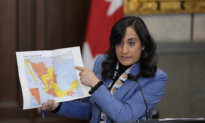
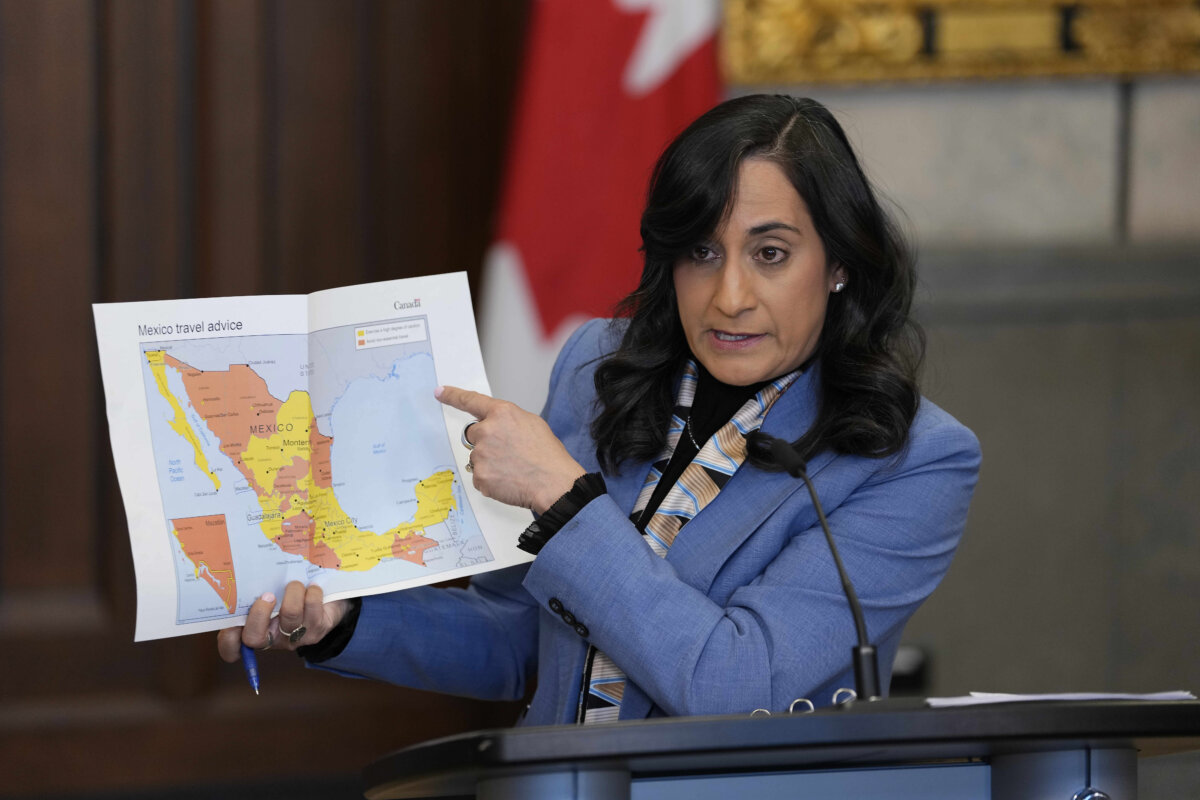
When asked by reporters for an update on Mexico, Foreign Affairs Minister Anita Anand said on Feb. 24 that the situation was de-escalating.
“The long and the short of it is the situation is becoming more normalized. We should continue to see this trajectory unfolding,” she said.
The previous day, Anand had said that over 26,000 Canadians in Mexico had registered with Global Affairs Canada (GAC), with a surge of 8,000 since Feb. 22. She said on Feb. 24 that number has now climbed to around 55,000. Canadians who register with GAC can receive updates on the local situation.
Anand said it could be “premature” at this point for Canadians with planned trips to Mexico to cancel their reservations, given the “trajectory towards normalization looks positive.” The minister noted several MPs have inquired with her on behalf of constituents worried about their upcoming trips.
“It is very much a day-to-day point of consideration, and I would urge Canadians to take a decision on a day-to-day basis,” she said.
Global Affairs’ travel advisory for Mexico was last updated late on Feb. 23 and continues to advise avoiding non-essential travel to multiple areas in Mexico. It says no significant security incidents were reported in several tourism hotspots on Feb. 23, including Puerto Vallarta, Acapulco, and Mazatlán, while noting further incidents are possible there and elsewhere.
Global Affairs says roads are reopening, after being blocked in some areas by cartel members, and security is being reinforced in Puerto Vallarta and Guadalajara.
“Travel to the airport only if you have a confirmed flight, and it is safe to do so,” says the travel advisory.
Global Affairs said shelter-in-place orders remained in place in the state of Jalisco and Nayarit as of late Feb. 23.
The state of Jalisco said on Feb. 24 that all public transportation has resumed, while Jalisco Governor Pablo Lemus Navarro said on Feb. 23 that business activity would resume on Feb. 24, while classes would return on Feb. 25.
The governor subsequently announced mid-day on Feb. 24 the “Code Red” alert in Jalisco, which was declared to organize a security response, was being lifted.
The latest security alert from the U.S. Embassy in Mexico, dated Feb. 24, says that U.S. citizens are no longer being urged to shelter in place. U.S. government staff in Puerto Vallarta and Guadalajara, however, are under a curfew at night time.
“The security situation has now stabilized following targeted operations in Jalisco,” the embassy said in a Feb. 24 X post. “Federal and State authorities are proceeding to reopen transit corridors and restore public services smoothly.”
Mexican President Claudia Sheinbaum dedicated her daily press conference to the security situation on Feb. 23, saying “peace and quiet” was returning to the country after the previous day’s deadly clashes.
Sheinbaum did not mention the security situation during her Feb. 24 media event until asked by a reporter towards the end of the appearance.
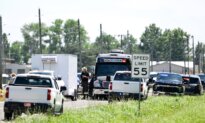
Sheinbaum said that cartel members had set up about seven roadblocks on Feb. 23, all of which were cleared by the authorities. “There are still some burned vehicles on the side of the road,” she said, adding that all roads would be cleared on Feb. 24.
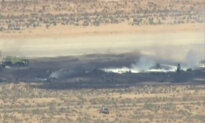
Mexican Security Secretary Omar García Harfuch had said that cartel members had blocked 85 federal roadways on Feb. 22, while also burning vehicles and attacking gas stations and various institutions such as banks. Clashes resulted in the death of 25 National Guard members and one guard from the State Attorney General’s Office, Harfuch said.
The wave of violence was sparked on Feb. 22 after Mexican special forces captured Nemesio “El Mencho” Oseguera-Cervantes, the leader of the Jalisco New Generation Cartel (CJNG), one of the country’s most prolific organized crime networks. El Mencho later died in custody while being transported to a medical centre.
The United States had offered a US$15 million bounty for information leading to his capture, and assisted Mexico with intelligence in its operation.
The CJNG was designated a terrorist entity by Canada in February 2025, following a similar designation by the United States.
Editor’s note: the article was updated with the latest information from the authorities.
 Friends Read Free
Copy
Facebook
Tweet
Friends Read Free
Copy
Facebook
Tweet