News Analysis
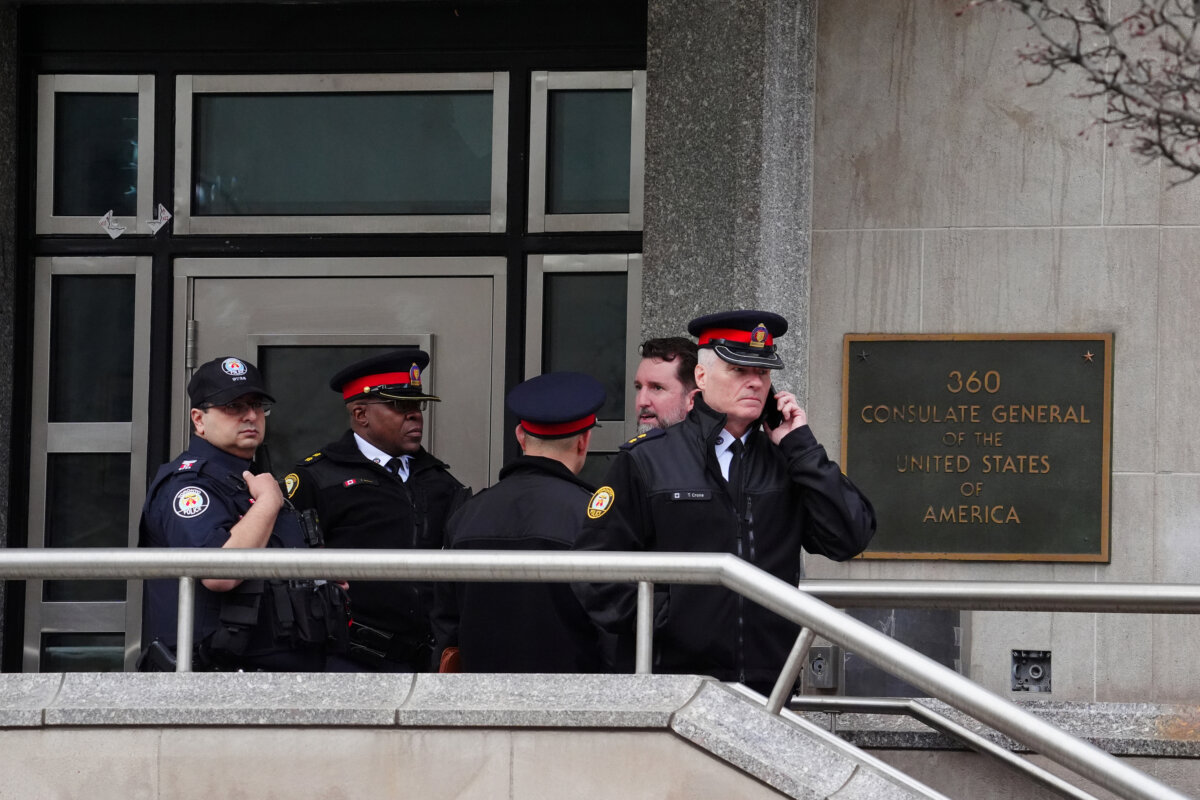
The suspects who fired shots at the U.S. Consulate in Toronto in March have yet to be apprehended, but the recent arrest of an Iraqi national by the FBI sheds some light on the incident.
It appears the March 10 shooting was not a spur-of-the-moment attack by unaffiliated individuals with grievances against the United States. Rather, the shooting may have been directed by an Iranian proxy as a specific response to U.S. and Israeli strikes against Iran.
This information appears in the U.S. complaint against Mohammad Baqer Saad Dawood Al-Saadi, described by the U.S. Justice Department as a senior member of the Iraqi group Kataeb Hezbollah. The department announced the arrest of Al-Saadi on May 15.
Al-Saadi allegedly directed, planned, and took credit for a string of attacks in Europe and North America after the United States and Israel launched their strikes against Iran on Feb. 28. Those attacks include bombings and arson targeting Jewish and U.S. institutions, stabbings of Jewish people, and the gunshots fired at the U.S. Consulate in Toronto. The allegations have not been proven in court.
The U.S. complaint is in part based on messages and photos Al-Saadi posted on social media calling for the carrying out of attacks, including one post described as a call to activate terrorist cells around the world, and other messages claiming responsibility for the various attacks.
Aside from the material available online, the FBI used a source and an undercover agent to collect information on Al-Saadi. In the undercover operation, Al-Saadi sent US$3,000 in cryptocurrency to someone he thought was a Mexican cartel member to conduct an attack against a prominent synagogue in New York City.
Group Formed as an Iranian Proxy
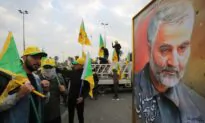
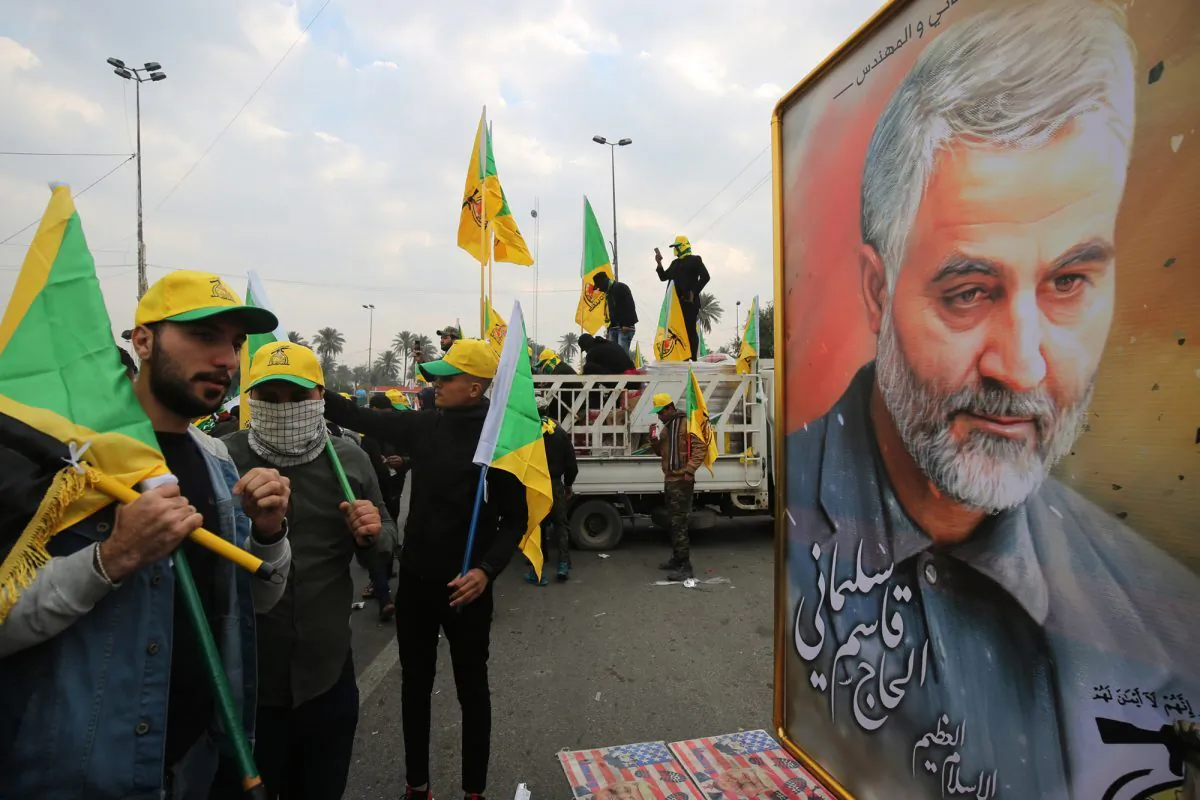
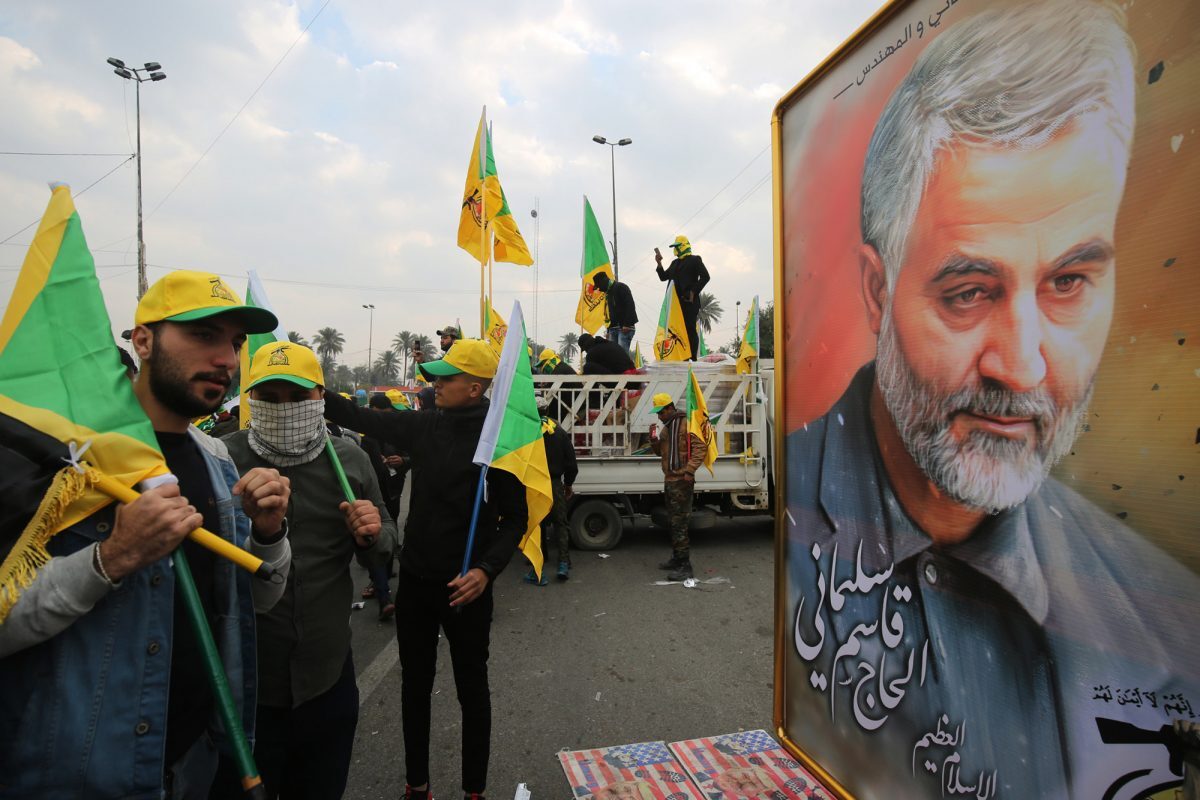
The involvement of Kataeb Hezbollah in attacks on foreign soil appears to be a rare occurrence. The group was formed in Iraq as an Iranian proxy during the Second Iraq War, developing an expertise in deadly roadside bombs to target U.S. troops.
The group worked with other Iraqi militias in the fight against ISIS in the 2010s, but turned its weapons against coalition forces once the common foe was largely defeated in Iraq, by firing rockets and attack drones against coalition bases.
Kataeb Hezbollah features prominently in a constellation of Shia militias in Iraq that are loyal to Iran. Other key groups include the Badr Organization, Harakat Al-Nujaba, and Kataeb Sayyed al-Shuhada.
Activities by these militias against U.S. interests in Iraq have usually been conducted under cover names, with new outfits claiming responsibility for attacks on a regular basis.
The FBI says Al-Saadi claimed responsibility for his string of attacks under the group name “Harakat Ashab al-Yamin al-Islamiya” (Islamic Movement of the Companions of the Righteous).
Not Hezbollah
Kataeb Hezbollah is not to be confused with its older Iranian proxy colleague Lebanese Hezbollah, which has a long history of international terrorism. Lebanese Hezbollah can be considered the big brother of Iraqi Shia militias, having provided training and expertise to these groups alongside Iran’s Islamic Revolutionary Guard Corps-Qods Force.
Lebanese Hezbollah’s terrorism has been much more high profile and deadly than that of Kataeb Hezbollah.
In recent years, several Hezbollah operatives, including some Canadian citizens, were caught in various terrorist plots. Hussein Bassam Abdallah of Windsor, Ont., was sentenced to jail in Cyprus in 2015 for having stored nine tons of ammonium nitrate, an explosives precursor, for Hezbollah.
Hassan El-Hajj Hassan, also a Canadian citizen, was convicted in absentia in Bulgaria in 2020 for a bus bombing in 2012 that killed five Israeli tourists and a local bus driver.
Hezbollah has also been deemed responsible for the bombings of the Israeli Embassy and a Jewish centre in Argentina in the early 1990s, killing 114 people.
The attacks linked back to Al-Saadi of Kataeb Hezbollah appear to show a gap in intent, capability, and operational security.
Al-Saadi openly called for violence and used his social media accounts to post claims of responsibility for various attacks. The FBI says his online accounts linked back to his personal phone number.
The attacks that Al-Saadi has been pursuing have apparently not been elaborate and have not resulted in the loss of life, even though explosives were used. This could suggest a strategy of maintaining attacks below a certain threshold to not trigger major retaliation by authorities.
The use of explosives in several instances to target Jewish institutions and U.S. banks in Europe points to an existing local infrastructure able to supply weapons for attacks.
In the planned operation to target a prominent New York synagogue, Al-Saadi appeared content with using fire instead of an explosive device.
“No problem starting with fire,” he told the undercover agent, while adding the “most important” thing is that the incident be recorded.
The complaint against Al-Saadi doesn’t reveal many details about the attack on the Toronto U.S. Consulate. In a call recorded by an FBI source, Al-Saadi said “our people” were behind two attacks in Canada against “the consulate and the Knesset,” the Hebrew word for “gathering” or “assembly.”
A few days before the attack on the consulate, synagogues in Vaughan and Toronto were fired upon. A suspect, who was 17 at the time, was arrested and charged by police earlier this month.
There is no information on whether the suspect has any connection with Al-Saadi or any other entity.
Al-Saadi told an FBI source he did not need help carrying out attacks in Europe because “things are working for us here in Europe,” whereas he needed to recruit people in Canada and the United States.
He said he doesn’t “have a problem with killing, neither do I have a problem with terrifying [the targets].”
Al-Saadi’s shortage of assets in North America, and his alleged willingness to pay US$10,000 to a purported cartel member to conduct attacks in New York City, leaves open the possibility the attack on the Toronto U.S. Consulate was carried out by hired hands. Of course, there are also individuals who are aligned with the Iranian regime or are against the United States who could have conducted that attack for ideological reasons.
The RCMP said at the time that the U.S. Consulate shooting was being treated as a “national security incident.”
The police force told The Epoch Times in a statement it cannot comment on the U.S. indictment against Al-Saadi given the matter is before the courts.
“Given the ongoing nature of investigations, the RCMP is not able to confirm or corroborate specific details, including alleged links to individuals, groups, or locations, comment on potential investigative activities, or discuss security measures related to specific communities or sites,” the RCMP said.
Editor’s note: the article was updated with a statement from the RCMP.
 Friends Read Free
Copy
Facebook
Tweet
Friends Read Free
Copy
Facebook
Tweet