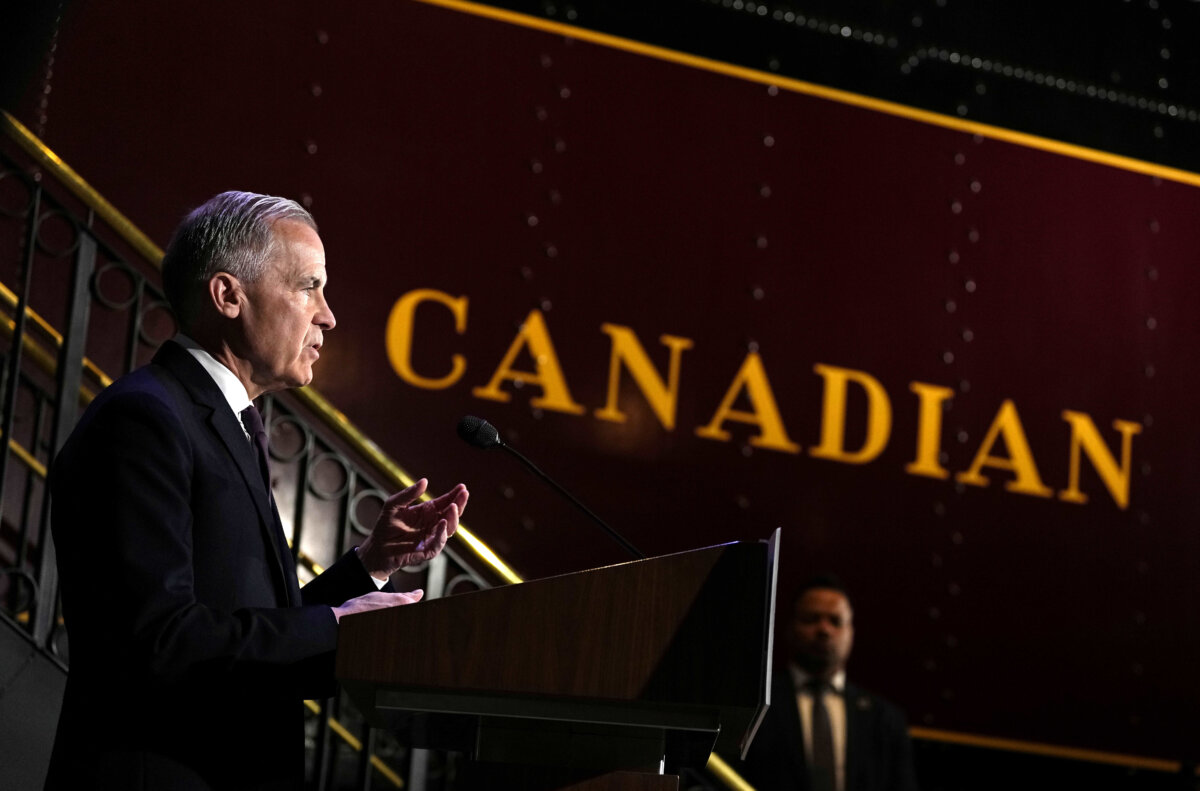

Prime Minister Mark Carney announced his government will create a new sovereign wealth fund, adding that some details will be announced later. Questions remain about how the fund will operate and how it will be paid for.
The Canada Strong Fund, announced April 27, will use investment from the private sector and individuals to fund projects related to areas like energy, critical minerals, agriculture, and infrastructure. The government said this new initiative will allow Canadians to share in the returns.
The initiative was welcomed by some business groups as another tool to help the economy, and criticized by the Conservatives and other groups raising concerns that the new fund is similar to the Canadian Infrastructure Bank. The Tories say that since Canada is running deficits, the initiative will be more akin to a “sovereign debt fund.”
Here’s what we know so far about the Strong Canada Fund, and what the arguments for and against it are.
The Fund Announcement
The Liberal government said the fund is meant to invest in strategic projects driving Canada’s economic transformation. Carney said the fund will not be restricted only to projects being fast-tracked under the One Canadian Economy Act, but will be focused on “investing in Canada.”
The government said the fund will be managed by an independent Crown corporation, and its work will be guided by a CEO and an independent board of directors. Carney expanded on this by saying the fund’s objective is to “grow wealth for Canadians over the long term.”
The government will establish a Canada Strong Fund Transition Office to engage with regulators and market participants. Ottawa said more details related to this will be revealed in later months.
Carney also said the fund will grow through “asset recycling and reinvestment” and create more opportunities for future generations. However, the prime minister did not say exactly what assets the fund will be investing in, or what the returns will be.
The source of the initial $25 billion in funding was also unclear from Carney’s press conference, as the prime minister said he did not want to “front-run” the tabling of the spring economic update on April 28.
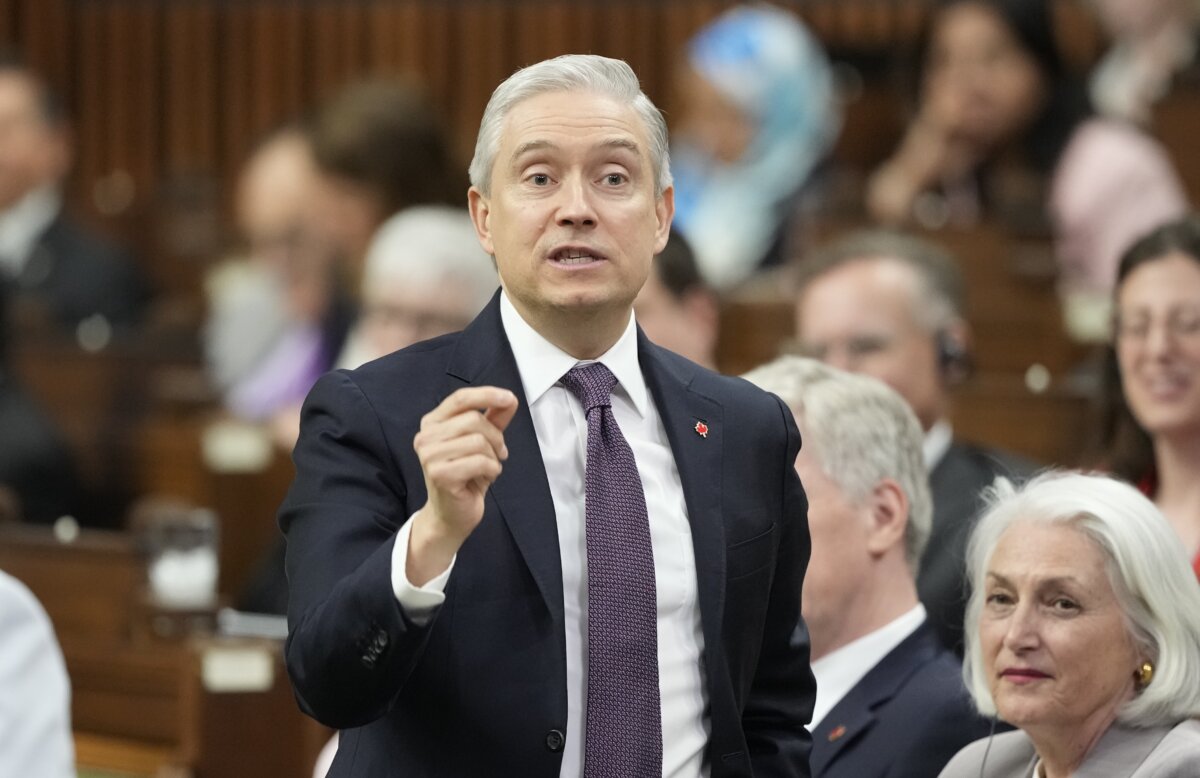
But Finance Minister François-Philippe Champagne said later in the day that Canada can borrow money at the lowest possible rates due to its “Triple A” credit rating, suggesting that the money’s initial funding could be borrowed.
Official Opposition
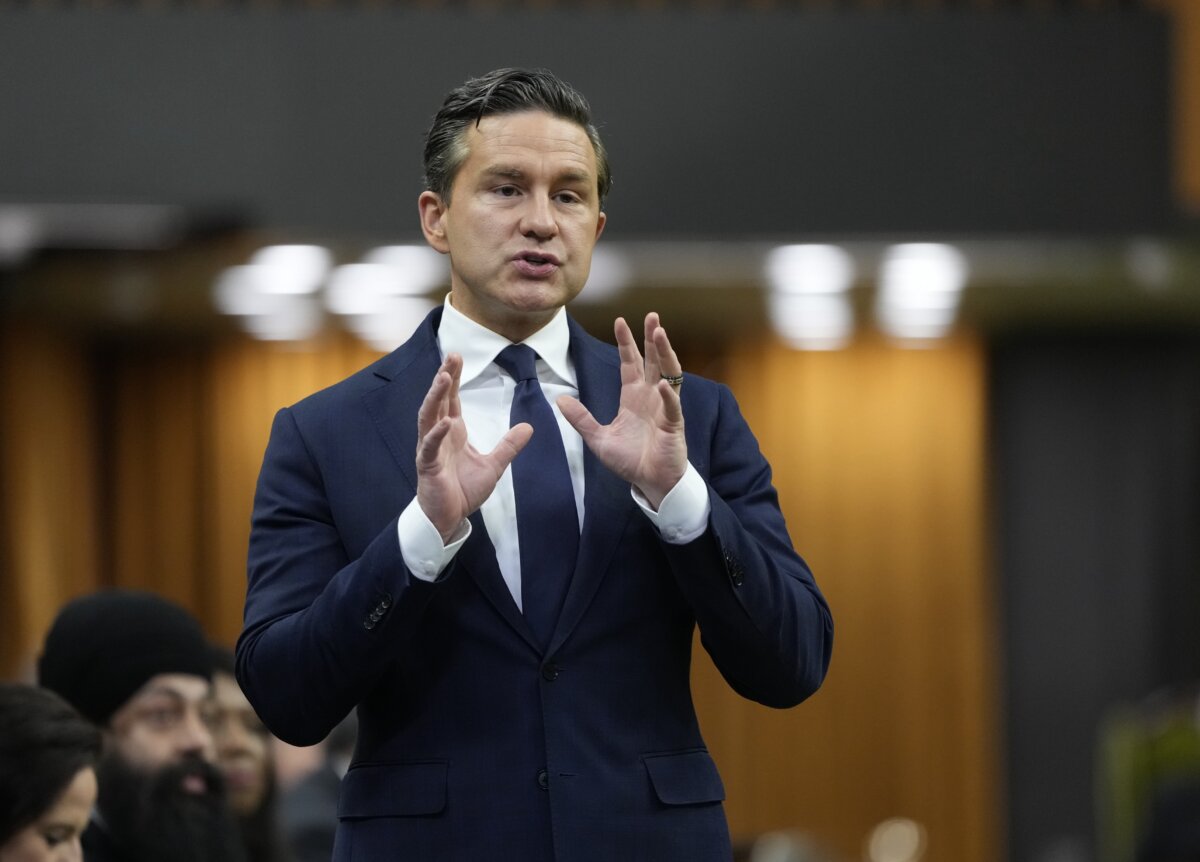
Conservative Leader Pierre Poilievre said given that the government is running back-to-back deficits, it does not have money to put into such a fund.
Poilievre noted that Norway and Saudi Arabia run “big budget surpluses” that are then put into similar sovereign wealth funds. Norway has the largest sovereign wealth fund in the world, valued at US$2.2 trillion, while Saudi Arabia’s fund holds $900 billion in assets and is ranked eighth in the world. Both of those are largely funded by revenues from oil and gas.
Other Reactions
The initiative was welcomed by the Canadian Chamber of Commerce as “another tool to spur investment” in major projects, but it said success will depend on implementation.
Matthew Holmes, head of public policy at the organization, said it would take a while to set up the fund, “so the immediate focus must remain on measures that strengthen the economy now,” including focusing on major project development and reducing red tape.
Pierre Gratton, head of the Mining Association of Canada, also said a state-backed investor could be useful when it comes to rare-earth minerals, given that China controls a large share of the global market and can move prices enough to damage small producers trying to get a foothold.
“It’s raising that capital that is so hard because it’s too risky. Now, once you’re up and running, and if you’re competitive, you can stay in business,” he said.
Some other groups, meanwhile, raised concerns over the sovereign wealth fund’s operations and how it will be funded.
The Montreal Economic Institute (MEI) issued a statement saying that the new fund could end up costing taxpayers large amounts of money while generating lacklustre returns.
MEI said that unlike with the Canada Strong Fund, Norway’s fund has a mandate to invest abroad as opposed to domestically, which avoids overheating the local economy and limits the potential for political interference in how funds are allocated.
Emmanuelle B. Faubert, an MEI economist, also said Carney is effectively announcing the “the Canada Infrastructure Bank (CIB) under a different name.” The CIB invests in infrastructure projects across Canada, with each investment attracting private capital and generating returns for investors.
When Carney was asked about the similarities between the CIB and the Canada Strong Fund, he said the former provides funding to make projects possible and the funding is eventually returned, while the latter allows for investors to obtain equity returns.
“[The Canada Strong Fund] gets those returns alongside the private sector, and it will spread the benefits of those returns over a much longer horizon,” Carney said.
Heather Exner-Pirot, director of energy, natural resources, and environment at the Macdonald–Laurier Institute, said she was concerned about Carney’s statement that the government would provide regulatory support for projects utilizing investment from the Strong Canada Fund.
“‘Regulatory support’ does not seem like a fair condition by which to extract ‘profits’ above and beyond normal corporate tax rates,” Exner-Pirot wrote on X. She said if the fund would entail a windfall tax on oil and gas and mining in exchange for regulatory efficiency, then that would be problematic.
 Friends Read Free
Copy
Facebook
Tweet
Friends Read Free
Copy
Facebook
Tweet