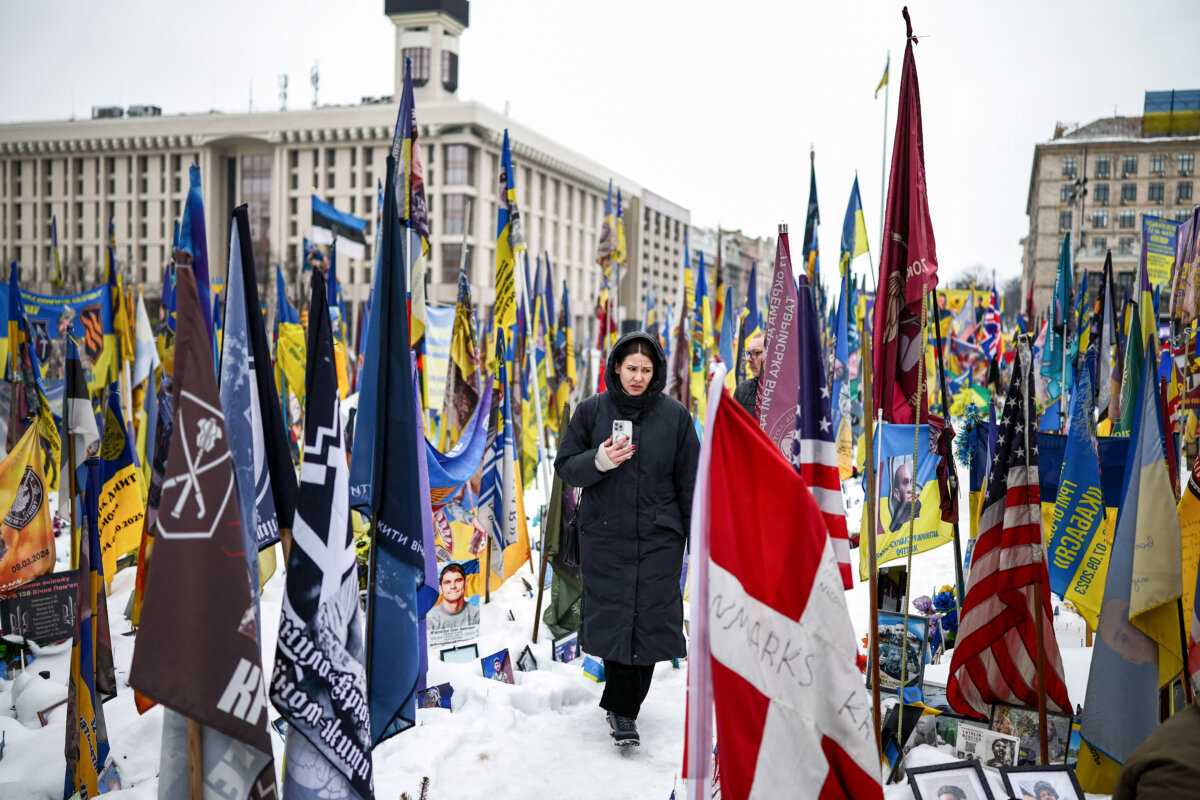
Ukrainian President Volodymyr Zelenskyy and world leaders marked the fourth year of the war in Ukraine on Feb. 24 as the fighting on the battlefield continues.
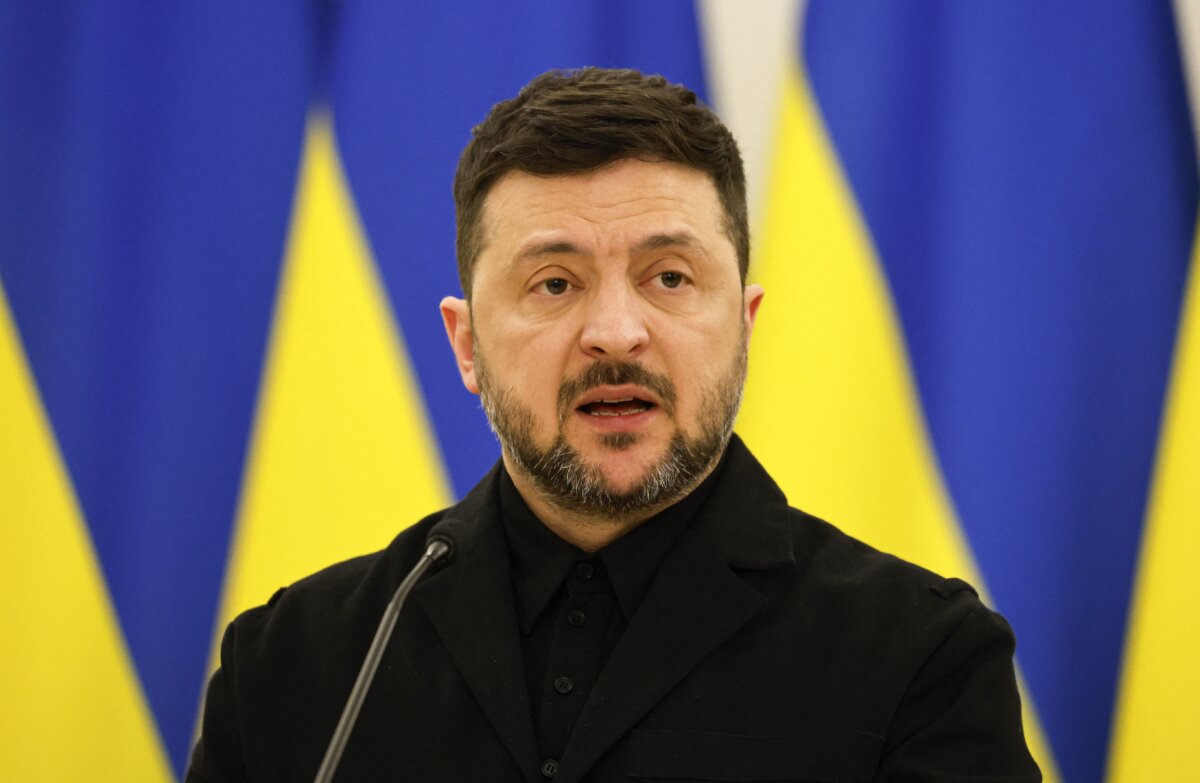
“Today marks exactly four years since [Russian President Vladimir] Putin started his three-day push to take Kyiv. And that says a great deal about our resistance, about how Ukraine has fought all this time,” Zelenskyy wrote in a Feb. 24 post on X. “Behind those words stand millions of our people, immense courage, incredibly hard work, endurance, and the long path Ukraine has been pursuing since February 24.”
In an accompanying video, the Ukrainian leader extended an invitation to U.S. President Donald Trump to visit Ukraine.
“Only by coming to Ukraine and seeing with one’s own eyes our life and struggle … only then can one understand what this war is really about,” he said.
Trump has vowed to bring an end to the conflict, with U.S.-mediated negotiations between Russia and Ukraine still ongoing. Three rounds have already taken place since the start of 2026, with the most recent on Feb. 17–18 in Geneva, Switzerland.
Suggesting a resolution may be approaching, Zelenskyy said in comments published by the Financial Times on Feb. 23 that he believes the war is “at the beginning of the end.”
“Ukraine needs a ceasefire — yesterday, today, tomorrow,” he said. “We don’t need a pause. We need the end of the war.”
The leaders of the European Union, which has been a staunch ally of Kyiv since the outbreak of war, marked the anniversary by praising Ukraine’s resilience and pledging continued support.
European Commission President Ursula von der Leyen and European Council António Costa are in Kyiv for the anniversary, along with the leaders of Denmark, Estonia, Finland, Iceland, Latvia, Lithuania, Croatia, Norway, and Sweden.
“Our objective is a comprehensive, just and lasting peace for Ukraine based on the principles of the UN Charter and international law,” Costa, von der Leyen, and European Parliament President Roberta Metsola said in a joint statement.
“We support all efforts aimed at achieving such a peace – a peace with dignity and long-term security. Respect for sovereignty and territorial integrity is the cornerstone. No country can annex its neighbour. Borders cannot be changed by force. The aggressor cannot be rewarded,” the EU leaders added.
They promised further political, financial, and military support for the country, and restated their belief that Ukraine’s future lies within the EU.
German Chancellor Friedrich Merz said in a post on X that the past four years have been a nightmare for the Ukrainian people.
British Prime Minister Keir Starmer, in a post on X, sent a message of support to Ukraine, saying, “Britain is with you.”
He said the UK is stepping up military, humanitarian, and reconstruction support. The support Starmer was referring to includes 20 million pounds (about $27 million) of new funding for emergency energy support to protect and repair the energy grid and provide additional generation capacity, and 5.7 million pounds ($7.7 million) to provide humanitarian assistance to frontline communities, medical mentoring, and helicopter training.
In addition, Britain also passed one of its largest sanctions packages against Russia since the start of the war.
A total of 300 new packages came into force on Feb. 24, the UK Foreign Office announced, targeting Moscow’s energy industry, its military supply chain, financial institutions, and shadow fleet.
The move means that the UK has now sanctioned more than 3,000 individuals, businesses, and ships under its anti-Russia scheme.
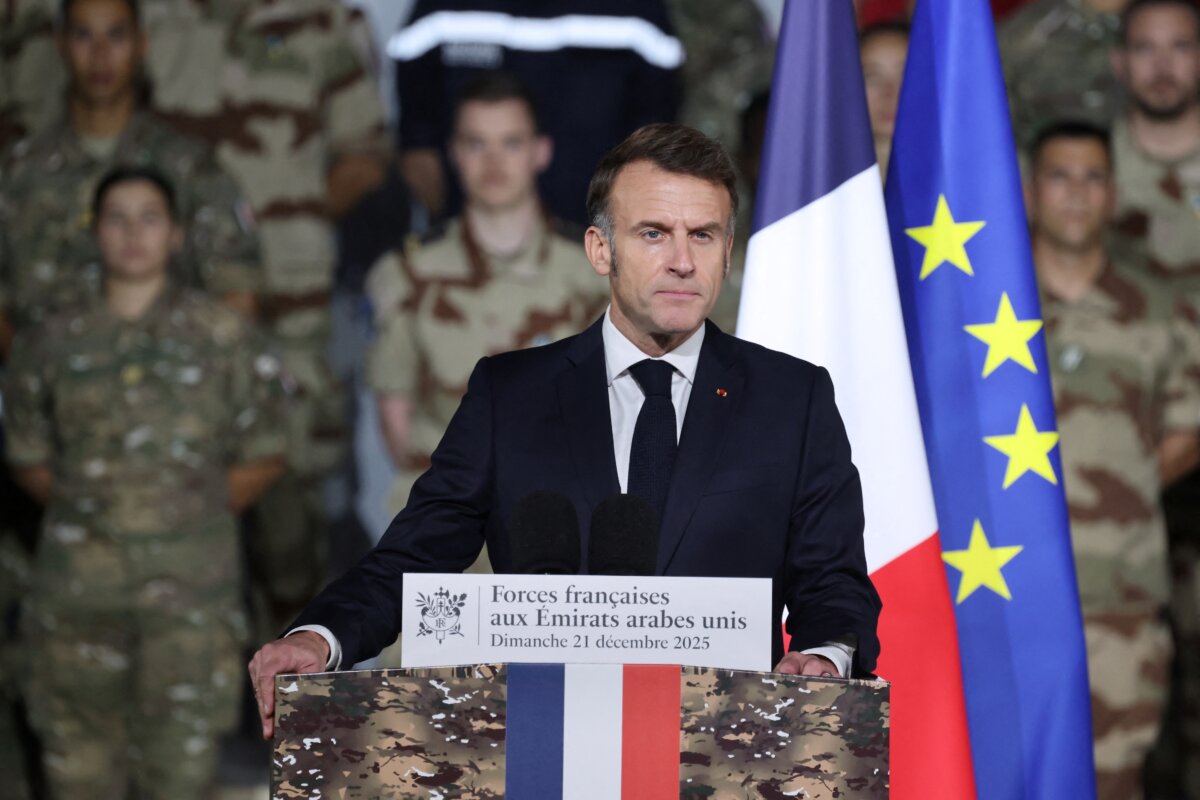
French President Emmanuel Macron said in a post on X that the war is a “triple failure for Russia: military, economic, and strategic.”
“It has strengthened NATO—the very expansion Russia sought to prevent—galvanized Europeans it hoped to weaken, and laid bare the fragility of an imperialism from another age. Because Ukraine is the first line of defence of our continent, France and Europe stand resolutely by its side.” Macron added.
NATO Secretary-General Mark Rutte said in a post on X that the alliance “stood with Ukraine from the beginning. We stand with you today.”
View From Moscow
Russian President Vladimir Putin, speaking during a ceremony at the Kremlin on Feb. 23, said that his country was fighting for “its future, independence, truth and justice.”
Feb. 23 is Russia’s “Defender of the Fatherland Day,” marking the foundation of the Red Army of the former Soviet Union.
Putin presented decorations to members of the Russian Ministry of Defence and the Russian National Guard.
“Those gathered at the Kremlin today are not only professionals with extensive experience and outstanding training. They are commanders who have stood shoulder to shoulder with their soldiers from the very beginning of the military operation, sharing every challenge and hardship with their comrades-in-arms,” he said. “These are people of strong moral convictions and noble ideals, the true patriots of Russia.”
Russian officials refer to the war as a “special military operation.”
Putin made no direct reference to the specifics of the situation on the frontline or the progress of negotiations during his speech. Kremlin spokesman Dmitry Peskov said on Feb. 24 that ending the war “all depends on the Kiev regime’s actions now,” according to Russian state news agency TASS.
He added that Russia’s goals of the “special military operation” have not yet been achieved, and it will therefore continue.
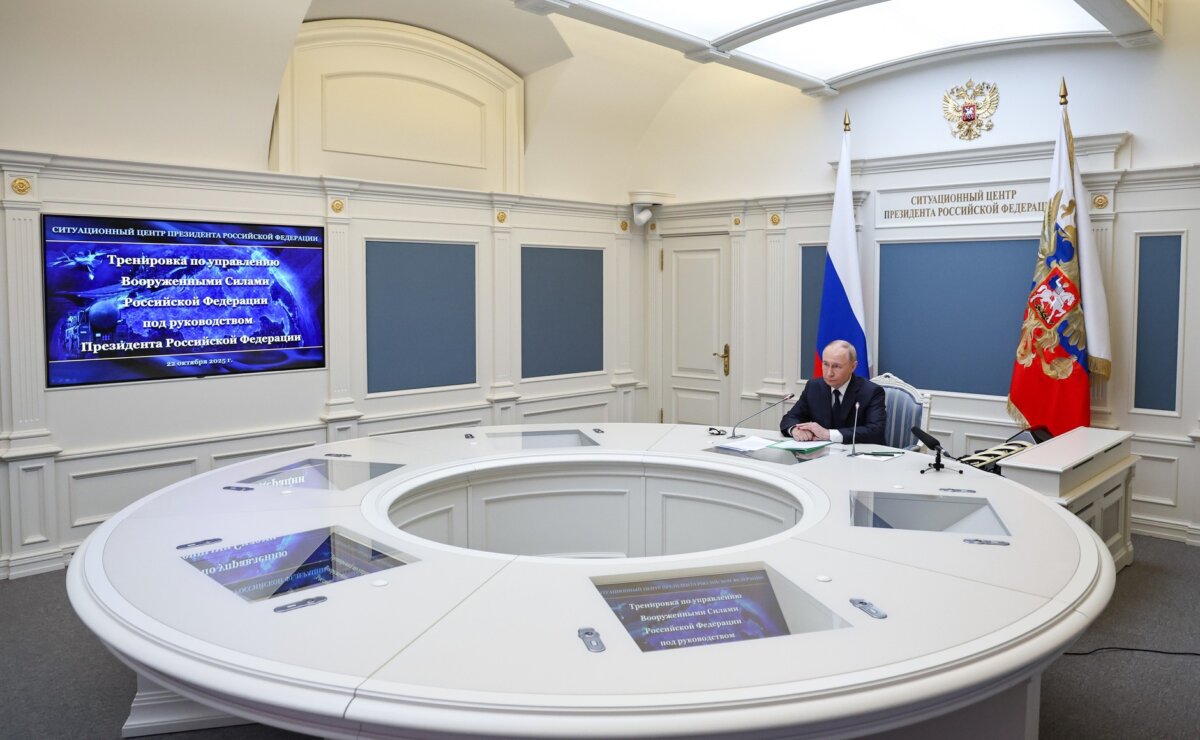
Russian Foreign Ministry Spokeswoman Maria Zakharova said that the “unchecked expansion of NATO right up to our borders, including Ukraine, has become one of the fundamental causes of the current conflict.”
“Until this issue is addressed, a resolution is impossible. Russia will pursue its objectives through both military and political avenues,” she added, according to TASS.
 Friends Read Free
Copy
Facebook
Tweet
Friends Read Free
Copy
Facebook
Tweet