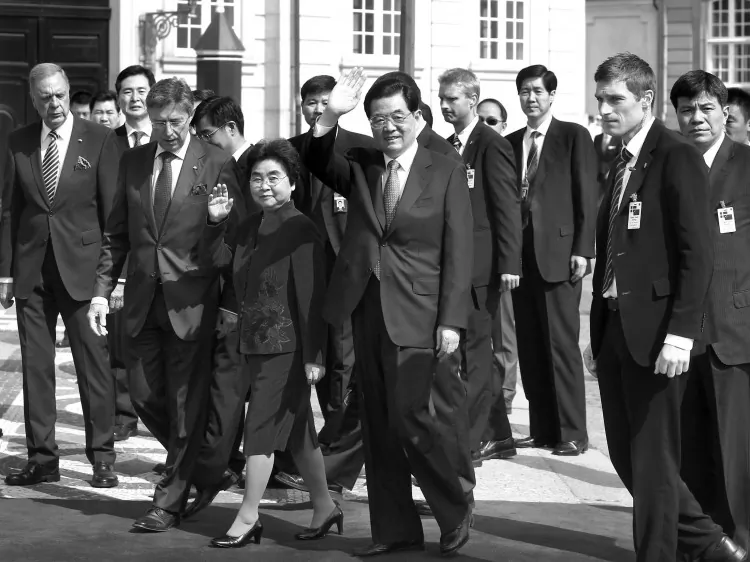

Chinese Communist Party leader Hu Jintao gets the same reception most places he goes: protesters come out in force, they hold banners, put up posters, and chant and sing about human rights in China. In most places, too, Chinese delegations are often able to enlist the local police in shunting aside the undesirables. The difference recently in Denmark, however, where Hu just visited, is that journalists from major newspapers joined in the protests. And when the police interfered, they got sued.
Charges of human rights violations and abuse of power were filed against the police department of Copenhagen, the capital of Denmark, after Hu Jintao departed following a state visit on June 15.
According to Claus Bonnez from the Danish legal aid organization Krim, who brought the charges, there were three incidents that brought the litigation.
In one case demonstrator Luna Pedersen from the Danish Tibetan Association was searched for drugs; while they were at it, the police confiscated her Tibetan flag. Bonnez says there was no reason for the police to suspect she had drugs, and they didn’t search any of the Chinese-flag holders for the same. Strike one.
In another case, journalist Janus Oestergaard from Danish tabloid Ekstra Bladet, at one point the sixth largest circulation in the country, was arrested after he hung posters.
Because journalists were given no opportunity to ask Hu questions at the press conference, Oestergaard took matters into his own hands. He headed to the Little Mermaid sculpture in the city and hung posters of Tibetans that had performed self-immolations in protest of the Communist Party’s Tibetan policies.
“We wanted to do some kind of stunt to show the president that we are serious about this,” Oestergaard told The Epoch Times. The police took the posters down and arrested him, putting him in a cell for five hours. Strike two. (Chief of police Mogens Lauridsen said that the Copenhagen police followed normal procedures, when asked about the arrest by The Epoch Times.)
The third strike, according to the lawyer Bonnez, was due to the fact that Copenhagen police allegedly assigned protesters so far from the Chinese leader that he could not see them, and thus they could not make their point. This violated article 11 of the European Convention on Human Rights regarding freedom of assembly and association Krim, the civil rights group, is arguing.
“It is important that the demonstrators can be seen by the president. That is the reason they demonstrate,” Bonnez said. “This had nothing to do with ‘security,'” he said. He thinks the police acted for political and diplomatic reasons instead.
Mogens Lauridsen, the police spokesperson, said he thought the protesters were close enough. “They could see the president, and he could see them,” he said.
Claus Bonnez is going to proceed with the case. He thinks the European Court of Human Rights will have something to say about the way the police behaved.
Denmark has already backtracked on another instance of apparent censorship on behalf of the Chinese delegation. The New York-based Chinese broadcaster New Tang Dynasty Television, which Beijing is at war with due to its bold human rights coverage, was effectively denied access to the press event after Danish authorities told them to submit their application for media credentials to the Chinese Embassy.
Local politicians and media pundits in Denmark were furious. Danish authorities then sent an apology in a press release to the media.
The Epoch Times publishes in 35 countries and in 19 languages. Subscribe to our e-newsletter.
 Friends Read Free
Copy
Facebook
Tweet
Friends Read Free
Copy
Facebook
Tweet