
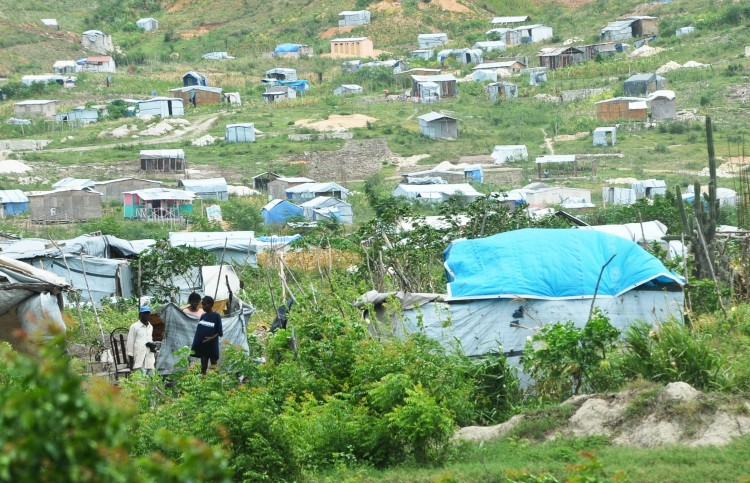
Despite being spared the worst of the heavy rains, flooding, and potential landslides that were predicted, any storm poses grave hazards for Haiti’s hundreds of thousands of displaced who still live in tarps and tents, even 18 months after the 2010 earthquake.
Heavy rain and some flooding was reported in isolated areas, but the capital of Port-au-Prince, where the bulk of the population lives, escaped the deluge.
Marcel Goyeneche, Disaster Preparedness coordinator, said that the people in vulnerable housing situations could have been devastated by heavy rain and intense flooding, according to a press release by the International Federation of Red Cross.
For the past two weeks, the Agency for Technical Cooperation and Development was building 404 secure and weather-proof homes to evacuate families in.
Maurice, a member of the Haitian Red Cross, was part of a team helping to spread awareness of the coming storm among Haitians. “Lots of people in the neighborhood don’t even have the money to buy a radio—that’s why it’s important to do it face to face,” he said, according to the organization’s website.
An early warning system has also been established, including color-coded flags, bullhorns, and whistles. Children are taught about systems through songs, skits, and games in the camps.
Almost 12,000 United Nations peacekeepers were put on emergency standby in Haiti. The U.N. Stabilization Mission in Haiti sent 8,500 military troops and 3,000 police officers as emergency backup for the most vulnerable.
The troops worked on repairing damaged roads to make it easier for aid to reach flood zones and rivers are being cleared to reduce chances of flooding.
The mission also set up two crisis centers to plan actions and emergency supplies were distributed, including water and hygiene kits.
Humanitarian organizations know from previous experience that storms can mean more cholera. Cholera spreads through bacteria-infected water, which is worsened by rains and flooding.
Last November, Hurricane Tomas flooded Haiti and unleashed a cholera epidemic. Hundreds were killed and some 20,000 people were infected.
Although the storm has weakened, Emily is still capable of producing high winds and 6 to 12 inches of rain with possible isolated amounts of 20 inches over the Dominican Republic and Haiti. According to the National Hurricane Center, these rains could cause life-threatening flash floods and mudslides.
 Friends Read Free
Copy
Facebook
Tweet
Friends Read Free
Copy
Facebook
Tweet