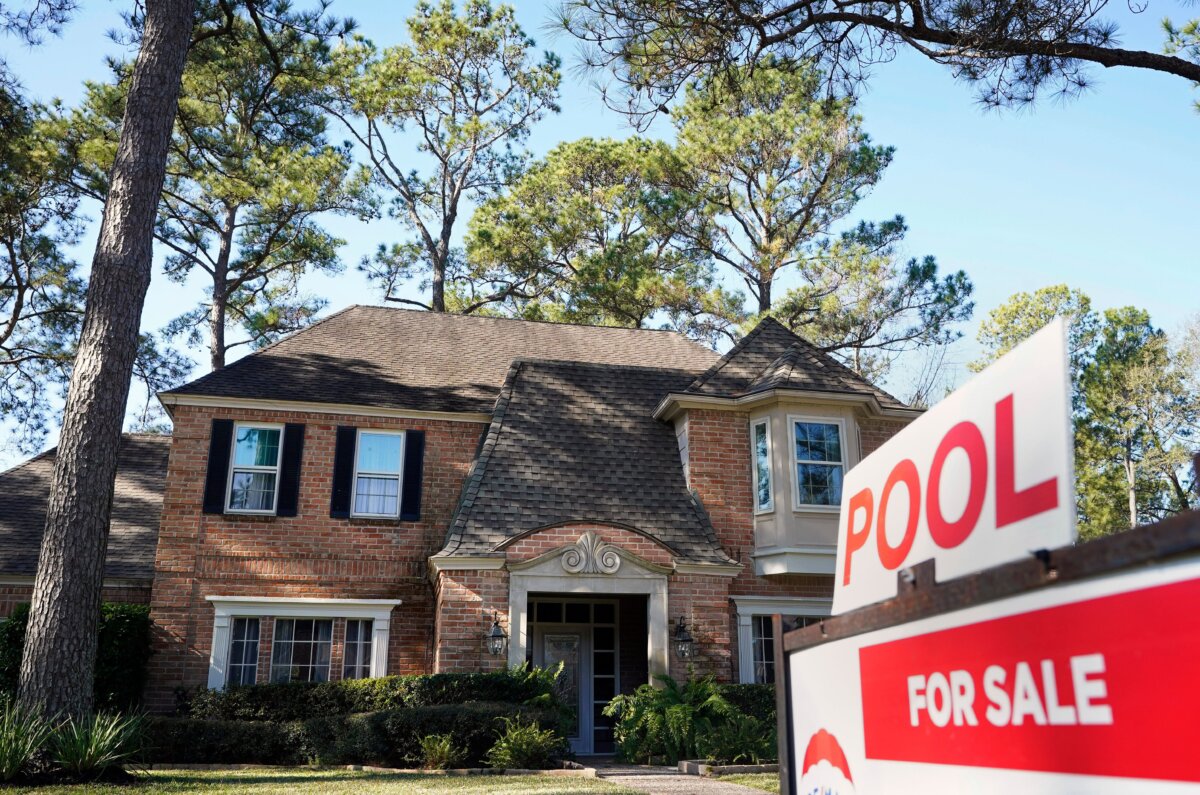

At age 25, Jacob Weber left the U.S. Army to pursue his American Dream: raising a family and owning a home.
Years later, half of that dream—home ownership—remains elusive. Instead, Weber, his wife, and their infant daughter are renting a relative’s property while they continue their search for a house within budget in their hometown of Ocean Shores, Washington.
Like Weber, many young would-be homebuyers are facing what they say is the growing impossibility of achieving homeownership. While housing analysts and realtors argue the dream is very much alive, they concede that for many, it may feel unreachable.
Gen Zers and young millennials spoke to The Epoch Times about a range of barriers on the path to owning a home: sky-high prices and interest rates, the cost of living, and simply not wanting to leave their hometown or family for somewhere cheaper.
Similar stories are common in online groups for first-time homebuyers.
Perennial issues for this age group—having bad or no credit, college debt, and low wages—have also contributed.
The increased cost of living and high rental prices make the idea of saving money to put toward his American Dream increasingly difficult, Weber told The Epoch Times.
Four years after leaving the military, Weber now works as an automotive technician and has lived with his family in a rented vacation home since 2022; at the time, he thought it would be a temporary arrangement.
Years later, he feels stuck, he said.
Weber said his and his wife’s dream of owning their own house with land seems unachievable due to astronomical prices and a scarcity of homes in his area—even when both had been working.
Now, with his wife staying home to raise their young daughter, the feeling of unattainability is amplified.
“The American Dream has always been [that] the husband works while the wife is there to take care of [their child],” he said.
If the Weber family still had a dual income, buying a home might be possible over time, the Army veteran said. But their existing debts prolong that timeline.
Americans have not always needed two income streams to afford a home, Weber noted.
The U.S. Census Bureau reports the median household income in 1960 was $5,620. The median home price was $11,900.
That’s a home price-to-income ratio of roughly two to one, at a time when husbands were primary breadwinners in 70 percent of households, according to a Pew Research report.
In contrast, today’s homebuyers are often advised to look at houses that are about three to five times their annual income.
“I don’t know how they expect to have a family dynamic in America if the family can’t stay home with the kids,” Weber said.
The U.S. inflation rate spiked to 9.1 percent in June 2022—a 40-year high largely due to the COVID-19 pandemic—but has since stabilized.
For the period ending in December, the Consumer Price Index rose 2.7 percent over the previous 12 months, according to the Bureau of Labor Statistics.
Slower inflation growth doesn’t mean prices are going down—only that they are rising more slowly. Wage increases fell behind during the inflation surge and have struggled to keep up. However, wage growth did outpace inflation for the past two years, CNBC reported in January.
These gains aren’t felt among many Americans, though.
The CNBC report showed that inflation-adjusted wage growth since 2020 has been close to zero. The median household income in 2024 wasn’t statistically different from that in 2019, according to a Bankrate analysis.
Blake Bryan, founder of Gridstone Home Financing Group, told The Epoch Times he frequently meets with young families trying to buy their first home. Most often, his clients bring up steep home prices and unfeasible down payments as the largest barriers.
The Trump administration has made housing a top priority, with the president signing an executive order preventing Wall Street firms from buying single-family homes.
His administration is exploring other mortgage options to help homebuyers.
Statistics show that older generations of Americans had more success when they were young homebuyers.
Baby boomers, born between 1946 and 1964, came of age during a thriving economy and years of healthy housing construction, and continue to dominate the U.S. housing market.
More than half of baby boomers owned a home by the age of 30, according to a Realtor.com analysis of National Association of Realtors and U.S. Census Bureau data.
Not far behind are Gen Xers, born between 1965 and 1980. Forty-eight percent of this generation owned a home by age 30.
Millennials, born between 1981 and 1996, have surpassed baby boomers as the nation’s largest living generation. They have lived through a vastly different economy and housing market than their predecessors. Forty-two percent of millennials owned a home by age 30.
But among millennials approaching 40, homeownership still lags behind that of previous generations. In 2025, 57.2 percent of 36-year-olds owned their homes. At the same age, the rates were 61.2 percent and 63.7 percent for Gen Xers and baby boomers, respectively, according to a January report from Redfin.
Meanwhile, the oldest of Gen Z, born between 1997 and 2012, is only 28. In 2025, 38.3 percent of these 28-year-olds owned a home. That compares to 42.5 percent of Gen Xers and 44.4 percent of baby boomers at the same age, according to the Redfin report. However, it’s higher than the millennials’ rate of 36.8 percent at age 28.
—Troy Myers
BOOKMARKS
An appeals court ruled on Wednesday that Donald Trump’s administration can detain illegal immigrants without bond. The Eighth Circuit’s ruling is the second to side with the administration this year, mirroring a decision by the Fifth Circuit in February.
Joe Biden’s White House altered messaging related to the risk of stroke from the COVID-19 vaccine, according to records released by Sen. Ron Johnson (R-Wis.). Find out how by reading Zachary Stieber’s latest report.
Dr. Robert Malone is quitting his (unpaid) job as vice chair of the Advisory Committee on Immunization Practices, following criticism from health groups and tensions with the Trump administration. “I’m tired of thousands of hours of free labor for just chronic disrespect for all of us,” Malone said.
Rep. John Moolenaar (R-Mich.) wants President Donald Trump to do more to address China’s human rights violations. “The CCP under Xi Jinping has been carrying out its most systematic campaign of religious and political persecution since the Cultural Revolution,” the lawmaker wrote in letters addressed to the president and Secretary of State Marco Rubio.
The EPA will temporarily allow the sale of gasoline with higher ethanol content for 20 days in May to address unsteady fuel prices. “Through the waiver, EPA is fortifying the domestic gasoline supply chain and providing Americans relief at the pumps ahead of the upcoming summer driving season,” the agency said.
—Stacy Robinson
 Friends Read Free
Copy
Facebook
Tweet
Friends Read Free
Copy
Facebook
Tweet