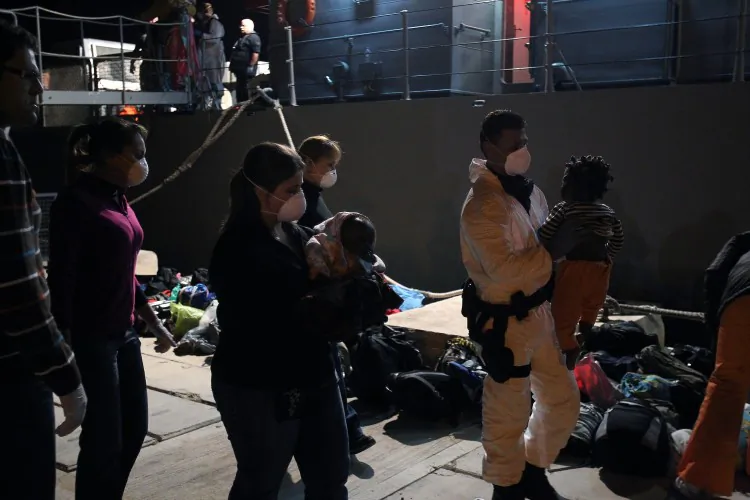
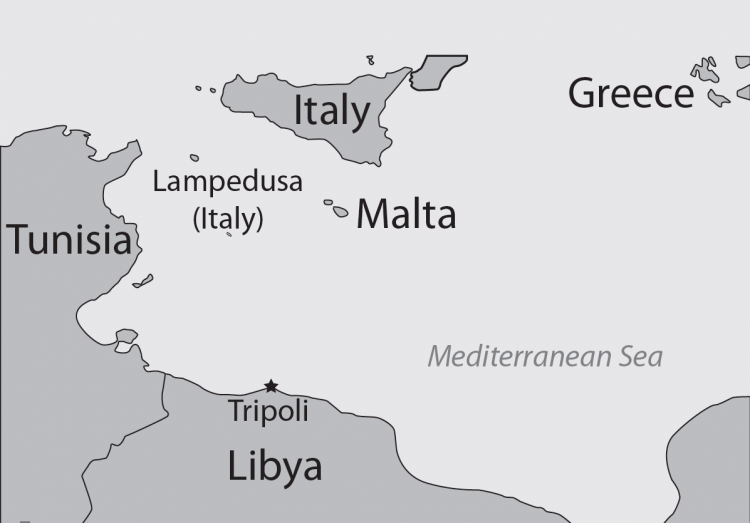
The tiny island nation of Malta, located in the waters between North Africa and Italy, has been burdened by an disproportionate number of migrants for the past decade.
With a population of only 400,000 people, Malta receives an average of 1,470 migrants by boat per year—proportionally, that is over six times greater than France, which received the largest numbers of migrants in the European Union in 2011. The number of undocumented migrants has increased since Malta joined the EU in 2004.
Forced to adapt, Malta’s processing system has become one of the fastest growing in Europe. Fifty-eight percent of migrants receive some form of protected status, which is higher than the EU average.
About 15,000 migrants made it to Malta’s shores since 2002 many by accident while trying to reach Italy’s Lampedusa island. After Somalis, the second largest group comes from Eritrea. Others come from Ethiopia, Egypt, the Ivory Coast, Ghana, Sudan and Nigeria.
Virtually all migrants are detained upon arrival, even children, who, as long as they look older than 12 or 14 years old, will be held in detention until their age is determined. Malta has a policy of mandatory detention for any “prohibited immigrant,” which includes anyone arriving without “right of entry.”
Conditions in Malta’s detention facilities have reportedly improved in recent years, but could deteriorate with overcrowding. In September 2011, there were riots at the Safi detention centre on the island over poor conditions and abuse by guards.
The conditions have not dissuaded migrants from landing in Malta, especially those who arrive accidentally. Many migrant boats lack navigational equipment, so can’t choose their destinations. Some don’t even know Malta exists as a country before they arrive there.
Instances of exploitation occur in detention facilities, as a 17-year-old related in the report.
“Every day a big man from Mali came and said, ‘Give me your food.’ And one day I said no, and he hit me. I was out on the floor [unconscious] for half an hour. I told the soldiers but they said, ‘We don’t care.’ No one helped me, I just cried and went to sleep.”
The Maltese government maintains that detention protects migrants from abuse, exploitation, or getting lost on the island.
Malta’s detention policy was found to violate the European Convention’s laws on the right to liberty by the European Court of Human Rights. Migrant children aren’t supposed to be detained except as a last resort for the shortest possible time period. Migrant children arriving in Malta are detained for an average of 3.4 months.
Children and adults who migrate to Malta are often fleeing from poverty, persecution, war or violence. Many teens also arrive unaccompanied by adults.
“We were in Libya for three years, but then there was the Gadhafi problem. I lost my father, the Gadhafi rebels killed him. I had to find my way out, I traveled to Europe,” one migrant told Human Rights Watch (HRW).
One-third of the 15,000 migrants originate from Somalia, which suffered a devastating famine last summer.
Getting to Malta from these war-torn and hunger-stricken countries can take many months, interviewees told HRW. A typical journey might involve coming from sub-Saharan Africa to Mali or Sudan via truck to Libya, then sailing to Malta on a faulty vessel with little supplies.
In 2011, in order of most protection to lowest, 4 percent of applicants in Malta earned refugee status, a further 37 percent won subsidiary protection, and 17 percent won a domestic form of temporary protection, allowing them to work in Malta but not travel to the EU.
Xenophobia and racism are some of what migrants have to face in Maltese society in addition to scarcity of jobs, anxiety over how long they can stay and whether they can rejoin families in Europe.
Malta received less migrants in 2010 while Libya and Italy shared a joint agreement to tow migrant boats back to Libya. HRW hypothesizes that migration numbers returned to normal the next year after the Libyan-Italian agreement was suspended following the collapse of the Libyan regime.
The Malta government has applied a one-year maximum detention period for all current asylum seekers, according to Amnesty International.
 Friends Read Free
Copy
Facebook
Tweet
Friends Read Free
Copy
Facebook
Tweet