
U.S. economic activity no longer appears to be contracting and is showing small improvements in the 12 Federal Reserve Districts. Some industry sectors are perking up, while others are still on a downward slide, according to the latest Federal Reserve Bank of Kansas City Beige Book.
“Reports from the twelve Federal Reserve Districts indicate that overall economic activity continued to expand in September, although many Districts described the pace of growth as ‘modest’ or ‘slight’ and contacts generally noted weaker or less certain outlooks for business conditions,” according to the Federal Reserve Board (Fed).
The Fed reports a summary of current economic conditions in its Beige Book eight times per year, with the latest published in October.
Consumer spending gravitated more toward loosening the purse strings in September, which very well might be due to the holidays approaching.
Earnings are still down with the exception of those workers with special skills who are hard to find. Hiring is at a moderate level in some areas, while other areas are still accounting for a large number of the unemployed and won’t perk up soon.
“Many Districts noted restraint in hiring and capital spending plans. … Wage pressures remained subdued outside of a few exceptions in which firms noted having difficulty finding appropriately skilled workers,” according to the Beige Book.
Businesses began to spend a little more, but Chicago, Philadelphia, and Richmond retailers hesitated to increase inventory for the holiday season, citing a falloff in consumer confidence in the economy.
The manufacturing, mining, and transportation sectors started to replace equipment, hoping to be ready when the economy normalizes.
The tourism sector was upbeat in Atlanta, Boston, and Minneapolis, with hotels reporting an increase in reservations, expecting a healthy holiday season. However, San Francisco couldn’t match the enthusiasm of other areas and reported a gloomy outlook.
Overall, the report strikes a more positive note, although there are pockets still reeling from the economic downturn.
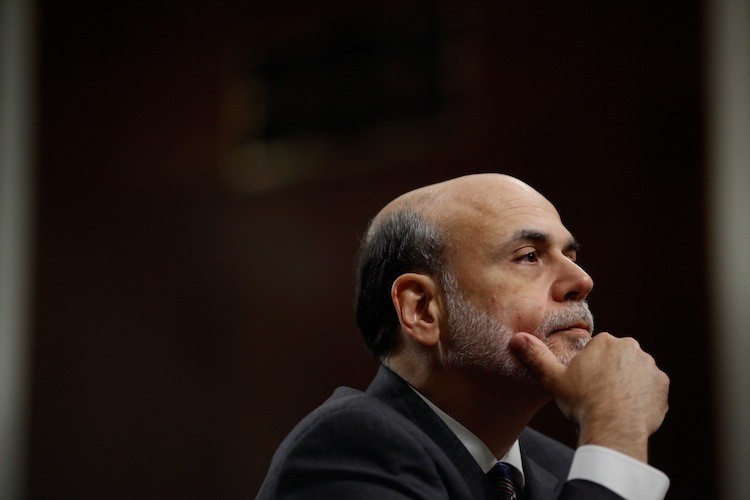
“It is clear the recovery from the crisis has been much less robust than we had hoped. … The recession was even deeper and the recovery weaker than we had previously thought,” said Ben S. Bernanke, Chairman of the Board of Governors of the Federal Reserve System, in a September speech.
Economic Outlook Fragile
“While we see strong business fundamentals in America still, the quarterly survey results reflect increased uncertainty among CEOs concerning the economic climate and business environment,” said Jim McNerney, Chairman of the Business Roundtable and Chairman, President, and CEO of The Boeing Company, in a September press release.
Executives’ economic expectations had been on the rise since the end of 2009, after which it swung to a strong negative outlook during 2010, declining throughout the entire year.
This year’s third quarter Economic Outlook Index dropped sharply from 109.9 at the end of the second quarter to 77.6, below the 2010 fourth quarter index of 101.
Although executives were positive concerning the pace of the U.S. economic recovery during the first two quarters of 2011, their outlook took a 180 degree turn. Executives of America’s larger companies expect orders, sales, and capital spending to trend downward.
To compound the feeling of gloom, the Fed reported that “responses to the Business Outlook Survey this month suggest that regional manufacturing activity is continuing to contract,” according to a September release of survey results.
There is a sliver of hope, as the Feds survey indicates that September declines in manufacturing activity was less pronounced than in August. The employment situation improved although orders and shipments were still leaning toward the negative side.
The August Manufacturing Outlook Index of -30.7, although still on the negative side, recovered to -17.5 in September. Despite the improvement in the index numbers, survey respondents suggested that the recovery will be slow and production growth will lean more to the negative side.
“The broadest indicator of future activity remained positive and rebounded this month, suggesting that recent declines are not expected to continue over the next six months,” according to the Federal Reserve Bank of Philadelphia in its September announcement.
More recent survey results appear to bear this prediction out. The results from the October Business Outlook Survey offer grounds for optimism, however slight. “Responses to the Business Outlook Survey this month suggest that regional manufacturing is showing signs of recovering, following several months of decline. … Responding firms indicated that employment was slightly higher this month. The broadest indicator of future activity remained positive and showed marginal improvement over its reading last month,” said the Fed in its October announcement.
Next…Double-Dip Recession Not in the Offing
 Friends Read Free
Copy
Facebook
Tweet
Friends Read Free
Copy
Facebook
Tweet