
The 2010 FIFA World Cup in South Africa has gotten off to a slow start after the first stage of round robin games, but be patient, things are just getting started.
The first measure to judge how exciting the World Cup has been, wrongly in my opinion, is the number of goals scored. Thus far after the 16 matches in the first stage of the round robin, the average number of goals scored per game is 1.56 (25 goals in 16 games).
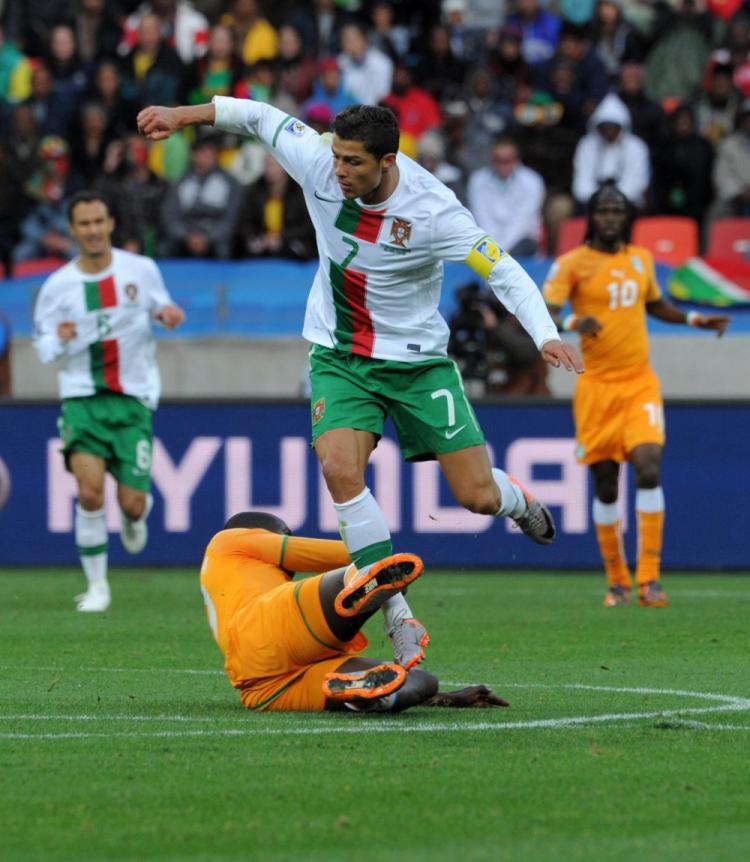
When West Germany won the World Cup in 1954, an average of 5.38 goals per game were scored. In 2006, when Italy won it all, 2.3 goals per game were scored. The 2010 World Cup is on pace to break that dubious record.
A couple of the goals scored shouldn’t have even been scored. Think back to Clint Dempsey’s “goal” against England last Saturday. Robert Green committed a goaltending blunder that won’t soon be forgotten. Also, Algeria’s goalkeeper Fawzi Chaouchi was at fault on a very savable Slovenian shot that cost his team the game.
Some blame the new Adidas Jabulani ball. Some blame the altitude but what’s really to blame is the defensive-minded “play not to lose approach” exhibited early on. While an early loss is not fatal, it is a body blow that puts a great deal of pressure on the team going forward. A draw, however, prevents teams from putting distance between themselves, leaving all possibilities open.
Home Continent Disadvantage
For the African teams, a first World Cup on their continent is extremely special. With six teams involved (Algeria, Cameroon, Ghana, Ivory Coast, Nigeria, and South Africa), one could expect to see something remarkable as we’ve seen in previous competitions. The world would like to see the African nations do well.
After the African teams’ first matches, their combined record is 1 win, 3 losses, and 2 draws—so much for home continent advantage. This doesn't include South Africa's loss to Uruguay on Wednesday.
If the African teams aren’t making headlines with their play, their vuvuzela horns have certainly compensated. Love ’em or hate ’em, the ever present buzzing sound is now part and parcel of the atmosphere.
While numerous complaints have been made about the long plastic FIFA-approved horns, they will most likely continue to be part of the World Cup experience. Earplug suppliers are boasting enormous increases in sales.
Positives
While the excitement on the pitch is down so far at the World Cup with a few notable dull games, there are some positives that should be mentioned.
In the first 16 games, there has only been one straight red card. And it was a harsh decision at that. Australia’s Tim Cahill clattered into the legs of Germany’s Bastian Schweinsteiger, and was reportedly in tears after the match, seeing his World Cup dreams shattered.
One could argue that good sportsmanship has been in evidence. Players have been good-natured and we haven’t seen too many instances of pushing and shoving after the whistle blows.
The refereeing at the World Cup has been fairly consistent and has avoided any major controversy. Certainly, some refs are more card-happy than others but no referee has taken control of any game with his decisions. And by and large, they have made the correct calls.
The officials missed the offside call on Slovakia’s goal against New Zealand but the Kiwis fortunately equalized very late in injury time. Perhaps a higher justice prevailed?
In any case, it’s far too early to pass judgment on the World Cup. Things are just getting started. Take the Swiss upset of Spain a foreshadowing of the excitement to come.
Follow Rahul on Twitter at www.twitter.com/RV_ETSports .
 Friends Read Free
Copy
Facebook
Tweet
Friends Read Free
Copy
Facebook
Tweet