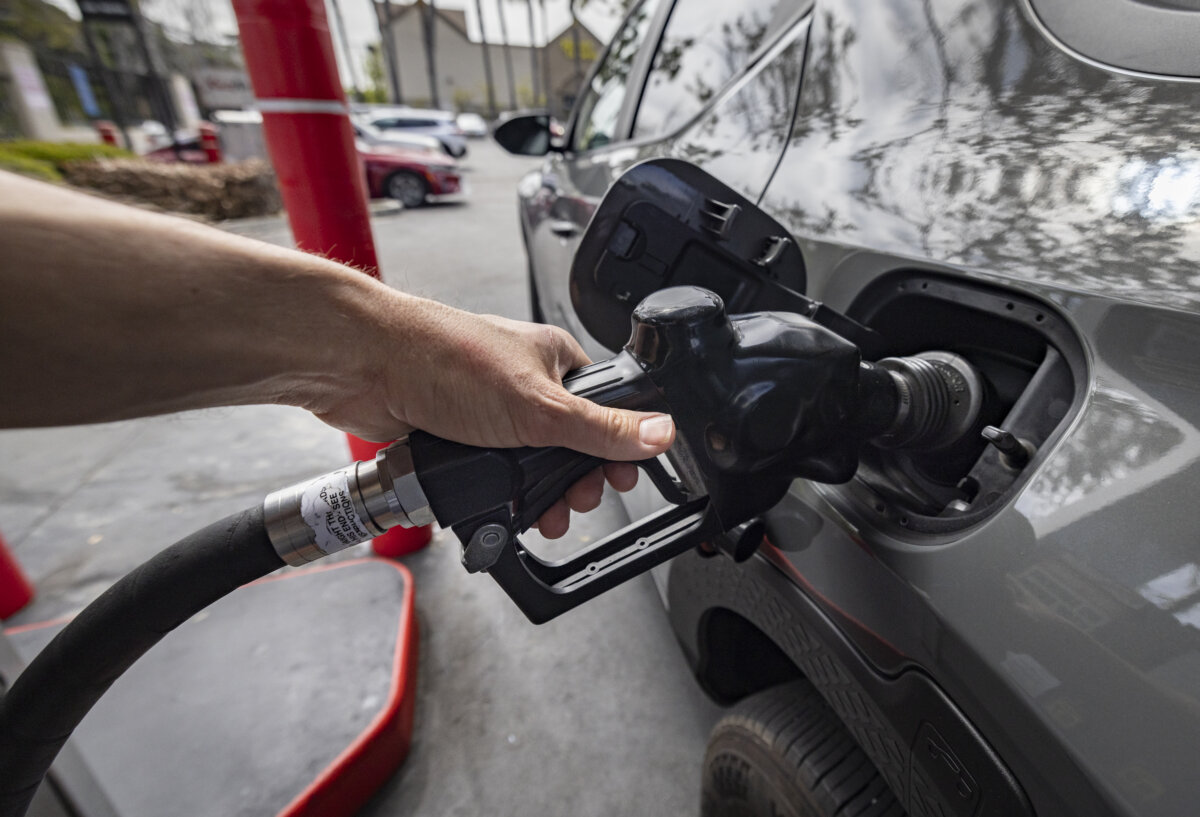
With the sudden escalation of conflict in Iran, Americans have been keeping a wary eye on the gas pump prices. Historically, there has been precedent for fuel prices to be subject to a “war premium”—a lasting price shock to the global oil market when certain Middle Eastern regions become volatile. Rising gas prices are already happening across the country.
While the Iran conflict may feel a world away, its impact on your wallet can be immediate.
The primary reason for this spike is the strategic importance of the Strait of Hormuz, a narrow waterway through which roughly one-fifth of the world’s oil passes daily. When conflict threatens this vital corridor of global energy, markets react by pricing in the risk of a shortage before a single barrel is actually lost.
However, there is a silver lining for the American consumer in 2026: Thanks to record-high domestic energy production and more efficient technology, America seems far better equipped to handle this volatility than we were during the energy crises of the 1970s. And by shifting from a passive consumer to a “strategic commuter,” you can shield your family’s finances from these global waves.
The Anatomy of a Price Spike: Why the Middle East Still Matters
To understand why an active war thousands of miles away changes the cost per gallon of gas in Ohio, we have to look at how oil is priced.
Oil is a fungible commodity, meaning a barrel from Texas and a barrel from Kuwait are part of the same global pool. When tensions rise near the Persian Gulf, global buyers become nervous. This anxiety creates a kind of speculative premium, an insurance tax that traders add to the price of every barrel just in case supply lines are cut.
History’s Lessons: 1973, 1979, and Today
Ghosts from 1970s often haunt these discussions. During the 1973 oil embargo and the 1979 Iranian Revolution, gas prices didn’t just rise; they created a national crisis.
In 1979, the national average for gas was roughly $0.86/gallon, but when adjusted for inflation, that is nearly $3.85 per gallon in 2026 dollars.
Worse than the price were the “odd/even” rationing lines that stretched for blocks, a sight that became a symbol of American vulnerability
The 2026 landscape tells a very different story of resilience. In 1979, the United States was a “price taker,” utterly dependent on foreign imports to keep the lights on. Today, America is the world’s leading energy producer, pumping out a record 13.6 million barrels of crude oil per day. We have transformed from a dependent customer into a global powerhouse.
Furthermore, the world has built “safety valves” that didn’t exist 50 years ago. Saudi Arabia and the United Arab Emirates have developed massive pipelines, such as the East-West Pipeline and the Habshan-Fujairah line, designed specifically to bypass the Strait of Hormuz. While these cannot replace every lost drop, they act as critical pressure-relief valves for the global market.
We are still connected to global prices, however. Domestic oil is still sold on the world market, but our shale natural gas industry means we are no longer facing the physical shortages of the past.
Rather than a scarcity of fuel, the challenge in 2026 might be managing costs.
Strategic Stewardship: The ‘Strategic Commuter’ Plan
Geopolitical tides in the Persian Gulf aren’t something we can control. How we navigate them is a different matter. High gas prices act as a kind of hidden tax, but proactive stewardship can help you get the most miles per drop.
Trip-Chaining as a Way to Combat Gas Prices
Instead of running separate errands throughout the week (one trip for groceries, another for the post office, and a third for the pharmacy), trip-chaining involves linking these stops into a single, logical loop. This does more than just save time; it saves fuel by reducing cold starts.
When your engine has been sitting for more than an hour, it takes significantly more energy to warm up to peak efficiency. A warm engine means you can improve your fuel economy by up to 20 percent on that afternoon’s errands (that doesn’t mean idling between stops is a good idea).
Good Maintenance Saves Fuel
Simple maintenance is often the most overlooked financial hedge. Tires that are properly inflated can reduce your gas mileage by about 0.2 percent for every drop of one pound per square inch in all four tires. Over a year of driving, maintaining the correct pressure and ensuring your air filters are clean can be the equivalent of saving $0.15 to $0.20 per gallon at the pump.
Make Fuel Loyalty Programs Work for You
Fuel loyalty programs have evolved from simple punch cards into sophisticated digital ecosystems. Many grocery chains and major retailers now offer points-based systems that allow you to stack rewards. By timing your larger household purchases with “double-point” days, you can often shave $0.50 or more per gallon off a full tank.
The Gas-Proof Emergency Fund: Building Financial Resilience
Adjusting your driving habits provides immediate relief, but any long-term security requires a structural change in how you view your household budget. If the energy market should turn more volatile, a traditional “emergency fund” often isn’t granular enough. Consider establishing a dedicated Fuel Contingency Fund,
Set aside a modest buffer, perhaps the equivalent of two full tanks of gas, in a high-yield liquid account. This creates a psychological and financial shock absorber. If prices spike due to a shocking headline in the Middle East, drawing from this specific fund to cover the difference prevents the surge from bleeding into your mortgage or grocery money.
Keep an Eye on Fuel Side Effects
Wise stewards look downstream. Rising fuel costs will eventually show up on the grocery shelf as “transportation surcharges.” One of the most effective ways to prepare for future inflation is to stock up on non-perishable goods and household essentials. Pre-loading your pantry while shipping costs are relatively stable, you effectively lock in today’s prices for tomorrow’s consumption.
The Bottom Line
We are no longer the energy-starved nation we were in 1979. Today, America is a country with greater access to resources and technology, while still maintaining the traditional work ethic needed to navigate challenges just like these.
Stewardship of your financial future is a practice to be implemented in any economy, not just when markets are soaring and the horizon looks sunny. In the end, the most powerful “energy reserve” we have isn’t buried in the ground—it’s the resilience and ingenuity generated in the American home.
The Epoch Times copyright © 2026. The views and opinions expressed are those of the authors. They are meant for general informational purposes only and should not be construed or interpreted as a recommendation or solicitation. The Epoch Times does not provide investment, tax, legal, financial planning, estate planning, or any other personal finance advice. The Epoch Times holds no liability for the accuracy or timeliness of the information provided.