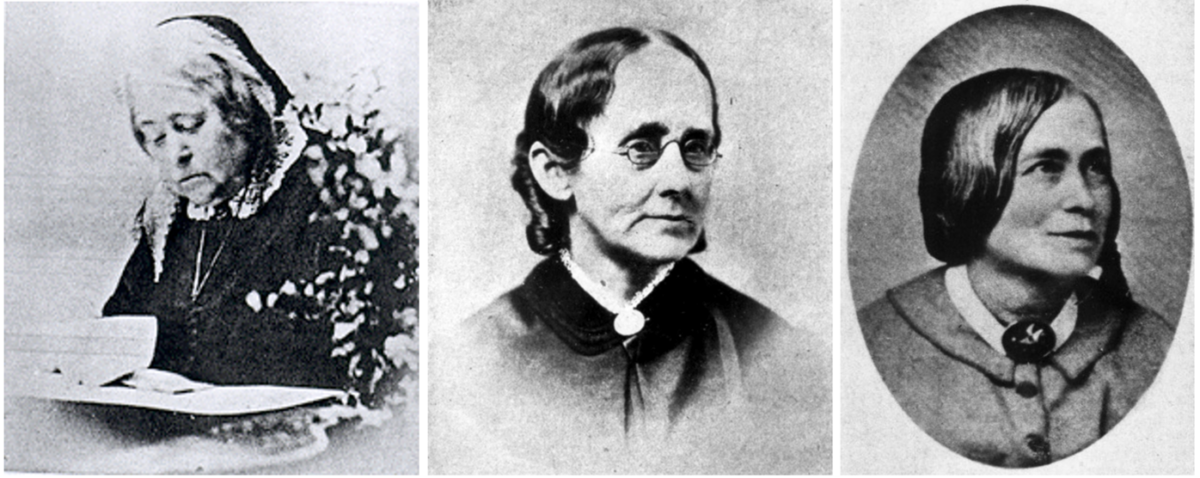
There’s an old saying that runs, “Always a bridesmaid, never a bride.” For Elizabeth Palmer Peabody, the first lady of the American Renaissance, the saying could be changed to “Always a sister-in-law, never a bride.”
While she befriended, inspired, and supported some of the leading men of letters and learning in the community she built, her younger sisters won the hands of two of New England’s most eligible bachelors.
The eldest of three sisters in a family of six, Elizabeth was a publisher, visionary, and patron of artists. Although she isn’t well-known today, she holds an important place in the history of American literature and education in the mid-19th century.
Fierce Determination
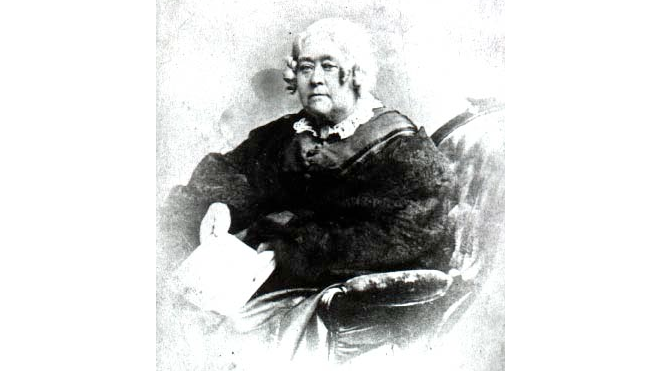
Early in life, Elizabeth realized she wouldn’t be the beauty of the family. That privilege belonged to second daughter Mary. Nor was she her mother’s favorite; that was the sickly third daughter, Sophia. She wasn’t the smartest girl in her mother’s home classroom. She failed to keep up with the prodigiously bookish (albeit two years older) neighbor child Ebe Hathorne, whom Mrs. Peabody brought over to inspire her “dull little girl.”
Born in Billerica, Massachusetts, on May 16, 1804, Elizabeth was the daughter of Eliza Peabody, a strong-minded woman who taught out of the family home, and Nathaniel Peabody, an unsuccessful doctor-turned-dentist who dabbled in homeopathy. He struggled to support the family without help from his wife and, later, daughters.
According to Megan Marshall’s 2005 biography “The Peabody Sisters,” Elizabeth was grateful to be the “first-born child in a home where the atmosphere was love.” Mrs. Peabody noted that her oldest daughter had the “firmest constitution” of all her six children. She believed this was because Elizabeth had been “born and nursed while my heart was at rest, and my hopes all of happiness.”
Eliza was determined that her daughters should be well-educated, although the family couldn’t afford the costly girls’ schools available at the day. Instead, the three Peabody sisters were tutored by their mother, who instilled in them a desire for self-improvement and self-education.
The girls learned literature, history, and languages as part of their classical studies. Elizabeth taught herself Hebrew at age 12 so she could read the Old Testament in its original language.
None other than Ralph Waldo Emerson tutored her in Greek in her teenage years. Emerson was one of the leading thinkers and writers in New England’s Transcendentalist movement; he recognized Elizabeth’s extraordinary mind when she was young.
Educator and Publisher
Elizabeth’s work centered around teaching and publishing. She started teaching at her mother’s school in Salem while still a teenager. At age 18, she established a private girls’ school in Boston. When that went out of business a year later, she became a private governess for a well-to-do family in Maine.
With the help of her sister Mary, she established a school in Brookline, Massachusetts, in 1825. They ran it successfully until a financial scandal involving a board member forced its closure in 1832.
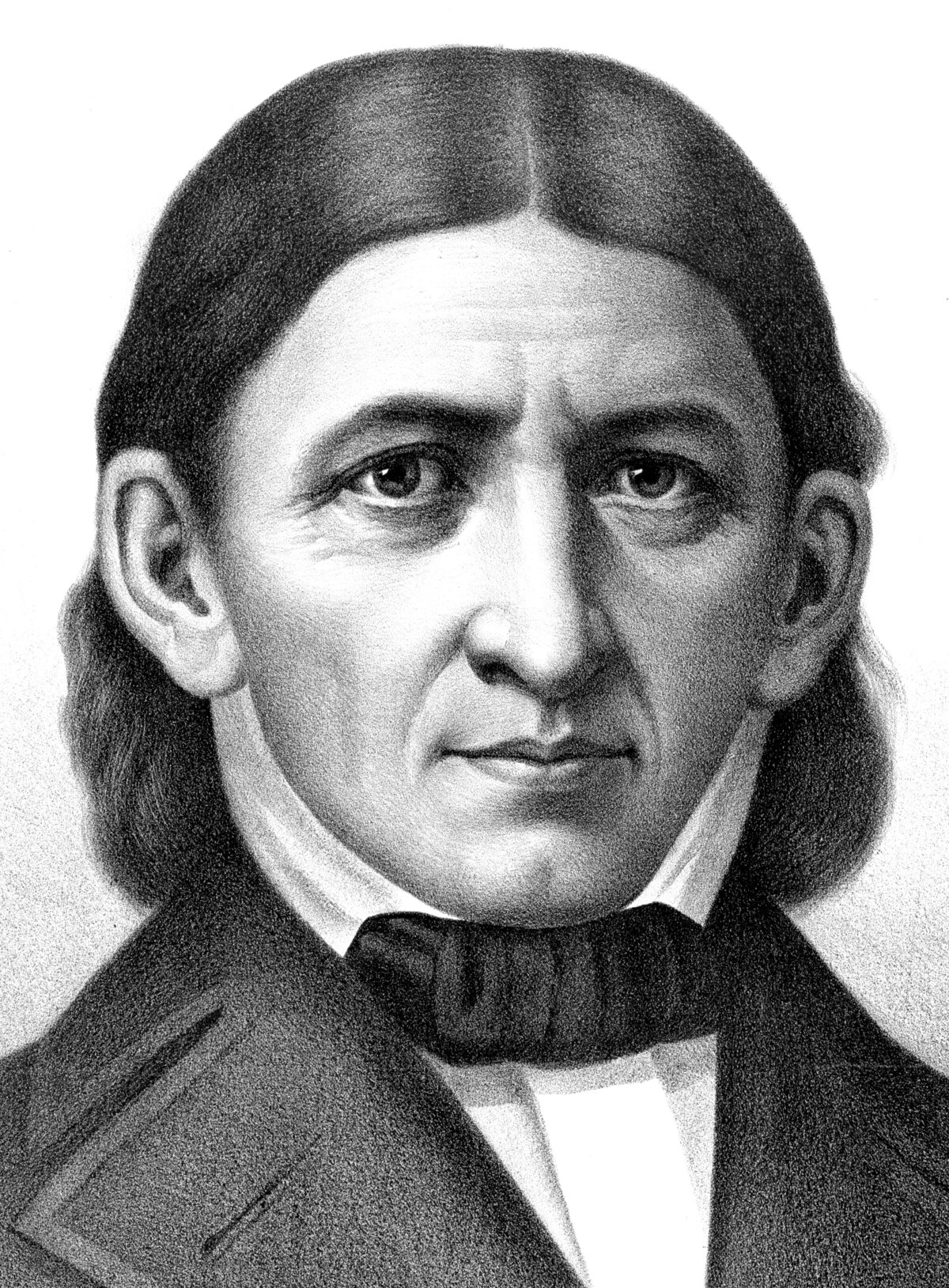
A few decades later, after Mary had been married and widowed, the sisters returned to their joint efforts on education. Together, they established the first kindergarten in the United States in 1860, following the ideas of German educator Friedrich Froebel. Elizabeth spent the last decades of her life advocating and promoting the kindergarten movement in America.
Elizabeth joined Bronson Alcott’s experimental Temple School in the late 1830s but left because of ideological differences. Afterwards, she bought a brick Federal-period row house at 13–15 West Street in Boston’s Central Business District.
This became a home for her whole family. Her parents and siblings lived there, and Sophia had a studio to create art. Elizabeth opened a lending library and established the West Street Bookstore in the front parlor in 1840. This bookstore was the first in Boston to publish foreign-language books.
The next year, Elizabeth began publishing the Transcendentalist journal, The Dial. She published many important works by prominent Transcendentalist writers, including Nathaniel Hawthorne’s early short stories and Henry David Thoreau’s “Civil Disobedience.”
Bookstore Salon
The West Street Bookstore was much more than a place to buy or borrow books. It became a place to express and exchange ideas on every topic of the day, including philosophy, literature, politics, and justice. Here, the greatest minds in the movement gathered to share their thoughts and their writings. The bookstore held evening salons where Transcendentalism flourished. It was the location where journalist Margaret Fuller’s “Conversations” was born.
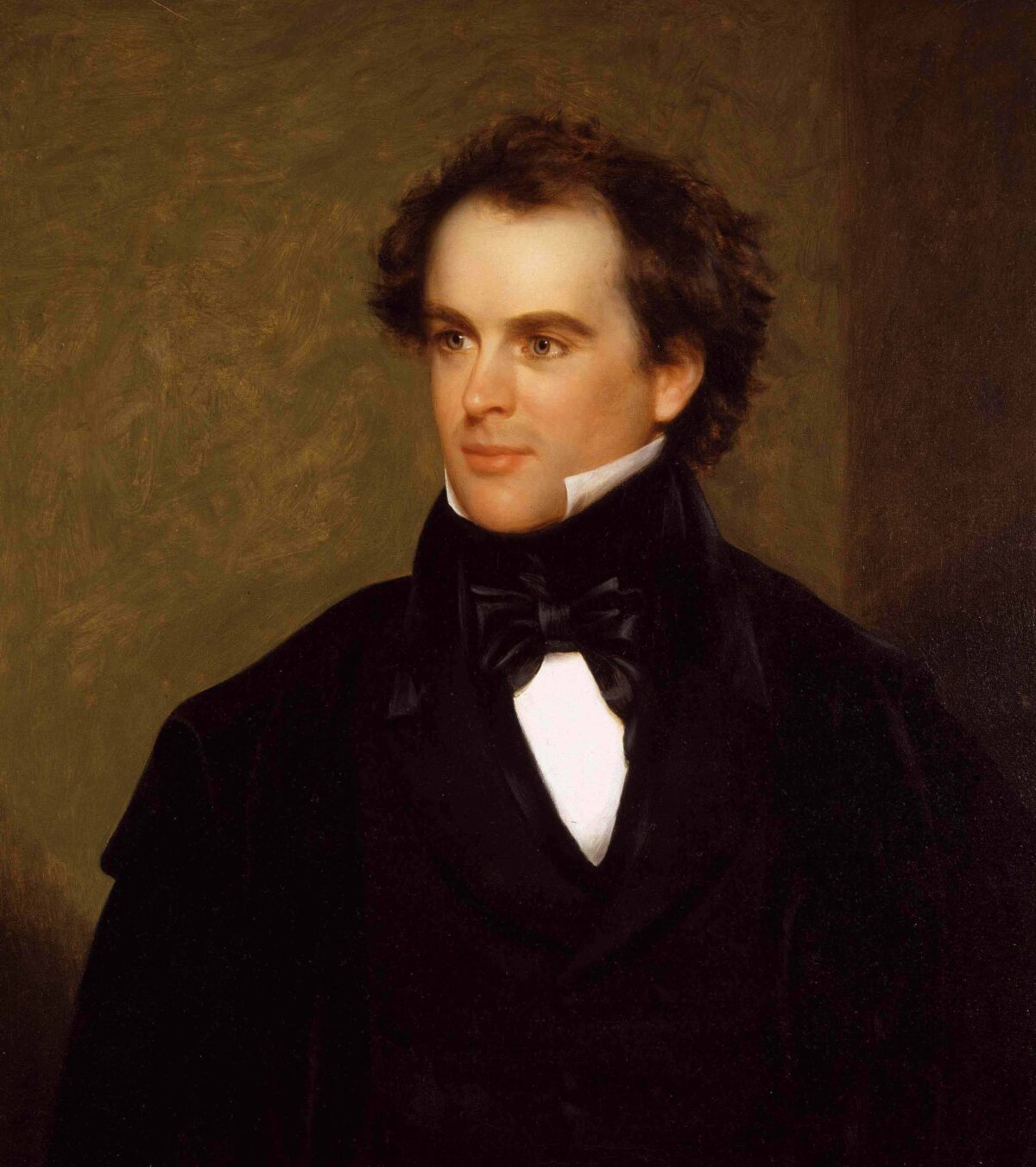
As a publisher, literary patron, and recognizer of creative genius, Elizabeth developed deep bonds with talented men. Their relationships with her often proved to be more than professional but perhaps less than honorable.
The handsome but reclusive Nathaniel Hawthorne was the same age as Elizabeth, 33, when they met in 1837. Writer Megan Marshall’s article in the New Yorker, claims she admired his charming appearance, saying “he is handsomer than Lord Byron.” She predicted his literary potential, saying he would “take his place amongst his contemporaries, as the greatest artist of his line.”
She encouraged Hawthorne’s writing, published his early stories, and introduced him to important contacts in her circle. She got him political jobs that afforded him the money and leisure time to write. Although she publicly denied ever having felt anything other than sisterly affection for him, Marshall unearthed an unpublished biography by Mary Van Wyck Church that suggests otherwise.
Elizabeth had a genuinely platonic, although deeply emotional, relationship with educator Horace Mann. She and Mary met him in 1833 at a boarding house in Brookline. The sisters offered him comfort as a grieving widower as well as intellectual companionship as like-minded Unitarians.
Mann cared deeply for her sister Mary at the time that she traveled to Cuba in 1835. According to Josephine E. Roberts’s article in The New England Quarterly, Mary doubted her Elizabeth’s assurances that Mann’s weekly visits to her parlor were motivated by nothing more than what she insisted was “a brother’s and sister’s love on both sides.” Mary returned to Boston and realized that Elizabeth had been correct; Mann had feelings for Mary.
Both Mann and Hawthorne began as Elizabeth’s beloved companions. Many assumed each was her sweetheart, if not fiancé, at one point. However, she happily stepped aside for both of her younger sisters, supporting and cherishing them as they married the two men whom she loved the most.
Elizabeth’s 89-year-long life was dedicated to caring for her relatives, educating the next generation, and promoting ideas of equality and tolerance, no matter how unpopular. She deserves to be remembered not only as an American legend but also as a shining example of sisterly love.
Please check out this amazing family that raised America to a cultural renaissance—Elizabeth, Mary, Sophia, Nathaniel Hawthorne, and Horace Mann.
What arts and culture topics would you like us to cover? Please email ideas or feedback to features@epochtimes.nyc