
Commentary
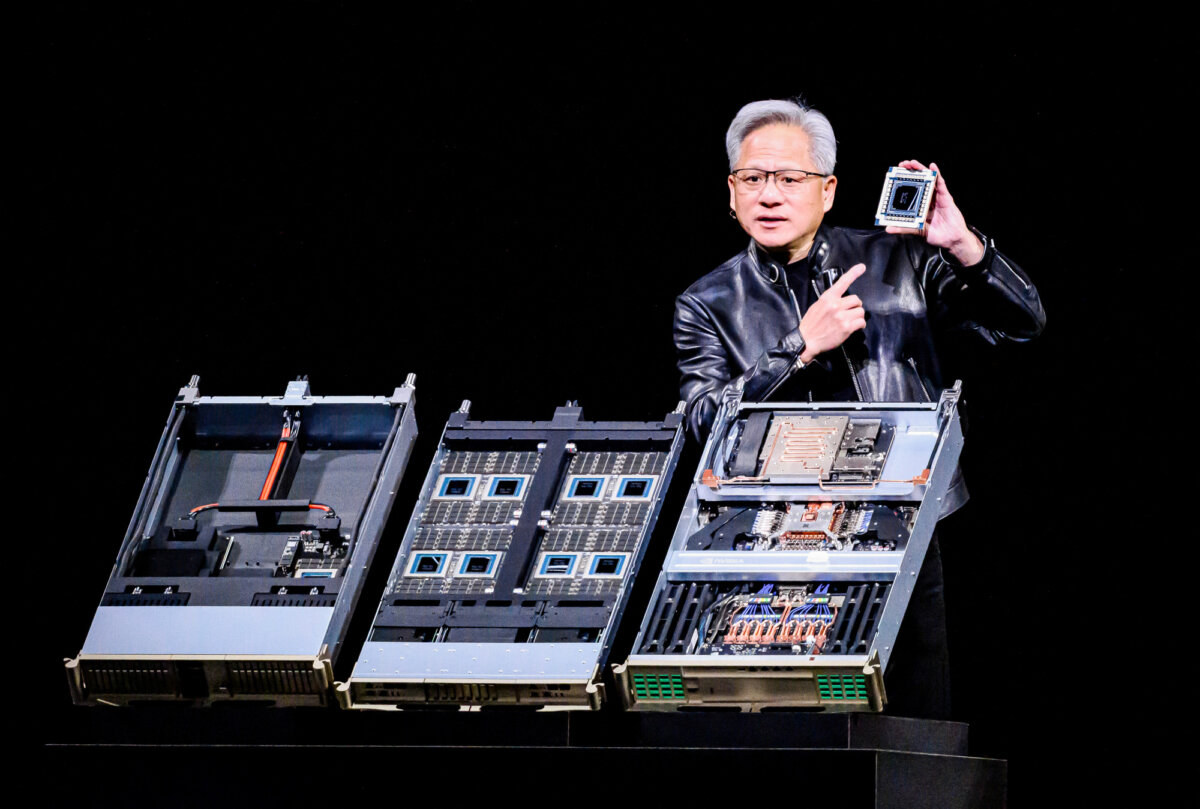
Nvidia (NVDA) provided the grand finale last Wednesday to an incredible earnings announcement season. For its latest quarter, Nvidia reported revenues up 106% to $96.2 billion. Data center revenue accounted for $89 billion, a 117% annual increase. In the past four quarters, Nvidia’s earnings surged by 118% to $53.96 billion, or $2.22 per share, compared with $24.76 billion (or $1.01 per share). The analyst community expected $2.09 per share, so Nvidia posted a 6.2% earnings surprise. Even more exciting, the company expects 70% annual revenue growth next year, well above analysts’ estimates of 45%. CEO Jensen Huang noted revenue would accelerate even faster if there weren’t a memory chip shortage. This guidance and his comment triggered a big rally in memory stocks and helped re-ignite a big rally in AI-related stocks.
The next corporate event should be Apple’s product announcement on September 9th. It is shaping up to be a potential blockbuster. Multiple sources, including Bloomberg, confirmed Apple’s first folding phone, the iPhone Ultra, will be announced then. The iPhone Ultra will include major updates to the iOS operating system, enabling iPad-like layouts and side-by-side apps, enhancing the appeal for multi-tasking.
A later milestone will be how investors react to Micron Technology’s earnings report on September 30.
Here are the most important developments recently and what they mean:
– There is a narrative out there that soaring global bond yields will derail the stock market, but that only pertains to interest-rate-sensitive value stocks, especially dividend stocks. Regarding the bond market and interest rates, I remain convinced that the Fed will not be increasing key interest rates at its upcoming Federal Open Market Committee (FOMC) meeting in September. One big reason is the Fed Chairman Kevin Warsh at Jackson Hole said that inflation isn’t meaningfully slowing and vowed to bring it back “at sufficient speed” to the Fed’s 2% goal, which he described as a “firm and fixed” target. Furthermore, Warsh said that he believed that “the wiser course was to await new information,” particularly given “possible developments in supply chains, investment flows, and geopolitics … before deciding whether a change in interest rate policy was advisable.”
– I was pleased that the Fed Chairman also talked about the AI boom and the incredible productivity gains it is unleashing. Warsh said his new task forces at the Fed are studying the impact of AI and productivity gains on the U.S. economy and implied that there appears to no negative impact (e.g., inflation). Overall, Treasury yields were not significantly impacted by the Fed Chairman’s speech, but the U.S. dollar strengthened during Warsh’s speech, so that was a positive development.
– The August payroll report that will be announced on Friday may stop interest rate speculation, since if there is another lackluster payroll report, the Fed should not increase key interest rates. Furthermore, most of the inflation is energy-related, which the Fed cannot control. Despite a flare-up in fighting between Iran and the U.S., crude oil prices typically moderate after Labor Day as worldwide demand ebbs. The drawdown in crude oil prices after Labor Day may not be as dramatic as it has been in the past since strategic crude oil inventories have been depleted around the world, so I expect crude oil prices will remain firmer than normal until inventories are replenished.
– Long-term, crude oil prices are headed lower, since President Trump recently announced the “biggest oil deal in world history” and said the U.S. has secured majority control of more than 65 billion barrels of Venezuela’s proven oil reserves. Trump said the agreement was reached through Secretary of State Marco Rubio, Secretary of War Pete Hegseth, Venezuela’s interim president Delcy Rodriguez, and private business “at no cost to the American Taxpayer.”
– The Institute of Supply Management (ISM) announced on Tuesday that its manufacturing index slipped to 54.6 in August, down from a robust 55.6 in July. Since any reading over 50 signals an expansion, the ISM manufacturing index is still very healthy and has expanded for eight consecutive months. Two components, new orders and backlog of orders, were largely responsible for most of the deceleration in the overall ISM manufacturing index. The good news is 15 of the 17 manufacturing industries surveyed reported an expansion in August.
Overall, I want investors to feel good about America, enjoy an incredible earnings environment as well as explosive GDP growth. S&P 500 earnings momentum peaked in the second quarter and will decelerate in the upcoming quarters. However, investors should not panic as the S&P 500’s earnings growth decelerates to around a 30% annual pace, since price-to-earnings (PE) ratios remain under compression. In my opinion, the stock market remains grossly undervalued relative to the bond market.
 Friends Read Free
Copy
Facebook
Tweet
Friends Read Free
Copy
Facebook
Tweet