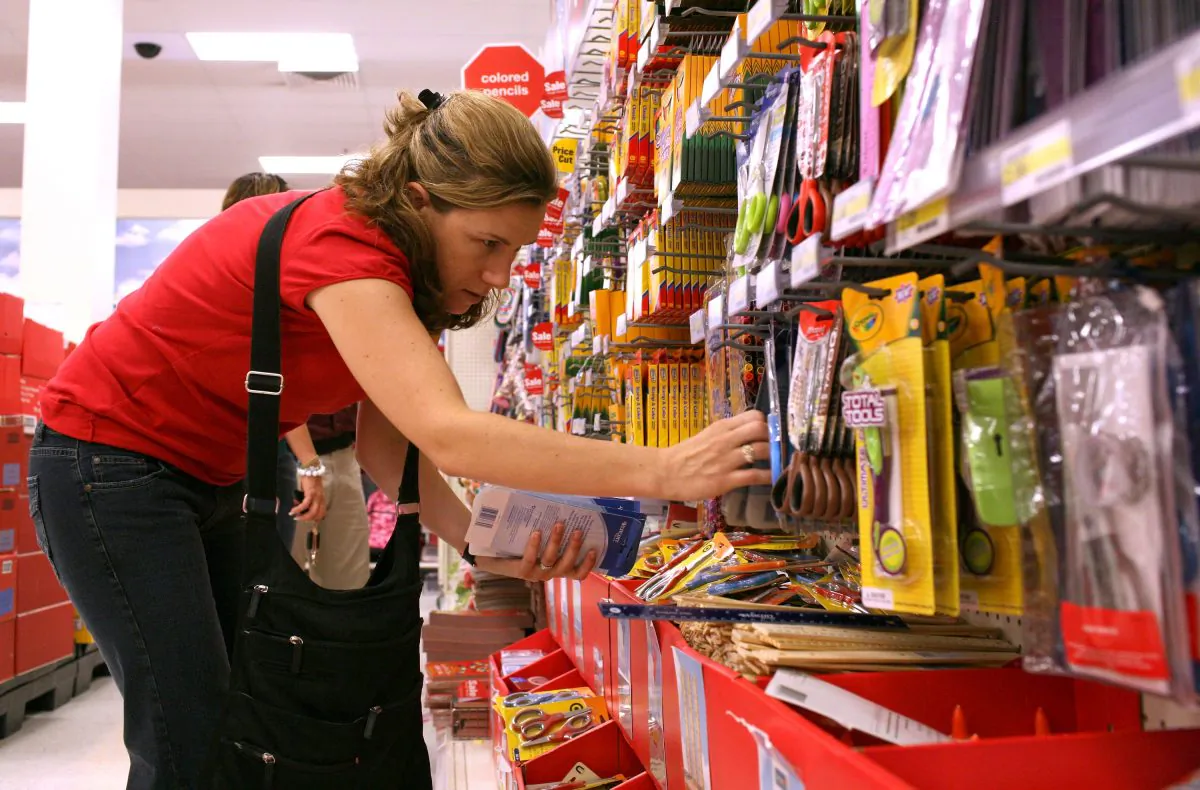

As Amazon, Walmart, and other retailers and e-commerce platforms wrap up their summer shopping events, an annual survey published on July 15 by the nation’s largest retail trade group shows that back-to-school shoppers are already stocking up well before the school year begins.
According to the survey, conducted July 1–7 by the National Retail Federation (NRF) and Prosper Insights & Analytics, two-thirds (67 percent) of back-to-school shoppers had already started buying items for the upcoming school year.
That is an increase from the 55 percent of shoppers who started early in 2024 and is the highest since NRF began tracking early shopping in 2018. A little more than half (51 percent) of back-to-school families are shopping earlier this year than they did last year, mainly because of concerns about rising prices caused by tariffs.
“Consumers are being mindful of the potential impacts of tariffs and inflation on back-to-school items, and have turned to early shopping, discount stores and summer sales for savings on school essentials,” Katherine Cullen, vice president of industry and consumer insights for the NRF, said.
Although consumers are starting their shopping earlier, NRF said most (84 percent) still had at least half of their purchases remaining. The main reasons consumers had leftover shopping include waiting for the best deals (47 percent), not knowing which items are needed yet (39 percent), or planning to spread out their budgets (24 percent).
For those looking for back-to-school deals during the summer, NRF said retailer events such as Prime Day, Walmart Deals, and Target Circle Week remained popular opportunities to make progress on shopping lists. Four in five shoppers (82 percent) planned to shop specifically for items for the upcoming school year during July sales.
As noted, the NRF survey was released three days after Amazon reported that its Prime Day 2025 was its biggest Prime Day event yet, although the Seattle-based e-commerce giant did not give further details.
“This year’s extended Prime Day event delivered incredible savings to our members across millions of deals,” Amazon Worldwide Stores CEO Doug Herrington said.
Walmart Inc., the nation’s largest retailer, ran its Walmart Deals program from July 8 to July 13, while Target’s annual Circle Week took place from July 6 to July 12 online and at local retail stores.
In its internal survey following its annual summer sales event, Walmart said on July 15 that seventy percent of its customers plan to spend more time searching for discounts during back-to-school shopping this year.
“We understand how important it is for families and teachers to save time and money when preparing for the school year,” Denise Incandela, executive vice president of fashion for Walmart U.S stores, said.
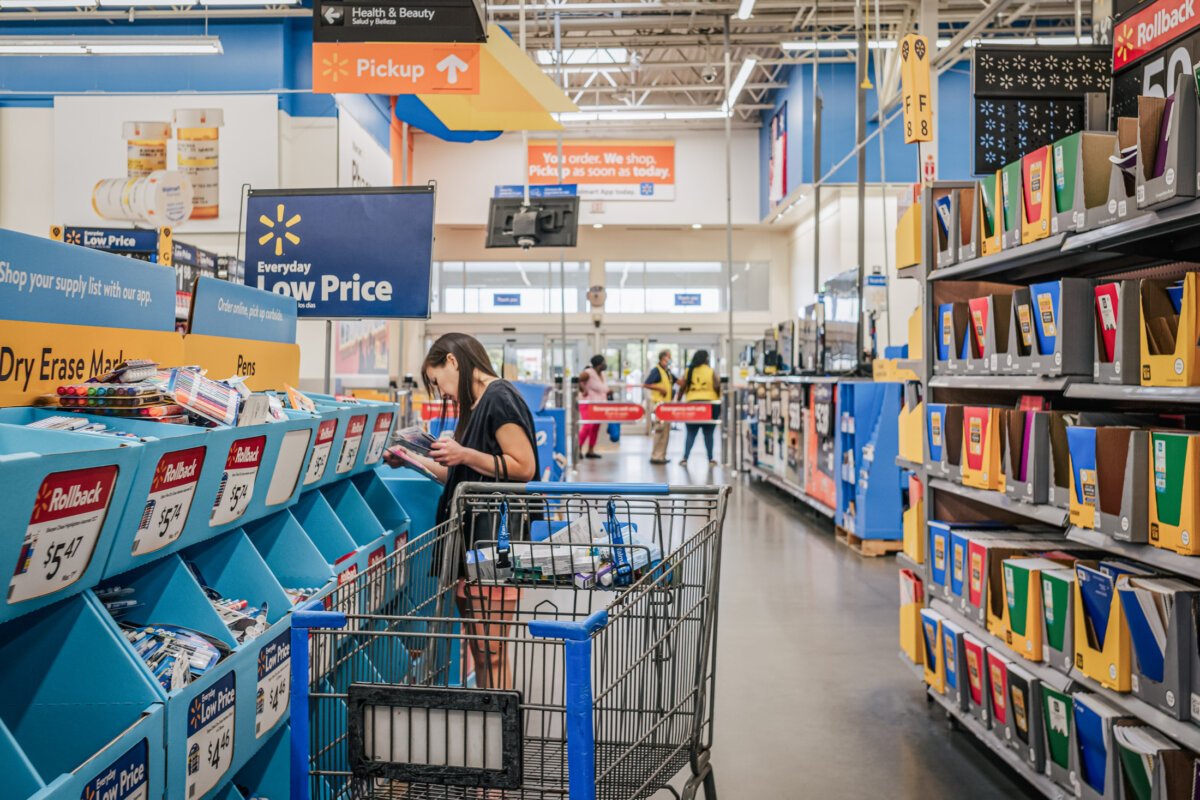 A customer shops at a Walmart store in Houston, Texas, on Aug. 4, 2021. (Brandon Bell/Getty Images)
According to NRF, families with students in elementary through high school plan to spend an average of $858 on clothing, shoes, school supplies, and electronics, down from $874 in 2024. Despite families budgeting less this year, slightly more consumers are purchasing apparel and electronics, driving expected total spending to $39.4 billion, up from $38.8 billion in 2024.
Of that total, K–12 shoppers spend an average of $295 on electronics, totaling $13.6 billion; $249 on clothing and accessories, which adds up to $11.4 billion; $169 on shoes, totaling $7.8 billion; and $143 on school supplies, amounting to $6.6 billion.
As in recent years, the most popular destinations for back-to-school shopping are online (55 percent), followed by department stores (48 percent), discount stores (47 percent), and clothing stores (41 percent).
College students and their families are planning to spend an average of $1,325, down from $1,364 in 2024. Although average per-person spending has decreased, more consumers are shopping across almost every category, bringing expected total back-to-college spending to $88.8 billion, up from $86.6 billion last year.
The top five categories for college spending include $309 on average for electronics ($20.7 billion total), $191 for dorm or apartment furnishings ($12.8 billion total), $166 on clothing and accessories ($11.1 billion total), $140 on food ($9.4 billion total) and $117 on personal care items ($7.9 billion total).
“This increase can largely be attributed to higher income households, while lower income households are pulling back across categories because of economic uncertainty,” Prosper Executive Vice President of Strategy Phil Rist said.
“Regardless of income, families want to ensure their students are set up for success. They are cutting back in other areas, using buy now, pay later or buying used or refurbished items to have everything they need for the school year.”
Since 2003, NRF has conducted a comprehensive annual survey on back-to-school shopping trends. This year’s research canvassed 7,581 consumers and listed a margin of error of plus or minus 1.1 percent.
 Friends Read Free
Copy
Facebook
Tweet
Friends Read Free
Copy
Facebook
Tweet