
U.S. exports climbed to a record high, driven by surging shipments of crude oil and other petroleum products during the first month of the war in Iran, new government data released on May 5 show.
The U.S. international trade deficit in goods and services reached $60.3 billion in March, up 4.4 percent from the previous month, according to the Bureau of Economic Analysis. February’s trade gap was adjusted a bit higher to $57.8 billion.
This came in slightly lower than the consensus forecast of $60.9 billion.
Exports jumped $6.2 billion, or 2 percent, to an all-time high of $320.9 billion.
The March gain was fueled almost entirely by shipments of goods, particularly industrial supplies and materials. Due to higher war-driven energy prices, the main contributors were crude oil ($2.8 billion), petroleum products ($1.7 billion), and fuel oil ($1.6 billion).
Amid higher demand for soybeans, exports of food, feed, and beverages increased by $1.1 billion. Conversely, consumer goods exports fell by $1.6 billion.
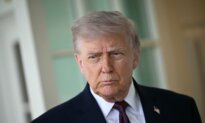
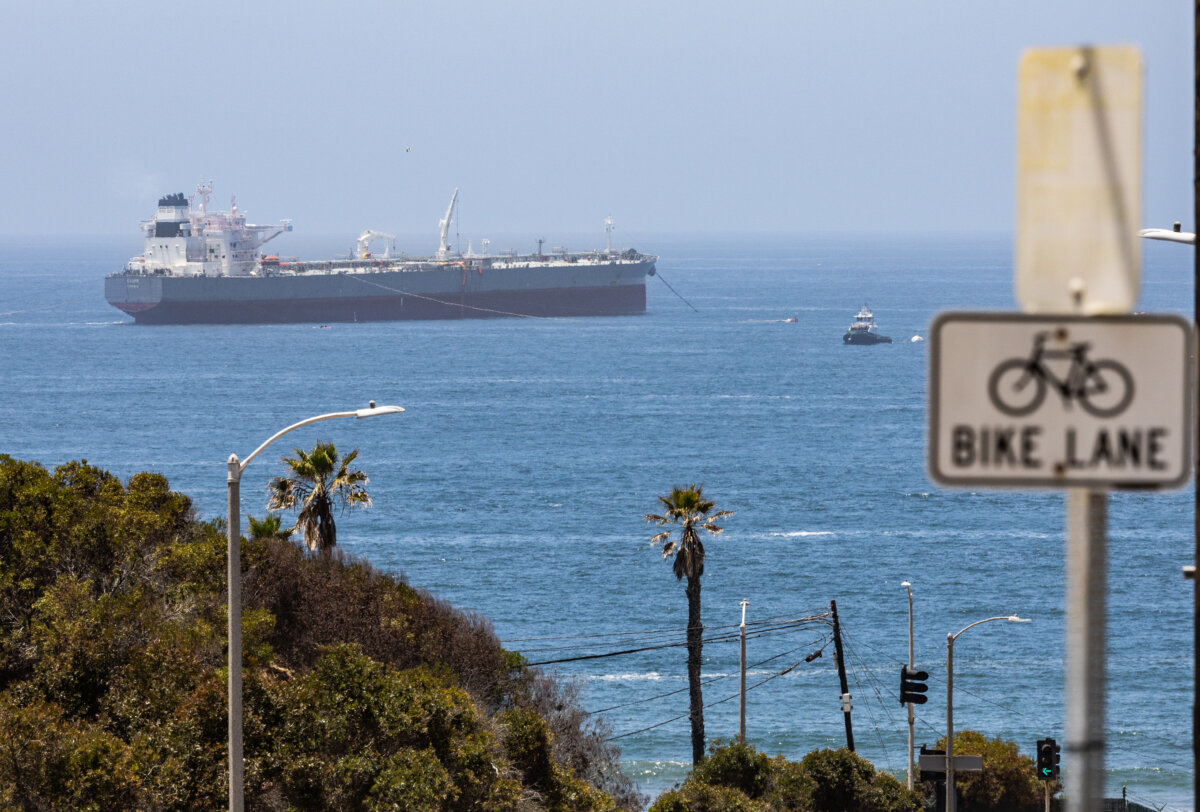
President Donald Trump recently touted the “massive numbers” of commercial vessels flocking to the United States and filling up along the Gulf Coast.
“Massive numbers of completely empty oil tankers, some of the largest anywhere in the World, are heading, right now, to the United States to load up with the best and ‘sweetest’ oil and gas anywhere in the World,” Trump said in an April 11 Truth Social post.
In recent weeks, Energy Information Administration data showed booming U.S. oil exports, reaching a record 6.43 million barrels a day.
Since the start of the Middle East conflict, the Strait of Hormuz has been shut down. The narrow waterway is a vital global chokepoint that handles about 20 percent of the world’s oil and liquefied natural gas (LNG) supply. The ongoing war in Iran—now in its 10th week—has sharply reduced Middle Eastern energy exports, and instead bolstered demand for American energy.
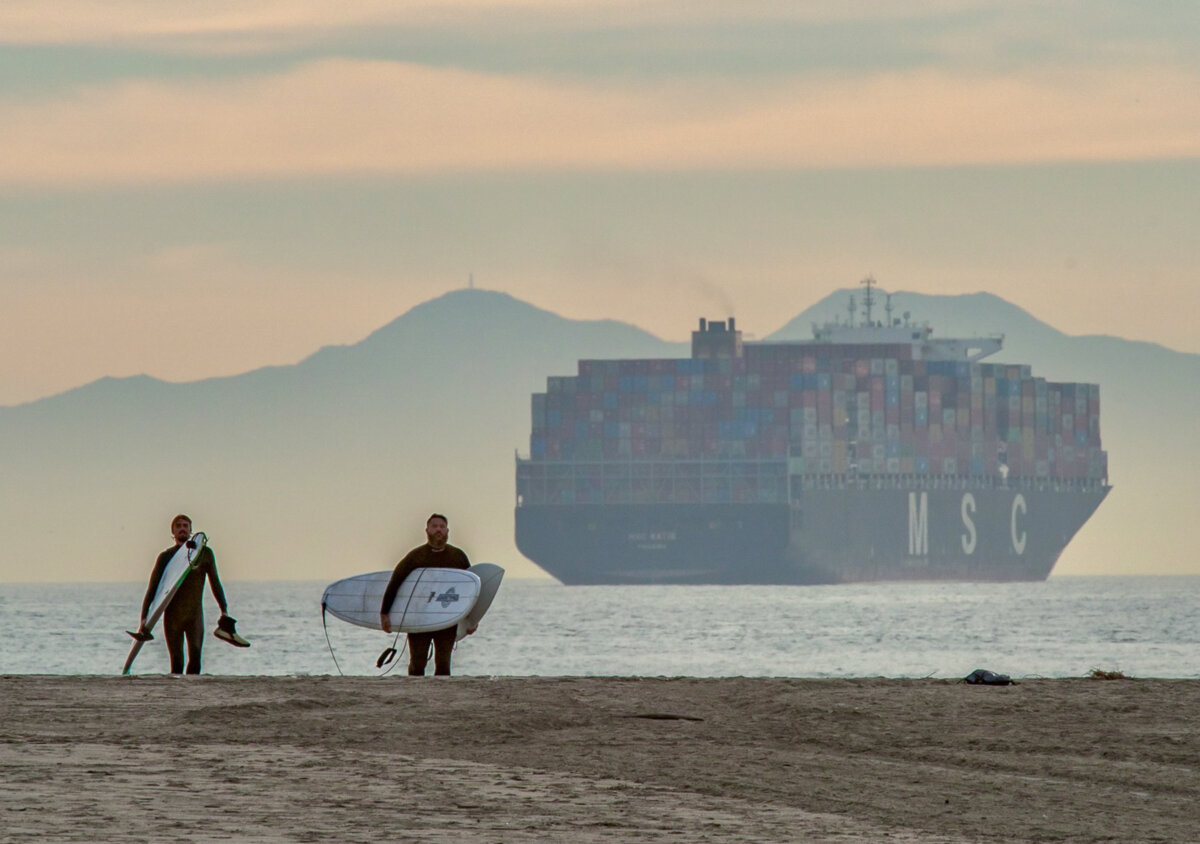
As a result, tankers have been making the trip to the southern United States for crude oil, LNG, and other petroleum products.
Data from MarineTraffic suggests vessels continue to head toward the United States.
A barrel of West Texas Intermediate—the U.S. benchmark for oil prices—remains firmly above $100 on the New York Mercantile Exchange. June futures fell about 3 percent during the May 5 trading session to around $103.
Imports Jump to 1-Year High
U.S. imports surged by $8.7 billion, or 2.3 percent, to $381.2 billion—the highest number in one year.
Goods imports represented most of the increase, surging nearly $11 billion to $302.2 billion. Automobiles, parts, and engines led the March jump, rising $3.6 billion. But consumer goods and capital goods also rose $2.4 billion and $2.1 billion, respectively.
Despite the administration’s global tariffs, imports have been steadily rising since November 2025.
The Supreme Court ruled in February that Trump overstepped his authority when he invoked the 1977 International Emergency Economic Powers to impose his tariff agenda. Trump then implemented a 10 percent global tariff.
In the meantime, the federal government will soon begin issuing tariff refunds. The Customs and Border Protection confirmed on May 4 that it estimates the start date for Automated Clearing House payments will be May 12.
Up to $166 billion in collections could be refunded to importers and shippers this year.
Last week, the president introduced a 25 percent tariff on cars and trucks from the European Union, arguing that the trade bloc is not complying with the trade agreement.
The move could pressure an already struggling European auto industry, said Ipek Ozkardeskaya, senior analyst at Swissquote Bank.
“European carmakers will struggle to replace US demand, as the US continues to restrict Chinese EV penetration. Outside these regions, markets are increasingly open to Chinese EVs, which are cheaper and often more advanced,” Ozkardeskaya said in a note emailed to The Epoch Times.
“European carmakers will remain under pressure with or without US market access—without it, the unraveling would simply be faster.”
Additionally, Trump removed tariffs on whiskey imports following a visit from the British Royal family.
The U.S. president will travel to China this month for a summit with Chinese leader Xi Jinping.
In a May 4 interview with Fox News, Treasury Secretary Scott Bessent said that Trump and Xi will center their discussions on trade, artificial intelligence, and Iran.
Bessent noted that Beijing is pressuring Iran to negotiate, but it is also exporting materials that could support Tehran’s military.
“I will say Iran is the largest state sponsor of terrorism, and China has been buying 90 percent of their energy, so they are funding the largest state sponsor of terrorism,” Bessent said.
“The threat of attacks from Iran has closed the Strait. We are reopening it. So I would urge the Chinese to join us in supporting this international operation.”
The U.S.–China monthly goods trade deficit narrowed by about $1.3 billion, to $9.756 billion.
 Friends Read Free
Copy
Facebook
Tweet
Friends Read Free
Copy
Facebook
Tweet