
The IRS and the Department of the Treasury have issued guidance on how business taxpayers can recover federal excise taxes paid on dyed fuel, a provision established under the One Big Beautiful Bill Act, the tax agency said in an April 30 statement.
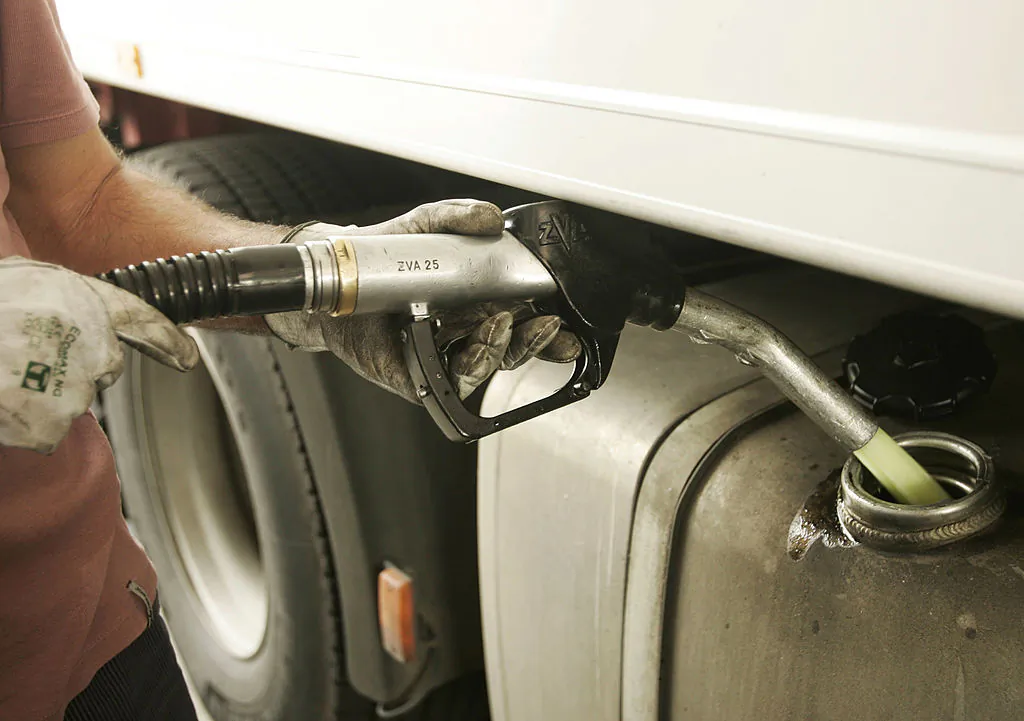
Fuels into which dyes are added to indicate they are exempt from federal or state taxes are only legally allowed to be used in vehicles for non-highway purposes, such as tractors and farm equipment, construction equipment, marine vessels, and stationary engines such as generators or welders.
The temporary regulations issued on April 30 detail “the procedures by which a taxpayer may recover federal excise taxes paid on clear diesel fuel or kerosene if that taxpayer later removed the fuel from a terminal as dyed fuel for nontaxable use,” the IRS said in a statement.
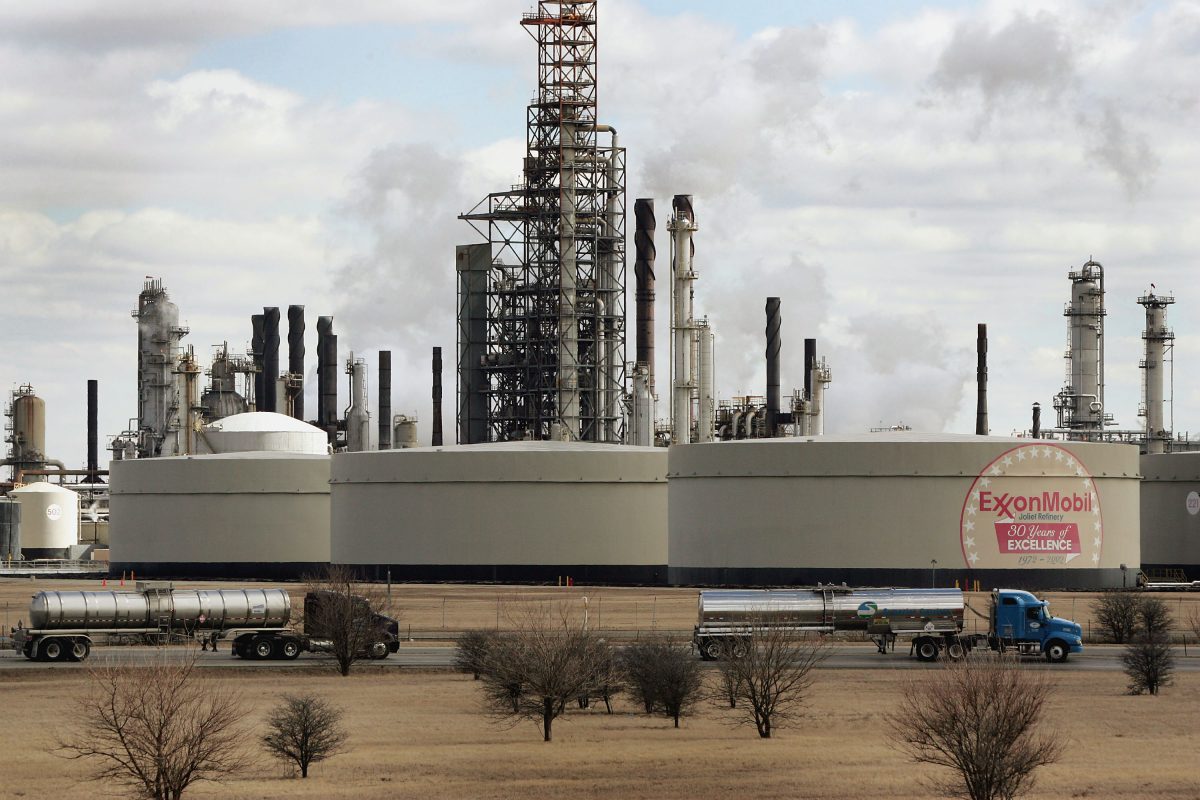
When a business removes taxable fuels from refineries or fuel terminals, it must pay an excise tax, according to a notice of proposed rulemaking published by the IRS and Treasury in the Federal Register.
In some cases, the removed fuel may later be reentered into a terminal. If this fuel is removed a second time, the business must pay excise tax on the second removal. If the fuel removed for the second time is dyed and destined for nontaxable uses, no excise tax would apply to the second removal.
Business taxpayers had no option to claim a refund for the excise tax paid during the first removal. The One Big Beautiful Bill Act, signed by President Donald Trump in July 2025, changed this, allowing a taxpayer to recover the excise tax paid.
In its statement, the IRS said that taxpayers can now submit claims for tax recovery provided the dyed fuel was “previously taxed, and the tax was not credited or refunded.”
The fuel must be “indelibly dyed by mechanical injection and removed from an approved terminal for a nontaxable use on or after Dec. 31, 2025,” it said, adding that to claim a refund, “the claimant must be the taxpayer that paid the prior fuel excise tax imposed on such fuel.”
The IRS said the temporary regulations are effective immediately.
“They will expire no later than 3 years from today’s effective date and will be replaced with permanent regulations,” the agency added.
Clean Fuel Credits
In February, the IRS and the Treasury proposed regulations on tax credits for businesses producing clean fuels, such as biofuels.
The One Big Beautiful Bill Act extended the applicability of a clean fuel production credit, referred to as 45Z, through to 2029. The fuel credit was originally applicable for 2025–2027.
To qualify for the credit, the clean fuel must be manufactured at qualified facilities in the United States. All fuel manufactured after Dec. 31, 2025, should come from feedstock grown or produced in the United States, Mexico, or Canada. For fuels produced after Desc. 31, 2025, credits are calculated at a rate of either $0.20 or $1 per gallon.
The move was welcomed by the American Soybean Association and the National Oilseed Processors Association, which said it would benefit the domestic biofuel chain, according to a Feb. 3 statement.
The Trump administration is also tackling a fuel emission regulation that has burdened farmers.
The policy relates to the diesel exhaust fluid (DEF), which has been used in almost all on-road diesel trucks and several types of non-road equipment, such as tractors, since 2010 as part of selective catalytic reduction systems to reduce the emission of nitrogen oxides, according to a notice from the Environmental Protection Agency (EPA), updated on March 30.
These systems can force a vehicle to “drastically” reduce speed or even stop working if the DEF runs out or if the catalytic system’s sensors fail.
“Although this derate strategy was intended to ensure compliance with EPA’s Tier 4 Emissions Standards (on-highway, nonroad), it has caused needless frustration, operational delays, and real economic hardship for countless farmers, truckers, and equipment operators,” the EPA states on its website. Derating is the purposeful reduction of equipment power output.
To resolve the issue, the agency said it “is issuing guidance to manufacturers for how they may modify DEF systems on new and existing diesel vehicles and nonroad equipment to reduce derates that can limit a vehicles performance to nearly inoperable levels (as low as five miles per hour).”
 Friends Read Free
Copy
Facebook
Tweet
Friends Read Free
Copy
Facebook
Tweet