
The spring real estate market may be showing signs of stabilization as both buyers and sellers step off the sidelines and get back into the game, according to a new report.
In its May 12 report, real estate brokerage Redfin noted that the gap between the number of home sellers and buyers narrowed in April due to an improving labor market. The agency estimated there were 46.5 percent more sellers than buyers in the month, down from 47.5 percent in March and a recent peak of 48.9 percent in December 2025.
Redfin still characterizes the current market as a buyer’s market, but no longer a “strengthening” buyer’s market.
“Homebuyer demand has been dwindling for months, but finally ticked up in April thanks to a strengthening job market and declining recession risk,” Redfin senior economist Asad Khan said in the report. “If the number of buyers continues to grow, more homeowners may see it as an opportunity to list their homes, helping bring the market out of this deep freeze.”
Earlier this month, the Bureau of Labor Statistics reported that employers added 115,000 jobs in April, well above consensus estimates of 62,000.
Redfin defines a buyer’s market as one where there are 10 percent more sellers than buyers. These markets tend to offer potential homeowners more negotiating power, as more home choices are available. Conversely, a seller’s market is one in which there are 10 percent fewer sellers than buyers. Markets where the gap is within 10 percent in either direction are considered balanced.
With an influx of buyers this spring, Redfin contends that buyers’ negotiating power may have passed its peak.
“Of course, it’s only a buyer’s market for those who can afford to buy,” the report states.
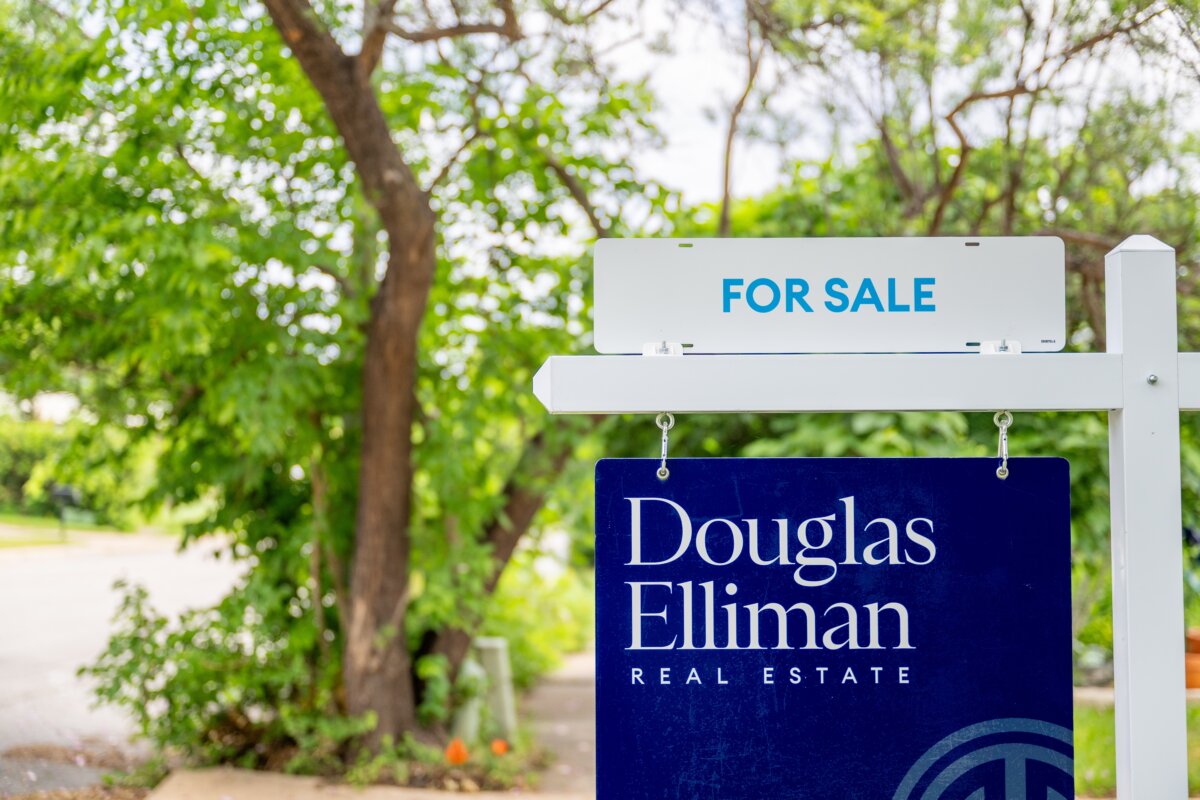
An estimated 1 million homebuyers entered the market in April, according to the report, representing a 2 percent uptick from March—the largest increase in 13 months. Meanwhile, nearly 1.5 million homeowners put up a “for sale” sign, rising by 1.3 percent month over month. Redfin attributed the influx of sellers to homeowners who delisted their properties last year and are now reentering the spring market.
While buyers’ markets dominated in 34 of the 49 major metro areas analyzed, the report indicates that the gap is beginning to shrink in at least 19 markets. These included West Palm Beach, Florida, where there were 80.2 percent more sellers in April—a drop of 10.2 percent from March and the biggest decline among those metro areas. Other markets, including Anaheim, California, and Austin, Texas, also reported narrowing gaps.
Nassau County, New York—part of Long Island—was the strongest seller’s market in April, with 28.4 percent fewer sellers than buyers.
Bianca D’Alessio, a broker with Nest Seekers International in Manhattan, believes that Nassau County and much of the New York City metro area will remain a strong seller’s market for the near future.
“Even with affordability challenges and elevated interest rates, we are still seeing a significant imbalance between supply and demand across many parts of the region,” she told The Epoch Times. “That said, I do think we will begin to see a gradual normalization over the next 12 to 18 months as more inventory comes to market and buyers become increasingly price sensitive.”
D’Alessio noted that pricing in prime locations is likely to remain resilient, with many buyers willing to pay premium prices for value, quality, and desirability.
“I think we will continue to see upward pressure on pricing in undersupplied markets, but the days of buyers indiscriminately paying any number are behind us.”
Additional sellers’ markets included Newark and New Brunswick, New Jersey; Providence, Rhode Island; Milwaukee, Wisconsin; and San Francisco, California.
Miami was April’s strongest buyer’s market, with an estimated 137 percent more sellers than buyers. Nashville followed with 125 percent more sellers, and San Antonio and Houston, Texas, came next with 112 percent and 108 percent more sellers, respectively.
According to the report, the popularity of the Sunbelt during the pandemic led builders to ramp up inventory to meet the increasing demand for housing. Today, due to rising home costs and interest rates, the buyer pool has diminished.
Historically, Redfin noted, Florida and Texas have led the nation in home building. Florida has also been dealing with rising insurance costs due to natural disasters, as well as rising condo fees, causing some homeowners to leave.
 Friends Read Free
Copy
Facebook
Tweet
Friends Read Free
Copy
Facebook
Tweet