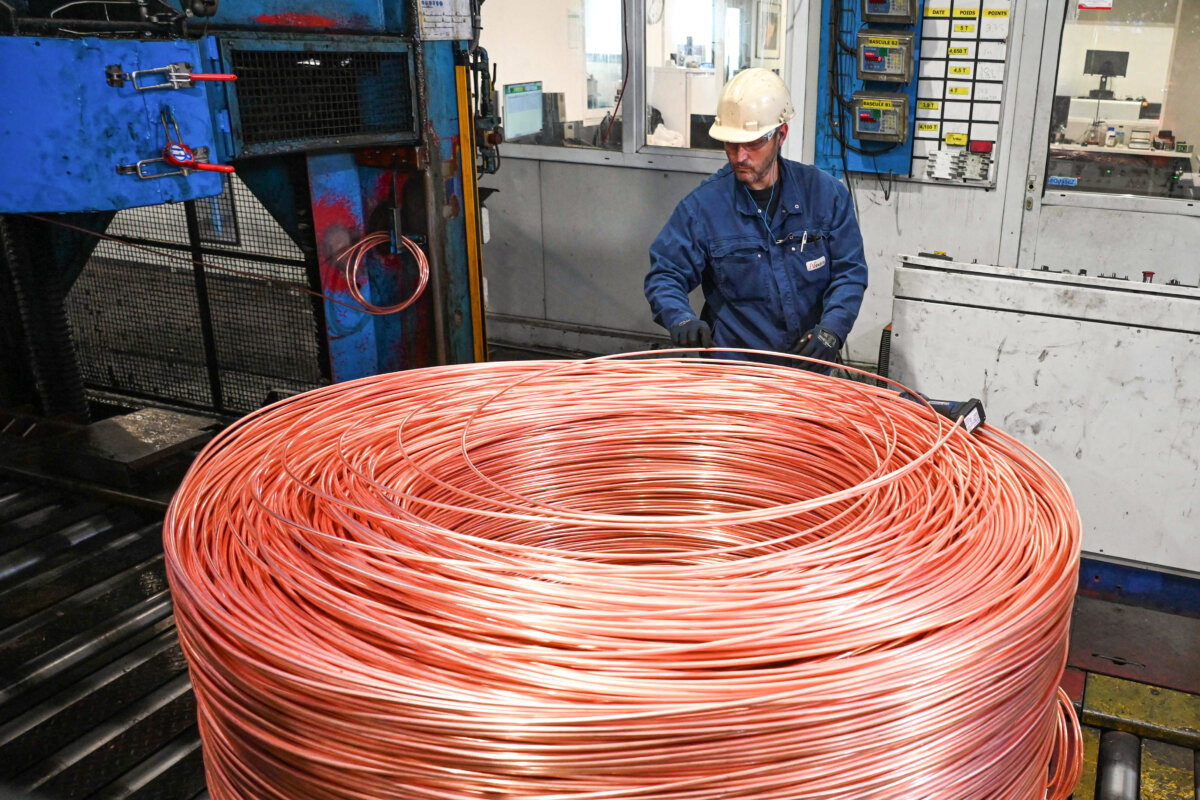

Copper prices finished 2025 slightly lower, following a massive year for the red metal.
The industrial metal fell about 2 percent to around $5.67 per pound on Dec. 31, joining the broader metal market decline.
Exchange operator CME Group, one of the world’s largest trading floors for commodities, raised the margins on precious metal futures for the second time this week as prices rocketed during the holiday trading season. The metals market sold off, rebounded the next day, and then tanked during the final session of the year.
Still, copper registered a solid annual performance, rallying 41 percent—the biggest gain since 2009—and flirting with all-time highs.
Nicknamed Dr. Copper, the red metal has typically been viewed as a barometer for the economy’s health.
The broader economy has performed well over the past year. After a first-quarter contraction, real GDP growth reached 3.8 percent in the second quarter and 4.3 percent in the third quarter. If the Federal Reserve Bank of Atlanta’s GDPNow Model estimate for the final quarter—3 percent—is accurate, then the economy expanded 2.8 percent, surpassing economists’ expectations.
Both economic growth and copper’s massive increase have been supported in part by the buildout of artificial intelligence (AI) infrastructure, particularly hyperscale data centers.
AI infrastructure, whether cooling systems or backup power systems, requires substantial amounts of electricity, thereby bolstering the demand for copper wiring.
Traders, meanwhile, also used copper as another AI-related play, be it futures or mining stocks.
But while demand is accelerating, investors worry about tight global supplies. In the United States, there have been mine outages, smelter cutbacks, and concentrate shortages. In addition, due to new U.S. tariffs, domestic stockpiling has increased.
This past summer, the Trump administration introduced a 50 percent levy on semifinished and intensive copper-derivative products. The White House exempted refined copper from import duties, but this could change when the administration revisits the refined copper market in June and considers a universal metal tariff.
“The potential for new tariffs on imports of refined copper, combined with production disruptions, and surging demand by power grids, data centers, and electric vehicles has helped U.S. copper prices climb to multi-month highs,” Adam Turnquist, chief technical strategist for LPL Financial, said in a note emailed to The Epoch Times.
Other factors further added to copper’s ascent, including falling interest rates and a weaker U.S. dollar.
While lower interest rates diminish the opportunity cost of holding non-yielding bullion, they simultaneously ease financial conditions, which can stimulate business expansion and investment demand.
The U.S. dollar is expected to post its worst annual performance in more than 20 years. This could make dollar-denominated commodities cheaper for foreign investors to purchase.
Outlook for 2026
Looking ahead to the new year, opinions are mixed on whether copper can continue its bull run.
Waning fears of a global economic downturn could further support copper prices, says Tom Essaye, president and co-founder of The Sevens Research Report.
“Looking ahead, the fresh record closing highs in copper leave the technical path of least resistance higher, while fundamentals remain skewed in favor of the bulls as global supply concerns are offsetting dwindling worries about an economic downturn in 2026,” Essaye said in a note emailed to The Epoch Times.
Stronger demand from China, one of the world’s largest consumers, could also play a significant role in the coming months, says Gregory Shearer, head of Base and Precious Metals Strategy at JP Morgan Chase.
Historically, copper price spikes have softened domestic consumption in China, encouraging smelters to push excess output abroad. However, Beijing could be forced into “increasingly buy into stronger copper prices.”
“More acute supply disruptions are likely here to stay for multiple quarters at the very least, which we think limits China’s ability to fully wait out higher prices,” Shearer said in a Nov. 28 research note.
“Moreover, we are already tracking a rollover in Chinese refined copper production and there still remains significant potential that Chinese smelters find themselves short of units of copper raw material, driving a long-hypothesized reversal in refined production growth.”
But analysts at Goldman Sachs Research believe copper prices could start to fall from their recent highs in 2026.
Despite concerns about supply tightness, they expect the global market to record a surplus in 2025. As next year progresses, the copper market may inch closer to balance.
“While our much smaller 2026 surplus of 160kt [kilotons] moves the market closer to balanced, it means that we do not expect the global copper market to enter a shortage anytime soon,” Goldman Sachs Research analyst Eoin Dinsmore said in a Dec. 11 research note.
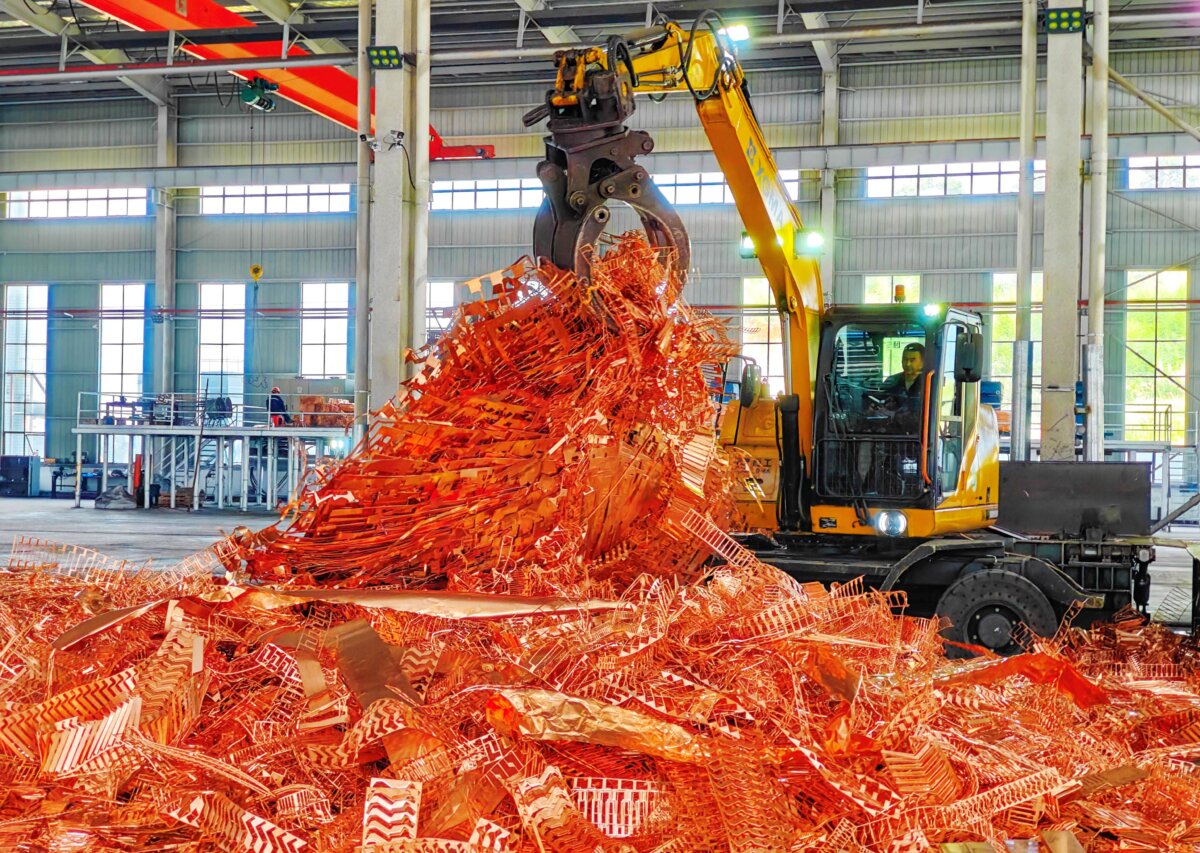
By 2029, the global copper market could slip into a deficit, “pushing prices higher—which is expected to incentivize the development of new copper supply (mainly by extending the life of mines, but also through more scrap use) and also to curtail demand,” Dinsmore said.
 Friends Read Free
Copy
Facebook
Tweet
Friends Read Free
Copy
Facebook
Tweet