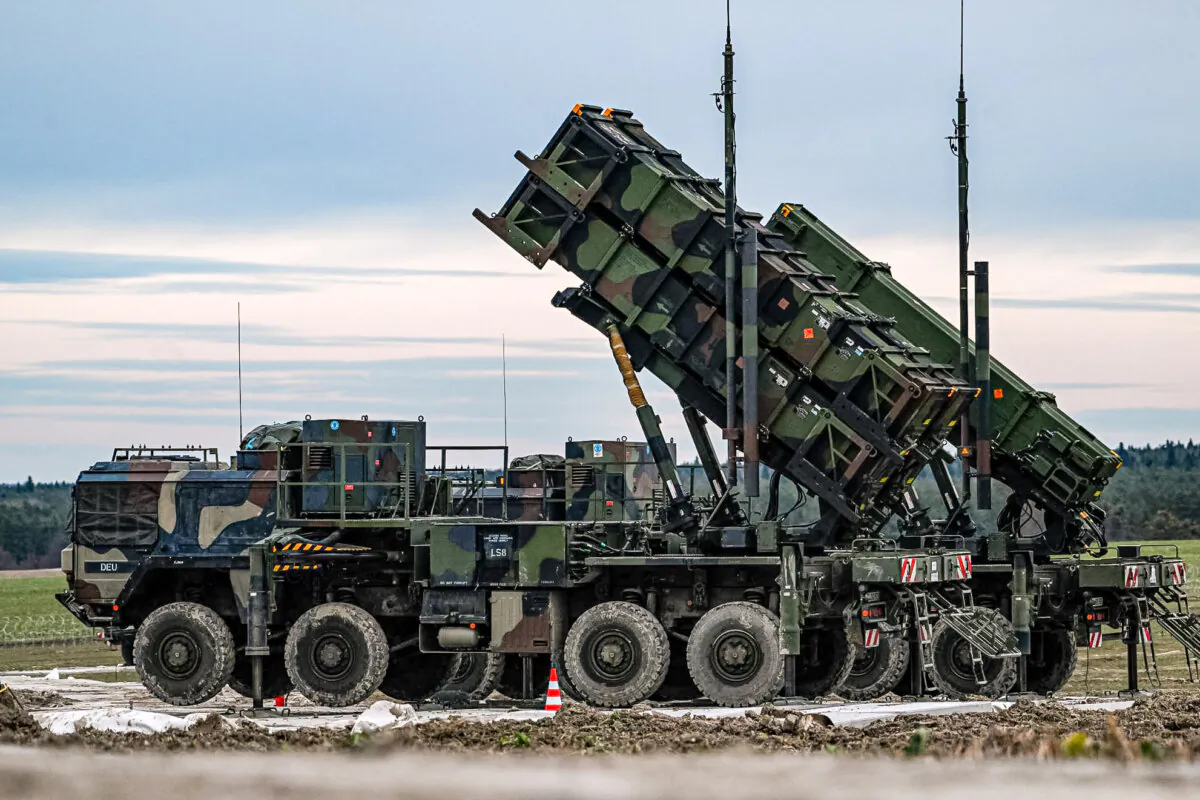

The U.S. Department of War (DOW) and Lockheed Martin on Jan. 6 announced a strategic seven-year partnership to significantly expand production of Patriot surface-to-air missiles, a key component of President Donald Trump’s Golden Dome missile defense initiative.
The Golden Dome Initiative, announced in May 2025, would create a next-generation missile defense system to protect America from overseas nuclear missile attacks. Under the agreement, Lockheed Martin will expand annual production capacity for PAC-3 Missile Segment Enhancement (MSE) interceptor missiles—capable of destroying incoming intercontinental ballistic missiles in midflight—from 600 to 2,000.
Lockheed Martin said it has already increased production of PAC-3 MSEs by 60 percent over the past two years, and delivered 620 Patriot missiles in 2025. The production increase aligns with long-term demand from the U.S. military, partner nations, and allies, and marries the interests of Lockheed Martin with those of the federal government, according to the DOW.
“This framework agreement marks a fundamental shift in how we rapidly expand munitions production and magazine depth, and how we collaborate with our industry partners,” Michael Duffey, under secretary of war for acquisition and sustainment, said in a statement.
“Lockheed Martin’s willingness to help pioneer this transformative acquisition model is a win-win for the taxpayer, our national security, and the rebuilding of the industrial base needed for the Arsenal of Freedom.”
The strategic partnership comes on the second day of Secretary of War Pete Hegseth’s multistate “Arsenal of Freedom” tour to drum up support for U.S. industrial defense manufacturers, which kicked off on Jan. 5. Hegseth opened the week with a speech at the enormous Huntington Ingalls Industries (HII) shipbuilding facility in Newport News, Virginia. HII is the nation’s largest military shipbuilder, and its Newport News division is currently constructing two nuclear-powered Ford-class aircraft carriers.
“We’re deploying cutting-edge technologies at a speed that’s not been seen in generations, and we’re making historic, multigenerational investments in the capabilities that we will need to dominate the future fight at a level of urgency that must match the urgency of the moment,” Hegseth told a crowd of shipbuilders and HII executives.
The DOW said the agreement with Lockheed allows the company and the department to share the advantages of enhanced profitability resulting from production increases. Lockheed Martin, meanwhile, noted that the framework of the agreement ensures its capability to meet long-term munitions production demand, heightens industry investment, and drives new operational efficiencies through a collaborative financing approach that helps it preserve capital.
The DOW also said it will work with various manufacturers who supply Pac-3 missile components to ink seven-year contracts to ensure Lockheed is able to meet the ramp-up in production capacity. The strategy will be applied to a range of future munitions contracts that, pending Congressional approval, will replenish national stockpiles and strengthen America’s defense industrial base, the DOW said.
“We appreciate the Department of War’s leadership in advancing acquisition reform,” Jim Taiclet, Lockheed Martin’s chairman, president and CEO, said in a statement.
“This first-of-its-kind approach builds on years of advocacy and collaboration to bring commercial practices to major acquisition programs. We will create unprecedented capacity for PAC-3 MSE production, delivering at the speed our nation and allies demand while providing value for taxpayers and our shareholders.”
 Friends Read Free
Copy
Facebook
Tweet
Friends Read Free
Copy
Facebook
Tweet