
The Strait of Hormuz, a narrow waterway in the Middle East connecting the Persian Gulf with the Gulf of Oman and the Arabian Sea, has continued to make headlines over the past week, as Iran has attacked and threatened oil tankers passing through the strait.
However, more than oil could be at stake in that narrow passage bordering Iran to the north.
“Fertilizer is getting its 15 minutes of fame right now,” Joshua Linville, vice president of fertilizer at StoneX, a global financial services firm, said.
Key Passage for Fertilizer Export
Linville spoke with Siyamak Khorrami, host of The Epoch Times’ “California Insider,” in an interview published March 14 about the Iran War’s possible impact to fertilizer supply and how it could ultimately affect the food supply and food prices.
He noted that three of the top 10 global leading exporters of urea and anhydrous—essential nitrogen sources used to produce fertilizers—are based in Saudi Arabia, Qatar, and Iran.
According to a March 11 report from the Center for Strategic and International Studies, 20 to 30 percent of global fertilizer exports, including 35 percent of urea, passed through the Strait of Hormuz in 2023. Meanwhile, about 20 percent of global liquefied natural gas—a major raw material for synthetic nitrogen fertilizers—was transported through the strait.
“And while we might all focus on oil and gas and things like that, those aren’t things that you can eat,” Linville said.
“All of a sudden, the world is quickly starting to find out just how important this corridor is because at the end of the day, without fertilizer, we’re not growing the crops, and we have a significantly bigger humanitarian issue at the end of this thing.”
Just as gas and oil production could slow down without ships coming and going, Linville said, the same thing may happen to fertilizer production.
The China Factor
Linville said that there had been issues with fertilizer exports even before the U.S.-Israeli strike against Iran. China, another one of the world’s largest exporters of urea and phosphate—a chemical compound used in fertilizer production—reduced its usual exports of close to 5.5 million tons per year to increase domestic supplies and keep those costs lower, according to StoneX data.
“Immediately after the attack, we take three of the biggest exporters of urea and anhydrous off the table because they can’t flow their product through the Strait of Hormuz,” Linville said.
Meanwhile, he noted that India—another larger producer of urea—may have to scale back its production because of a lack of gas.
“All these other markets that feed into that fertilizer production are starting to have an impact, and that’s why we’re seeing prices up,” he said.
While Linville acknowledged that grain prices are still lower than in the spring of 2022—when the Russian-Ukrainian war broke out—from a farmer’s perspective, the impact of rising fertilizer prices could be significant.
Critical Moment in Planting Season
Delays in receiving fertilizer could also have an adverse impact on crops.
“You have a port opening for a loading, and you get that thing loaded out to water as soon as you can—and it’s still 30 days before the vessel reaches North America,” Linville said.
“It’s probably another three to four weeks before that product comes from the coast to the inland point where it’s available to the farmer.”
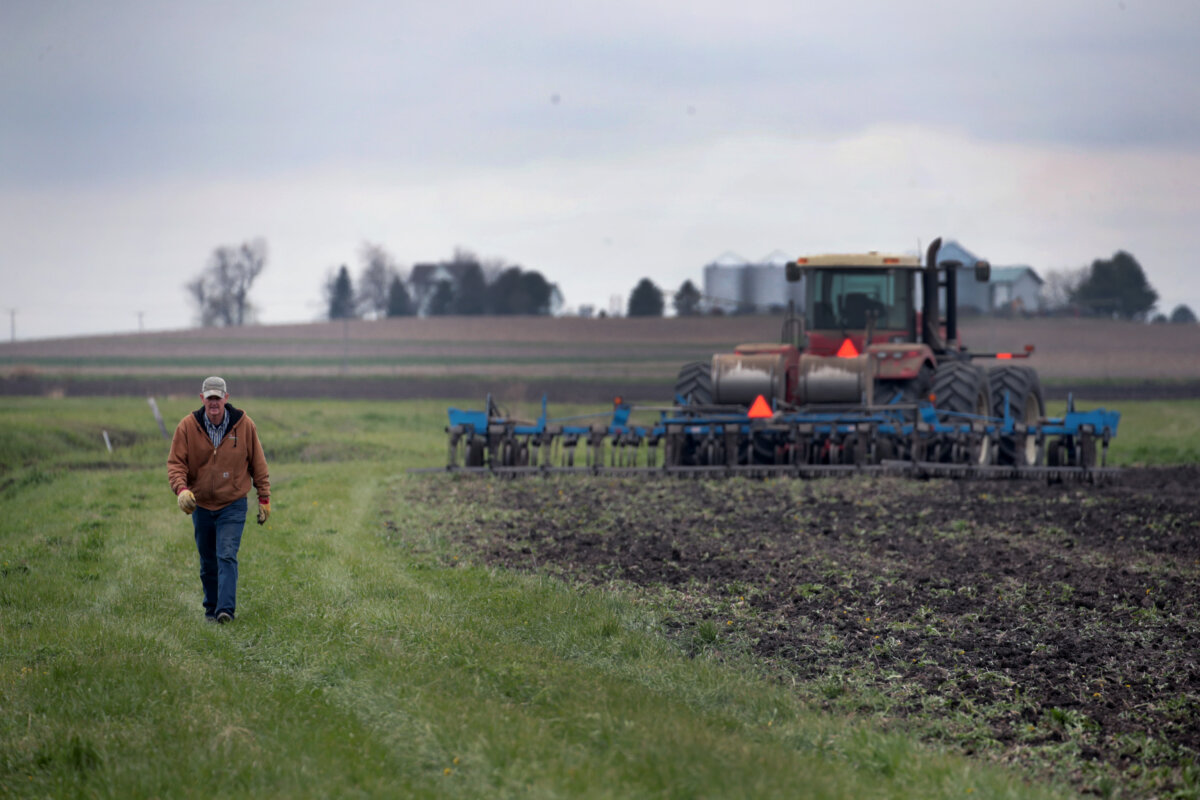
As a result, he noted, farmers now have to decide whether to plan a fertilizer-intensive corn crop or switch to a much less fertilizer-intensive crop, such as soybeans.
“We’ve been using 93 million acres of corn for the U.S. market,” he said.
“My bigger concern is globally, when you look at this, if there remains a long-term situation, and we have to start talking about tight supplies and not enough to go around, the countries that probably suffer the most in terms of getting their supplies are very big on wheat production,” he said.
According to Linville, Eastern Europe and Africa could feel the effects of the shortages first. He noted the United States is in a position to pay more for fertilizer, while other nations may not be able to produce as many crops with limited fertilizer.
Typically, the planting start date for North American farmers is April 1, so they need to start making decisions now, as this period represents the bulk of fertilizer purchasing. The United States usually imports 5–5.5 million tons of urea per year, with April the single largest arrival month.
Impact on Food Prices
Phosphate is another product likely to have a major impact on American farmers, with much of it coming from China, Morocco, Russia, Saudi Arabia, and the United States.
Linville said while China exported 10 million tons in 2021, the country has chosen to hold exports until August this year.
“There are two big variable costs that go into phosphate production,” Linville said.
Sulphur and anhydrous prices both continue to climb due to global production failing to keep up with demand, he said. In addition to China holding back on exports, European production problems have escalated due to the high cost of gas.
“North America needs to step up, and we need to produce more tons here,” Linville said.
Responding to a question from Khorrami about sufficient production here for U.S. farmers, Linville said from a nitrogen standpoint, the United States is still a net importer of urea and anhydrous.
“Our production is nowhere near enough to meet our demand,” he reiterated.
Should the conflict with Iran continue for another two weeks, Linville fears that fertilizer costs could rise above the highs set back in 2022, when urea topped $900 a ton.
As a result, Linville believes, food prices could be impacted.
“If this thing continues for a few more weeks, I think you’ll start seeing these prices go up,” he said.
 Friends Read Free
Copy
Facebook
Tweet
Friends Read Free
Copy
Facebook
Tweet