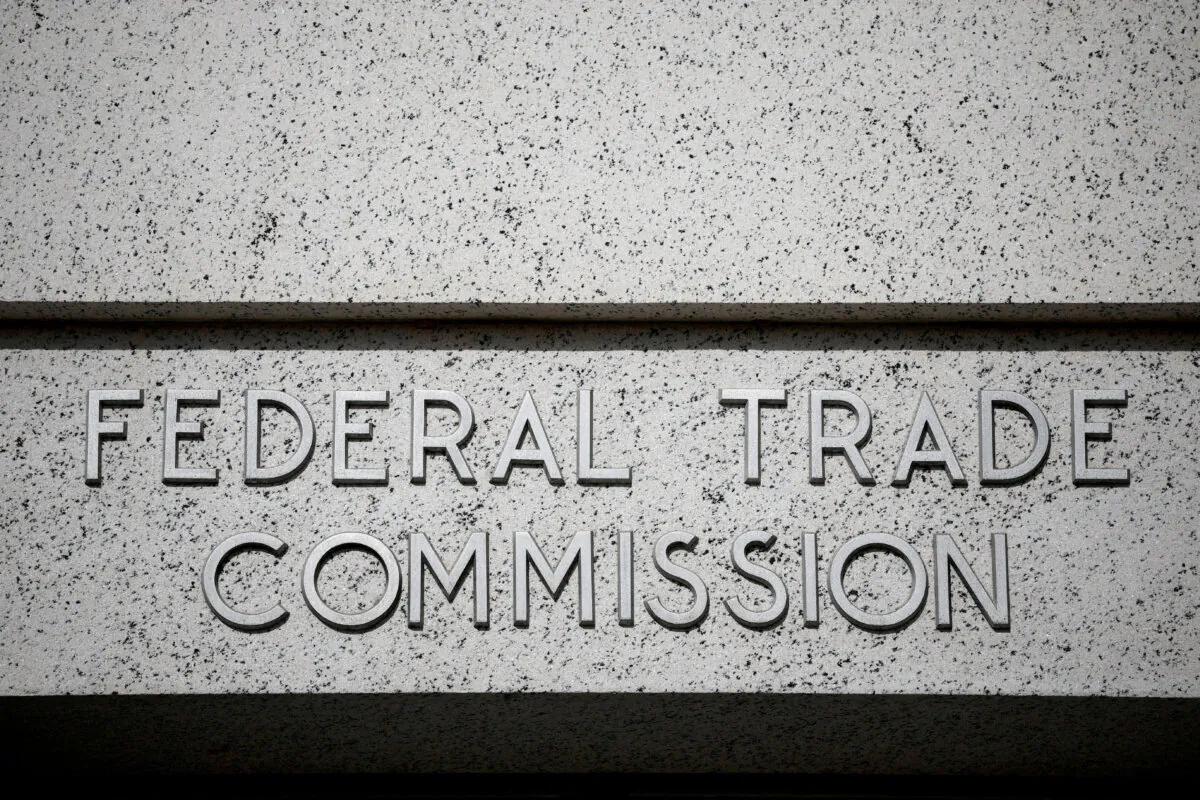
When the Federal Trade Commission approved a mega-merger between two ad agencies earlier this week, the regulator imposed a restriction on ideological and political collusion that could have far-reaching implications.
On June 23, the commission approved Omnicom Group Inc.’s $13.5 billion acquisition of The Interpublic Group of Companies Inc. However, in a consent order, the agency charged with protecting America’s consumers barred what it identifies as a coordinated boycott and discrimination in ad placement based on political viewpoints.
Specifically, a consent order told Omnicom companies that they cannot “rely on ‘exclusion lists’ or other means of differentiating between Media Publishers … on the basis of political or ideological viewpoints to determine or direct Advertisers’ advertising placements”
Omnicom and Interpublic are two of the world’s largest advertising and media-buying firms. Together, they represent a significant portion of the advertising market and exercise massive influence on how and where advertisements are placed.
In a statement shared with The Epoch Times, neither Omnicom CEO John Wren nor Interpublic CEO Philippe Krakowsky mentioned the stipulation imposed by the agency.
On Monday, FTC Chairman Andrew Ferguson issued a statement calling attention to a complaint filed by the commission against Omnicom and Interpublic, which alleged that the advertising industry has steered money away from websites and applications they find politically or ideologically objectionable.
In the complaint, the commission speaks about the World Federation of Advertisers’ Global Alliance for Responsible Media. The industry group, which is now disbanded, was formed by advertising companies to “safeguard the potential of digital media by reducing the availability and monetization of harmful content online.” Both Omnicom and Interpublic were members of the Alliance.
In his statement, Ferguson said that efforts such as the Global Alliance for Responsible Media are evidence that the advertising industry is “plagued” with coordinated efforts to steer advertising revenue away from certain news organizations and social media networks. Furthermore, Ferguson argued that this kind of organization is anticompetitive in the eyes of the FTC.
“This type of coordination risks America’s largest companies’ economic weight unwittingly being enlisted for the political and ideological aims of certain advertising industry groups and political activists,” Ferguson said.
The activities of the Global Alliance for Responsible Media were the subject of a congressional investigation in 2024. In a June 2024 House Judiciary Committee hearing, conservative commentator Ben Shapiro said that the alliance was part of a media infrastructure that “guarantees that advertising dollars flow only to left-wing media brands.”
In the same hearing, Spencer Waller, the Justice John Paul Stevens chair in competition law at the Loyola University Chicago School of Law, said the boycott is not a legally legitimate antitrust issue but rather a free-speech issue.
“The policy implications of imposing antitrust liability conduct in these circumstances are quite concerning,” Waller said in 2024. “Using the antitrust laws to challenge expressive conduct of this type interferes with commonplace forms of advocacy … that are part of the fabric of our country and entitled to substantial First Amendment protections.”
The FTC’s approval of the merger is provisional. After a 30-day public comment period, the full commission will vote on giving final approval. As part of the agreement, Omnicom and Interpublic will release information about their participation in politically motivated advertising boycotts as part of the Federal Trade Commission’s ongoing investigation into the two companies’ roles in the Global Alliance for Responsible Media.
FTC representatives did not respond to a request for comment from The Epoch Times.
Also on June 23, media watchdog organization Media Matters filed suit against the agency on the grounds that it is being unfairly targeted by an FTC investigation.
In a statement about its effort to halt the investigation, Media Matters said the inquiry is politically motivated and began only after President Donald Trump fired two Democrats who served on the commission—Alvaro Bedoya and Rebecca Kelly Slaughter—in March.
Currently, only three of the five FTC seats are filled. All active commissioners are members of the Republican Party. This, Media Matters said, renders “the commission completely politicized and free from its usual checks and balances.”
“The Trump administration has demonstrated that it will not hesitate to abuse the powers of the federal government to undermine the First Amendment and stifle dissent,” Media Matters President Angelo Carusone said in a statement.
 Friends Read Free
Copy
Facebook
Tweet
Friends Read Free
Copy
Facebook
Tweet