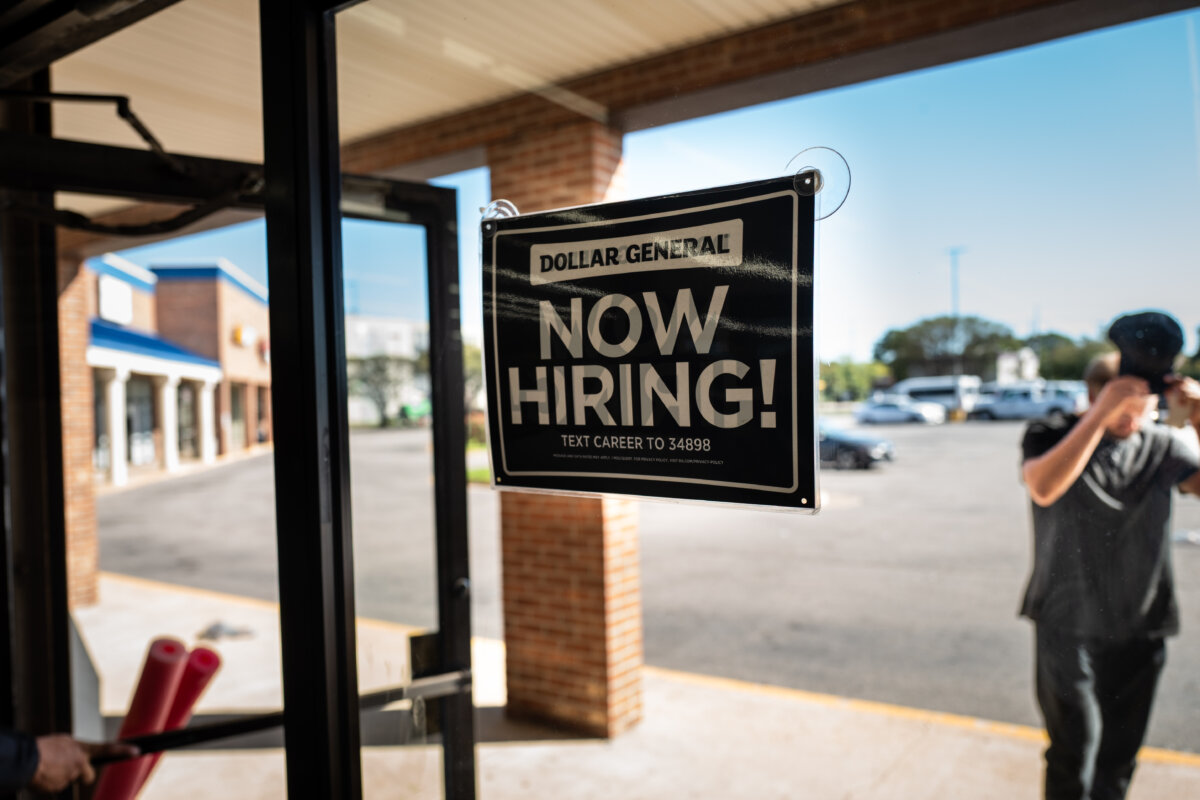

The number of Americans filing for unemployment benefits has remained near historically low levels, signaling a stable U.S. labor market.
Initial jobless claims fell by 11,000 to 207,000 for the week ending on April 11, according to new Department of Labor data released on April 16. This is down from the previous week’s 218,000, which was the highest reading since early February during the storm-driven fallout. Economists had penciled in a level of 215,000.
The four-week average, which strips out week-to-week volatility, was little changed at 209,750.
Unemployment claims data further indicate that layoffs remain low as companies refrain from shrinking headcount while navigating turbulence in the broader economy.
Despite the year-long moniker of the labor market being in a “low fire, low hire” state, recent public and private sector figures suggest that hiring momentum could be building.
March’s nonfarm payrolls report showed 178,000 new jobs and a lower jobless rate of 4.3 percent.
Additionally, U.S. private employers added an average of 39,250 jobs per week for the four weeks ending on March 28, according to payroll processor ADP. This represented the fourth consecutive week of solid job creation, the group noted.
Still, the mixed jobs data in the first three months of 2026 present a muddy look at current employment conditions, said Jeffrey Roach, chief economist at LPL Financial.
“This year will most likely be a year of shifting labor dynamics as artificial intelligence upends the job market, especially for low-skilled roles,” Roach said in a note emailed to The Epoch Times.
“We continue to see healthy job opportunities for workers with experience.”
However, others contend that artificial intelligence (AI) is not a major factor in employment.
Although AI adoption is growing across the U.S. marketplace, it is having a limited effect on the overall labor market, according to Morgan Stanley economists.
“Measuring the impact of AI on labor is complex,” Diego Anzoátegui, research economist at Morgan Stanley, said in an April 14 note.
“The same technology that automates tasks can also augment workers, increase productivity, and boost demand in AI-exposed sectors. So far, the data suggest early, narrow displacement—more visible among younger workers—while overall disruption remains limited.”
Although conditions appear fragile, the labor market is ostensibly “normalizing, not collapsing,” according to a plethora of numbers, said Svenja Gudell, Indeed’s chief economist.
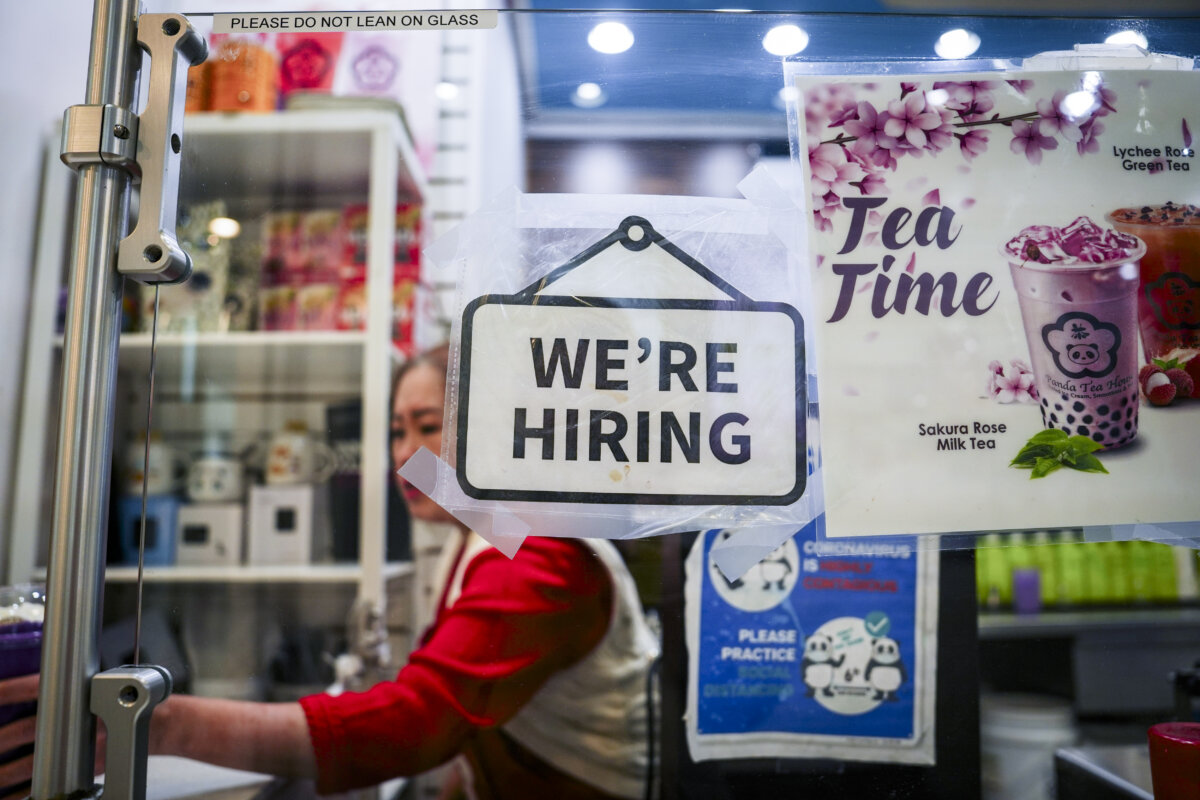
“Job postings have largely normalized, layoffs remain near historic lows, and [gross domestic product] is still growing,” she said in an April 13 research note.
“But persistent inflation, rising geopolitical and economic uncertainty, the fragility of the current ‘low-hire, low-fire’ equilibrium, and the early stirrings of demographic and AI-driven structural change mean the road ahead may be bumpier than the recent (relative) stability might suggest.”
Recurring Claims
Workers could find it easier to locate new employment as of late.
Continuing jobless claims—the number of jobless individuals currently receiving unemployment benefits—has remained below 1.9 million this year after staying above this level for most of 2025.
Economists use recurring claims data as a proxy to estimate the challenges people may face in pursuing employment opportunities.
For the week ending on April 4, continuing claims edged higher to a two-week high of 1.82 million, from 1.79 million.
Since late 2024, job finding expectations have weakened. In the Federal Reserve Bank of New York’s Survey of Consumer Expectations for March, the mean probability of finding a new job ticked up to nearly 46 percent from 44 percent in February.
More U.S. households also anticipate a higher unemployment rate in the coming year.
However, a lower break-even rate suggests that the jobless rate will likely remain historically low, according to research by Federal Reserve Bank of Dallas economists.
In a March 31 paper, the regional central bank estimated that the break-even level—the pace of employment gains necessary to keep the unemployment rate low—could be close to zero.
“The break-even rate peaked at about 250,000 jobs per month in 2023, fell to roughly 10,000 by July 2025, and declined to near zero thereafter, averaging about [minus 3,000] jobs per month from August to December 2025, indicating, if anything, a modest net jobs loss over this period,” they said.
 Friends Read Free
Copy
Facebook
Tweet
Friends Read Free
Copy
Facebook
Tweet