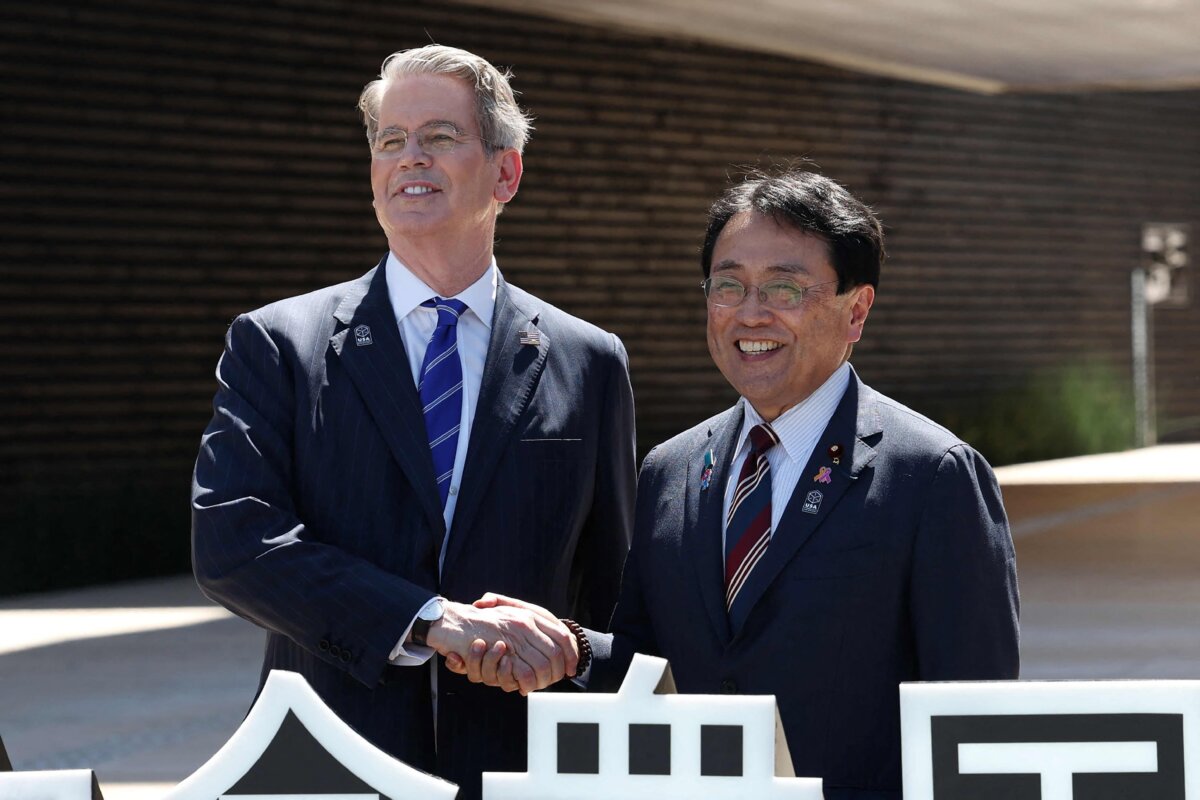

Lower U.S. tariffs secured by Japan during its recent trade talks with the White House will kick in by Sept. 16, Japan’s tariff negotiator Ryosei Akazawa said on Tuesday.
Citing a U.S. Federal Register notice dated Sept. 9 that formalized President Donald Trump’s executive order, Akazawa said the revised tariff rates will take effect within seven days of the notice’s publication.
In July, both sides agreed to a deal in which Trump agreed to lower his reciprocal tariffs on Japan to a baseline of 15 percent.
Japan agreed to open its markets to American companies with previously limited access, and buy U.S.-made commercial aircraft and defense equipment. Japan also committed to increasing U.S. rice imports by 75 percent, and purchasing $8 billion in U.S. agricultural and other products, including soybeans, fertiliser, and bioethanol, each year.
Before the deal, Japan was facing higher country-specific tariffs at 24-25 percent, above the universal baseline of 10 percent in reciprocation of Japan’s high tariffs on U.S. and other foreign goods.
Japan charges a steep 341 yen ($2.36) per kg tariff on rice imports—many times a 100 percent tariff—due to its strict protection trade policies, and has levied 30-40 percent tariffs on U.S. beef, citrus, dairy, and wines.
Trump’s Sept. 4 executive order outlined a formal schedule for the lowered reciprocal tariffs to take effect.
It said that the U.S.-Japan trade agreement would help reduce the decades-long trade deficit between the two countries and create a more balanced economic relationship.
The U.S. goods trade deficit with Japan totaled $69.4 billion in 2024. As part of the deal, Japan agreed to invest and loan $550 billion within the United States.
The relaxation in tariffs was particularly good news for Japan’s automobile sector, with carmakers such as Toyota, Honda, and Nissan set to see have sector-specific U.S. tariff reduced from 27.5 percent to the baseline 15 percent. The agreement also removed tariffs on civilian aerospace products.
The new tariff rates take effect retroactively, applying to shipments dating back to Aug. 7.
At a press conference, Akazawa told reporters it would be up to the U.S. government to decide which initiatives Japan’s $550 billion in investment or loans would ultimately go to. They would not necessarily go to financing Nippon Steel’s U.S. Steel deal or SoftBank Group’s planned projects.
In earlier comments, he explained that a U.S. investment committee would choose which projects receive Japanese funds based on deliberations by a Japan-U.S. consultation committee, allowing Japan a seat at the table in the project selection process.
Trump would ultimately choose where the money will go based on the investment committee’s recommendations, he said.
In Trump’s tariff structure, he outlined that certain sectors would face additional tariffs above the baseline to address the nation’s needs, including in the pharmaceutical and semiconductor sectors, as noted in the executive order on the deal with Japan.
Akazawa said that bilateral trade talks would continue to come to an agreement for these special consideration sectors.
“While a presidential order has been issued concerning adjustments to general tariffs as well as automobile and auto parts tariffs, presidential orders for most-favored-nation status for pharmaceuticals and semiconductors have not been issued,” Akazawa told reporters in Japan on Sept. 6, upon returning from the trade talks in Washington.
Emel Akan and Reuters contributed to this report.
 Friends Read Free
Copy
Facebook
Tweet
Friends Read Free
Copy
Facebook
Tweet