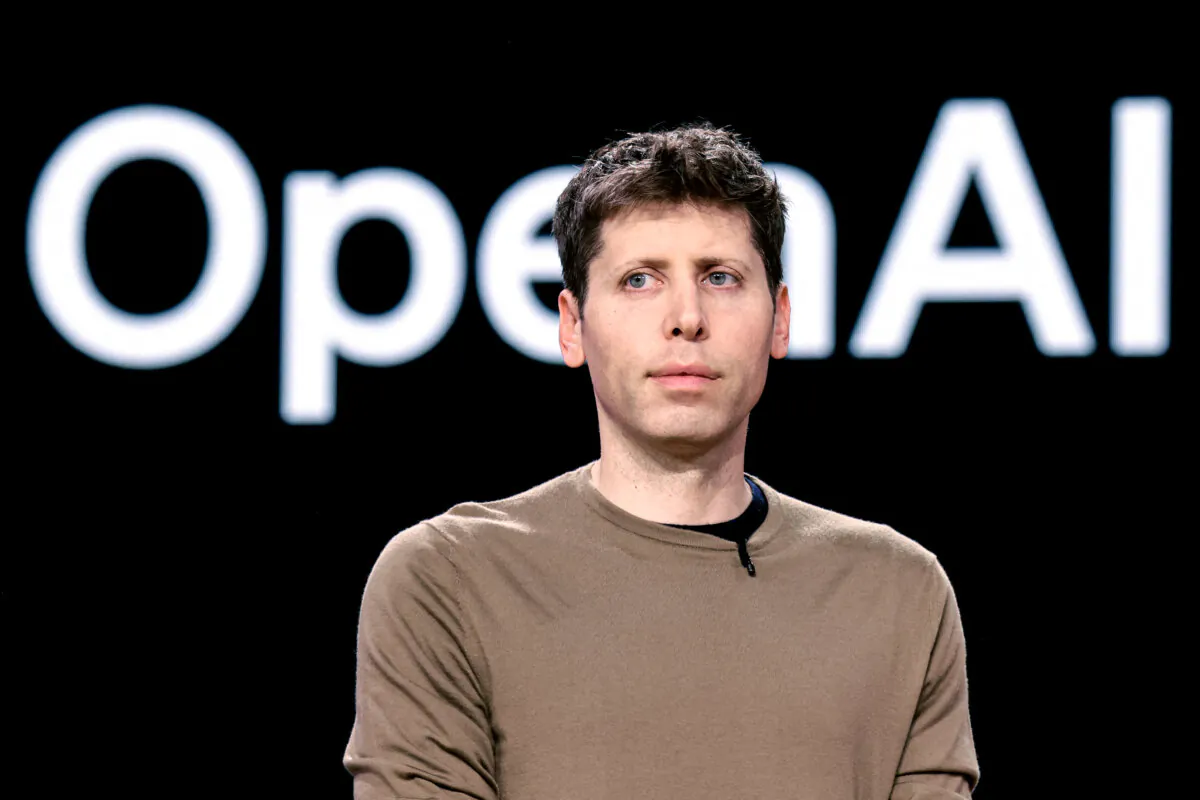

Microsoft and OpenAI have adjusted their partnership agreement for the first time in several years, allowing the artificial intelligence company to expand its enterprise clientele, according to a statement from the ChatGPT creator.
The two technology giants have been involved in a revenue share program for the past several years.
Throughout the relationship, Microsoft had paid OpenAI when Azure clients used the AI firm’s models. Likewise, OpenAI would pay Microsoft a share of its revenue, contingent on its “technology progress,” including artificial general intelligence milestones.
As part of an overhauled arrangement, both sides have revised their revenue structures.
Microsoft, in an April 27 blog post, said it would no longer pay OpenAI any revenue. Conversely, under the amended deal, revenue share payments from OpenAI to Microsoft would be “subject to a total cap” and continue through 2030.
One of the chief objectives is to allow OpenAI to serve customers “all its products” across any cloud provider.
The ChatGPT parent has been diversifying its reach in recent months, forming a deal with Amazon Web Services in February. Amazon will invest up to $50 billion, while OpenAI will bolster its agreement by $100 billion over the next eight years.
OpenAI has been trying to fend off the growing competition from industrial rivals, such as Anthropic’s Claude and Google’s Gemini, in the enterprise market space.
Despite the latest changes, Microsoft will continue to be OpenAI’s main cloud partner and will maintain a license to OpenAI intellectual property for models and products until 2032. The software firm will also participate directly in the company’s “growth as a major shareholder.”
“While this amendment simplifies the partnership, the work we’re doing together remains ambitious,” they said in a joint statement.
“From scaling gigawatts of new datacenter capacity, to collaborating on next-generation silicon, to applying AI to advance cybersecurity, and more, we’re excited to keep partnering to advance and scale AI for people and organizations around the world.”
Microsoft has been one of OpenAI’s top financial backers since 2019, investing about $13 billion.
This is not the first time that they have taken another look at their partnership.
In October 2025, they announced multiple changes to their agreement.
At the time, OpenAI finished a recapitalization by restructuring into a nonprofit with a controlling equity stake in its for-profit business. Additionally, it committed to spending $250 billion on Microsoft’s Azure cloud services. Microsoft said its investments were valued at $135 billion.
Microsoft (MSFT) share prices were little changed to kick off the trading week. Year-to-date, the stock is down by about 10 percent to about $424.
IPO for OpenAI
The announcement comes as OpenAI prepares to file an initial public offering, becoming a publicly traded company.
While it has yet to announce a formal launch date, Chief Financial Officer Sarah Friar told CNBC’s “Money Movers” earlier this month that it is testing the waters and preparing. She confirmed that the organization will reserve a portion of shares for retail investors.
“AI needs to garner trust in everything that we do,” Friar said. “That is part of why retail particularly speaks to me.
“It has to be that everyone partakes, that it isn’t just … a very small group, and everyone else gets left behind.”
Investment demand has been strong, with the firm reporting in March that it raised $122 billion in committed capital during the latest funding round.
The initial public offering market could be hot in the year ahead as investors brace themselves for the likes of OpenAI, SpaceX, and Anthropic, said Macrae Sykes, portfolio manager at Gabelli Funds.
It has rebounded notably since the 2022 bear market, with capital for non-special purpose acquisition companies totaling $44 billion.
“For SpaceX, they’re hoping to raise $75 billion combined with the aftermarket trading activity, which could strengthen the market and usher in a host of other [initial public offerings] as well, like OpenAI, Anthropic, etc.,” Sykes said in a note emailed to The Epoch Times.
“If we can moderate the macro impacts and some of the energy dynamics, we could have a solid rest of the year.”
Stocks have recovered from the war-driven March sell-off.
The blue-chip Dow Jones Industrial Average is back above 49,000. For the first time ever, the tech-heavy Nasdaq composite index and broader S&P 500 are eyeing 25,000 and 7,200, respectively.
 Friends Read Free
Copy
Facebook
Tweet
Friends Read Free
Copy
Facebook
Tweet