
Oil prices fell to more than $1 on Aug. 24 as markets awaited U.S. announcements on its new sanctions against Iran that U.S. officials said will isolate Iran economically.
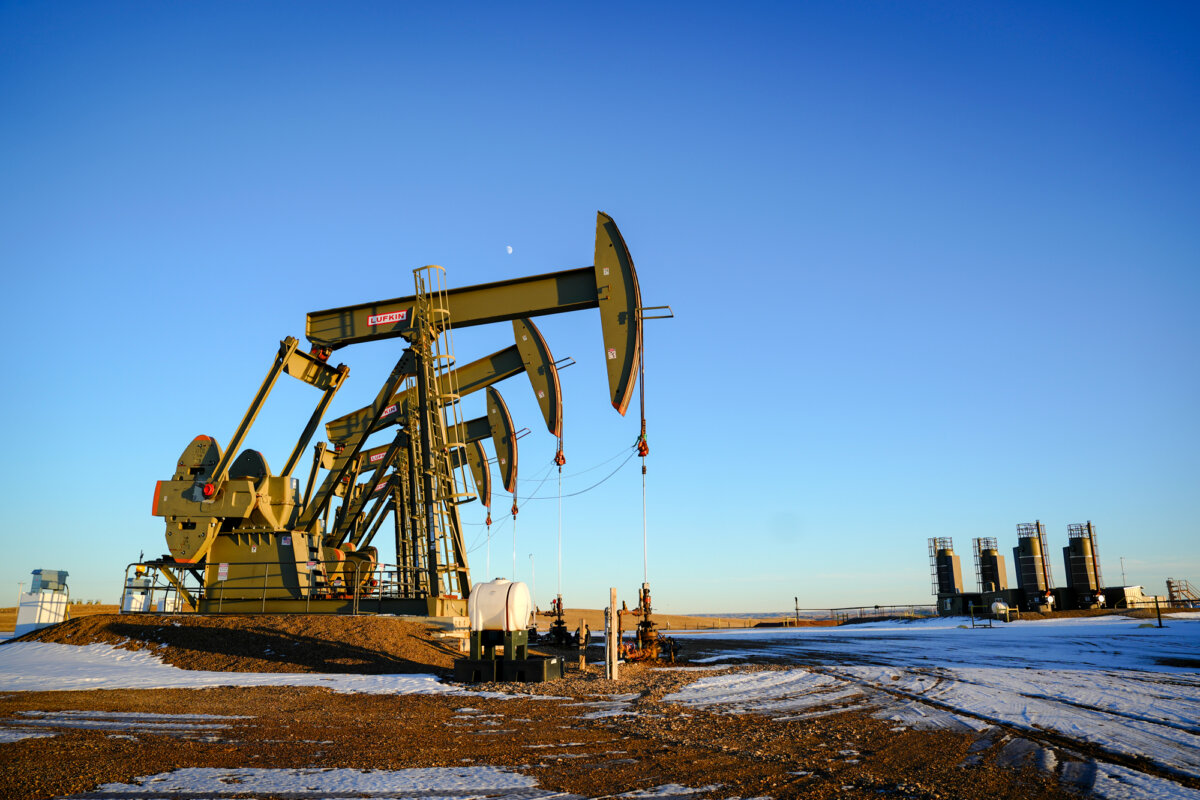
Brent crude futures dropped $1.23, or 1.3 percent, to $93.16 per barrel on Monday, while U.S. West Texas Intermediate crude fell $1.36, or 1.6 percent, to $85.7 per barrel.
The decline came ahead of a press conference by U.S. Treasury Secretary Scott Bessent, who is expected to announce further U.S. sanctions targeting Iran and its trading partners on Aug. 24.
Bessent told CNBC on Aug. 20 that the United States stands to impose the “toughest sanctions in history” against Iran and warned that any countries continuing to do business with Tehran will face the full force of the U.S. government.
“It is a one-two punch. We have the blockade, and we are going to have the toughest sanctions in history. And I will tell you, this will work,” Bessent told the news outlet.
In a social media post on Aug. 23, Bessent said “an economic D-Day” was approaching for Iran, describing it as “the single greatest financial offensive” Washington has launched against an enemy.
He said that President Donald Trump has created the conditions for the United States to use all of its agency, authority, and tools to cut off Tehran’s financial lifelines until the regime is completely isolated.
Tehran has denounced the move, with Secretary of Iran’s Supreme National Security Council Mohsen Rezaee warning that if Iran is targeted for economic isolation, it will block oil shipments through the Persian Gulf and the Strait of Hormuz, a critical route for global oil and gas shipments.
Iranian Foreign Minister Abbas Araghchi said in an Aug. 20 post on X that the “so-called ‘economic D-Day’” is a distraction from America’s national debt and surging interest costs.
The national average price for regular gasoline stood at $4.09 per gallon on Aug. 23, according to AAA, up from $4.06 the previous week.
AAA said on Aug. 20 that crude oil prices are driving up the national average gas price as crude oil remains at $80 per barrel amid shipping disruptions in the Strait of Hormuz.
The national average price for regular gas was $2.98 on Feb. 28, the day when the United States and Israel launched strikes aimed at dismantling Iran’s nuclear program. The strikes triggered a war that saw Tehran retaliate by attacking Middle Eastern nations that host U.S. bases and attacking international maritime traffic in the Strait of Hormuz.
Bessent said in an Aug. 20 interview with CNBC that the Trump administration’s policy of “maximum economic pressure” on Iran meant that it was less likely the United States would restart large-scale military strikes on Iran for now.
Timothy Frudd and Reuters contributed to this report.
 Friends Read Free
Copy
Facebook
Tweet
Friends Read Free
Copy
Facebook
Tweet