
Crude oil prices declined on Monday amid indications that a deal to end the ongoing war between the United States and Iran could be near.
Brent crude oil futures prices ended May 22 at $100.21 per barrel. On Monday, oil was trading at $95.44 as of 9:45 p.m. EDT, a decline of more than 4.7 percent. Prices had hit a peak of around $126 per barrel on April 30.
President Donald Trump announced in a May 23 Truth Social post that the United States and Iran have nearly reached a “Memorandum of Understanding pertaining to PEACE” and that he has concluded talks with leaders of Bahrain, Egypt, Turkey, Pakistan, Jordan, Qatar, the United Arab Emirates, and Saudi Arabia. A phone call with Israeli Prime Minister Benjamin Netanyahu on Saturday also “went very well.”
“An Agreement has been largely negotiated, subject to finalization between the United States of America, the Islamic Republic of Iran, and the various other Countries,” Trump wrote, adding that some of the final aspects of the peace deal were still under discussion.
On Monday, Iranian Foreign Ministry spokesperson Esmaeil Baghaei said that there has been progress in discussions between the two countries.
“At present, the focus of the negotiations is on ending the war, and at this stage we are not discussing the details of the nuclear issue,” Baghaei said, according to IRNA, Iran’s official news agency. “It is fair to say that we have reached understandings on many issues. But whether this means an agreement is imminent is something no one can claim at this stage.”
Meanwhile, on Monday, the United States military conducted strikes in southern Iran as a self-defense measure, the U.S. Central Command said.
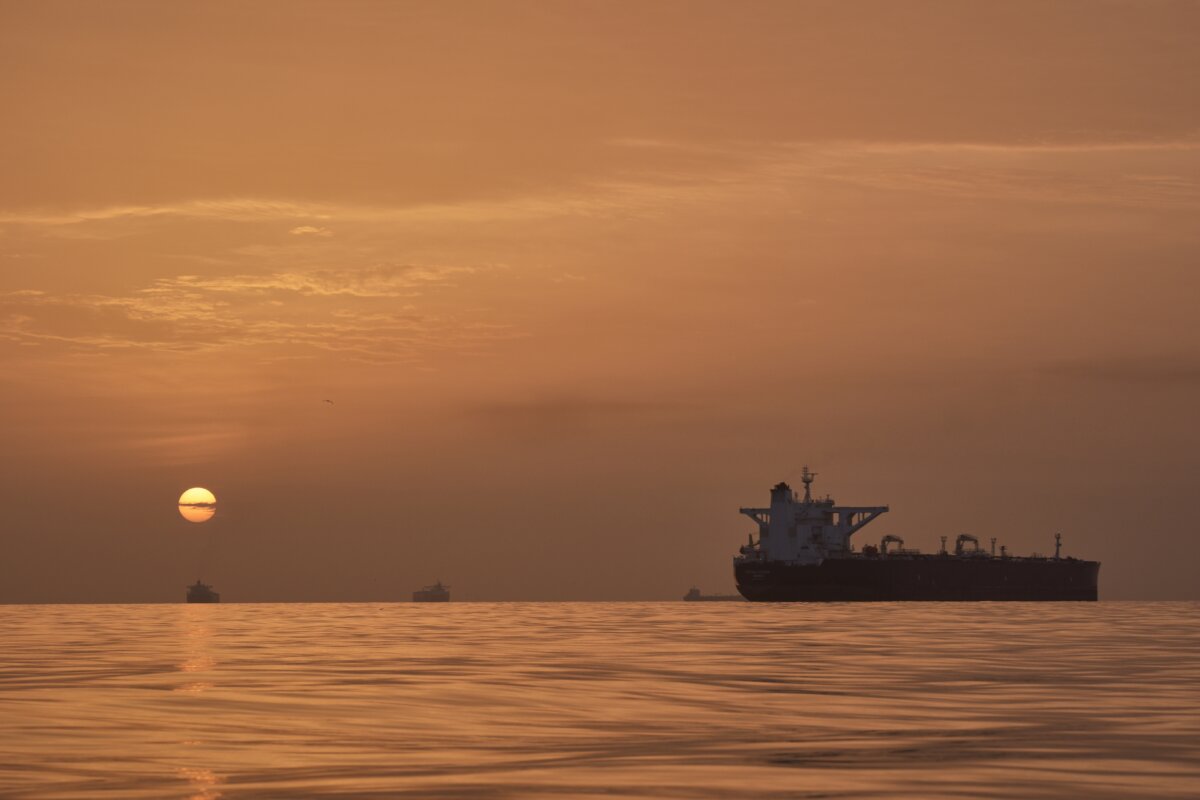
Since the war began in late February, Iran has repeatedly attacked and threatened commercial vessels transiting the Strait of Hormuz, a crucial trade waterway south of Iran through which more than a fifth of global seaborne oil trade takes place. This disruption in oil supplies has contributed to pushing up prices.
The International Energy Agency (IEA) warned in a May 13 report that supply losses due to Strait of Hormuz disruptions were depleting oil inventories globally at a “record pace.”
Cumulative supply losses from producers in the Gulf region in the Middle East have exceeded 1 billion barrels, according to the agency.
“While demand may swing back to growth towards the end of the year if a deal to end the war is agreed that allows flows through the Strait of Hormuz to gradually resume from [the third quarter of 2026], as is assumed in this Report, supply will likely be slower to recover,” IEA said.
“As a result, the oil market remains in deficit until the final quarter of the year. With global oil inventories already drawing at a record clip, further price volatility appears likely ahead of the peak summer demand period.”
Dow Jones went up 294 points on Monday amid hopes of a peace deal.
In the United States, the national average price of regular gasoline was $4.51 per gallon on May 25, slightly lower than $4.52 a week ago, but higher than $4.09 a month back, according to data from the American Automobile Association.
In five states, gasoline prices were higher than $5 per gallon—Alaska, Nevada, Oregon, Hawaii, and Washington. In California, prices exceeded $6 per gallon.
The Trump administration has taken various measures to tackle oil supply disruptions and rein in elevated prices.
On May 11, the Energy Department announced releasing 53 million barrels of oil from the Strategic Petroleum Reserve, with the department saying it was moving “swiftly to address short-term supply disruptions and strengthen U.S. energy security.”
Treasury Secretary Scott Bessent announced another waiver on May 18 that would allow “vulnerable nations” to buy Russian seaborne oil. A previously issued waiver had expired on May 16. The new waiver is effective for 30 days.
“This general license will help stabilize the physical crude market and ensure oil reaches the most energy-vulnerable countries. It will also help reroute existing supply to countries most in need by reducing China’s ability to stockpile discounted oil,” Bessent said in a May 18 post on X.
 Friends Read Free
Copy
Facebook
Tweet
Friends Read Free
Copy
Facebook
Tweet