
Oil prices rose during early April 20 trading amid the worsening Iran war situation, trading at about $95 per barrel after dipping below $90 on April 17.
Brent crude oil futures closed on April 16 at $99.39 per barrel and then dropped to $86.09 on April 17, before closing the day at $90.38. However, the standoff between the United States and Iran escalated this weekend, alarming oil markets and pushing up prices. Oil was trading at about $94.75 on April 20 as of 8 a.m. ET.
On April 13, the U.S. Navy imposed a blockade on ships entering and leaving Iranian ports, which came after peace talks between the United States and Iran ended without a resolution.
On April 17, Iranian Foreign Minister Seyed Abbas Araghchi announced that Iranian forces would cease restricting shipping traffic via the Strait of Hormuz during the 10-day ceasefire period between Israel and Lebanon. This coincided with oil prices falling on April 17.
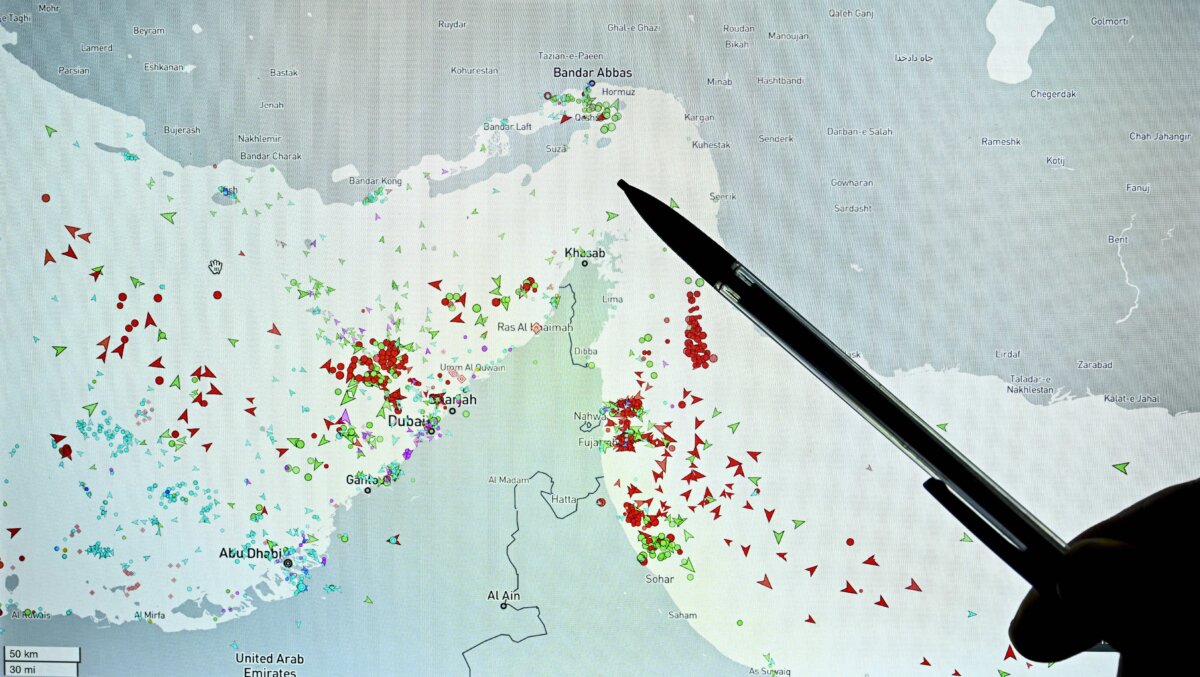
Iran changed its stance the next day, with the country’s military saying on April 18 that it had reinstated “strict military oversight” over the strait because of Washington’s naval blockade of Iranian ships. This created uncertainty in markets and pushed up oil prices on April 20.
The Strait of Hormuz is a critical shipping waterway south of Iran that accounts for more than one-fifth of global seaborne oil trade. Any disruption to transit via the waterway has the potential to raise oil prices.
On April 19, U.S. President Donald Trump said in a Truth Social post that U.S. representatives would arrive in Pakistan on April 20 for peace talks with Iran.
However, it is unclear whether Iran will attend the meeting, since Iranian Deputy Foreign Minister Saeed Khatibzadeh said on April 18 that Tehran was not ready for another set of peace talks unless Trump backed away from what he called the U.S. president’s “maximalist” stance on the country’s nuclear activity.
In his Truth Social post, Trump warned that if Iran does not agree to a deal, the United States could target key Iranian infrastructure.
“The United States is going to knock out every single Power Plant, and every single Bridge, in Iran,” the president wrote.
Such a development could spike oil prices even further.
In an April 16 post at ING Bank, Carsten Brzeski, global head of macro at ING Research, suggested that a U.S.–Iran deal may not come this week.
“In our new base-case scenario, we assume negotiations between Iran and the United States will drag on, prompting renewed tensions and even limited, calibrated military actions,” he wrote. “It will take another 2 to 4 weeks before a deal is reached, uncertainty begins to retreat, and the Strait of Hormuz reopens.
“Once that does happen, it will take a while before traffic returns to pre-war levels; insurers and shipowners will be cautious, at first. In this scenario, we see oil prices gradually retreating to below [$90 per barrel] by the end of the year.”
US Gas Prices
Amid elevated oil prices, gasoline prices continue to remain high in the United States. The nationwide average price of regular gasoline was $4.04 per gallon on April 20, up from $3.91 a month back, according to American Automobile Association data.
In three states, gas prices exceeded $5 per gallon—California, Hawaii, and Washington.
High gas prices are what worry Americans the most about the U.S.–Israel war with Iran, according to an April 7 report from Pew Research Center, citing a survey conducted in late March.
“About seven-in-ten Americans (69 percent) are concerned about higher gas and fuel prices as a result of the U.S. military action against Iran, including 45 percent who are extremely concerned,” Pew said. “Of the potential outcomes we asked about, this one worries Americans most.
“Levels of concern also differ by party. Still, most Democrats (79 percent) and Republicans (59 percent) are worried about higher gas prices as a result of the Iran war.”
The U.S. government has taken action to mitigate the pressure on oil markets and ensure adequate supply for prices to remain under control.
On April 17, the Trump administration renewed a sanctions waiver that allows nations to buy Russian oil stranded at sea, which allows additional oil supplies to enter the market.
The waiver is applicable until May 16 and replaces a previous license that expired recently on April 11.
“As negotiations [with Iran] accelerate, Treasury wants to ensure oil is available to those who need it,” a Treasury spokesperson said.
 Friends Read Free
Copy
Facebook
Tweet
Friends Read Free
Copy
Facebook
Tweet