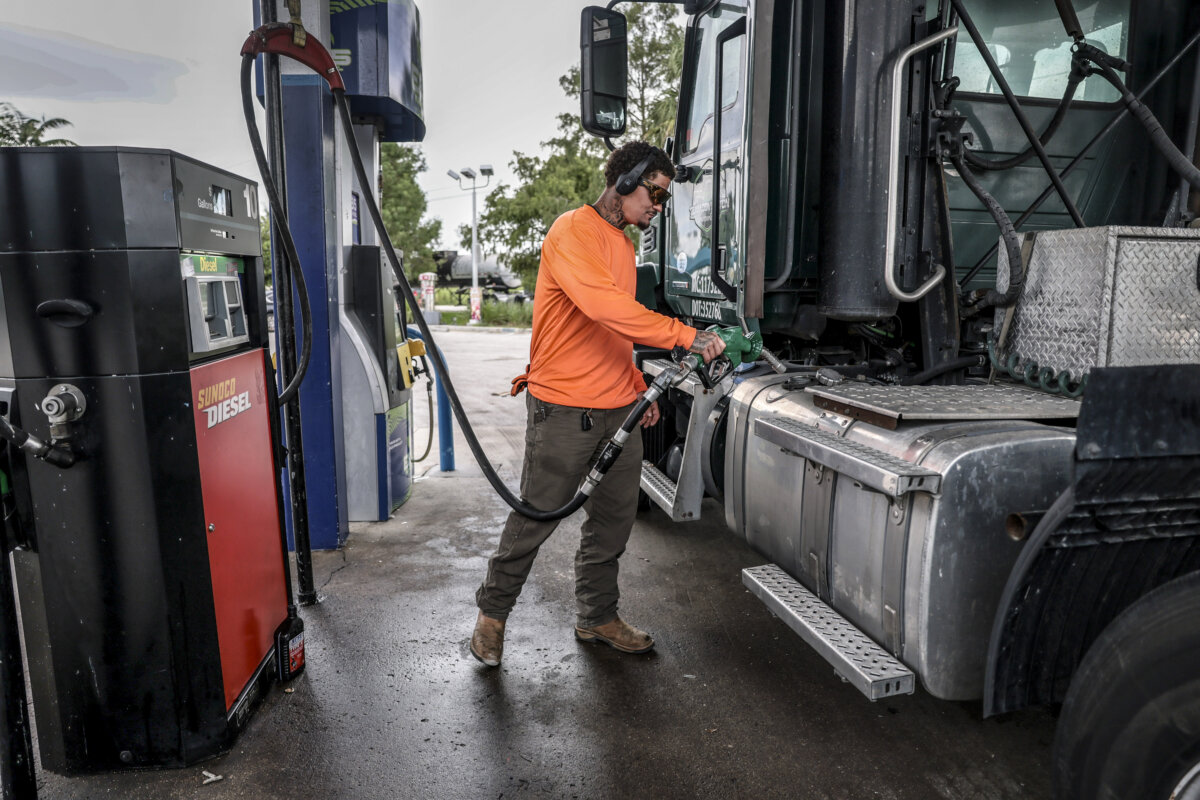

Oil prices held near two-week lows on Wednesday as rising crude supplies from the Gulf and hopes for Middle East diplomacy eased supply concerns, while diesel refining margins hit a record high amid fears of U.S. export restrictions.
Brent crude futures rose $1.33, or 1.34 percent, to $100.58 a barrel by 9:03 a.m. ET, while West Texas Intermediate futures gained 65 cents, or 0.72 percent, to $91.17.
Brent had briefly fallen below $98 a barrel on Tuesday, its weakest level in more than two weeks, while West Texas Intermediate earlier on Wednesday touched its lowest price since the beginning of the month.
While crude prices have weakened, diesel markets have continued moving in the opposite direction.
The premium for European low-sulfur gasoil over Brent crude climbed to a record high after U.S. President Donald Trump on Tuesday publicly backed a ban on U.S. diesel exports.
Asked about calls from several Republican senators for a diesel export ban during a joint press conference with Ukrainian President Volodymyr Zelenskyy at the United Nations, Trump said he has also called for a ban.
Global Issue
Some analysts warn that restricting exports would likely do little to lower energy costs while risking further disruptions to already strained global fuel markets.
PDI Technologies’ Petroleum Analyst Patrick De Haan said a temporary export ban would likely offer only limited relief to U.S. consumers while creating broader disruptions to global fuel markets.
De Haan added that the United States remains a structural surplus producer of diesel and that domestic prices are largely determined by global supply and demand, not U.S. production alone.
“The U.S. is not short of diesel. The world is,” he wrote in a Sept. 21 post on LinkedIn.
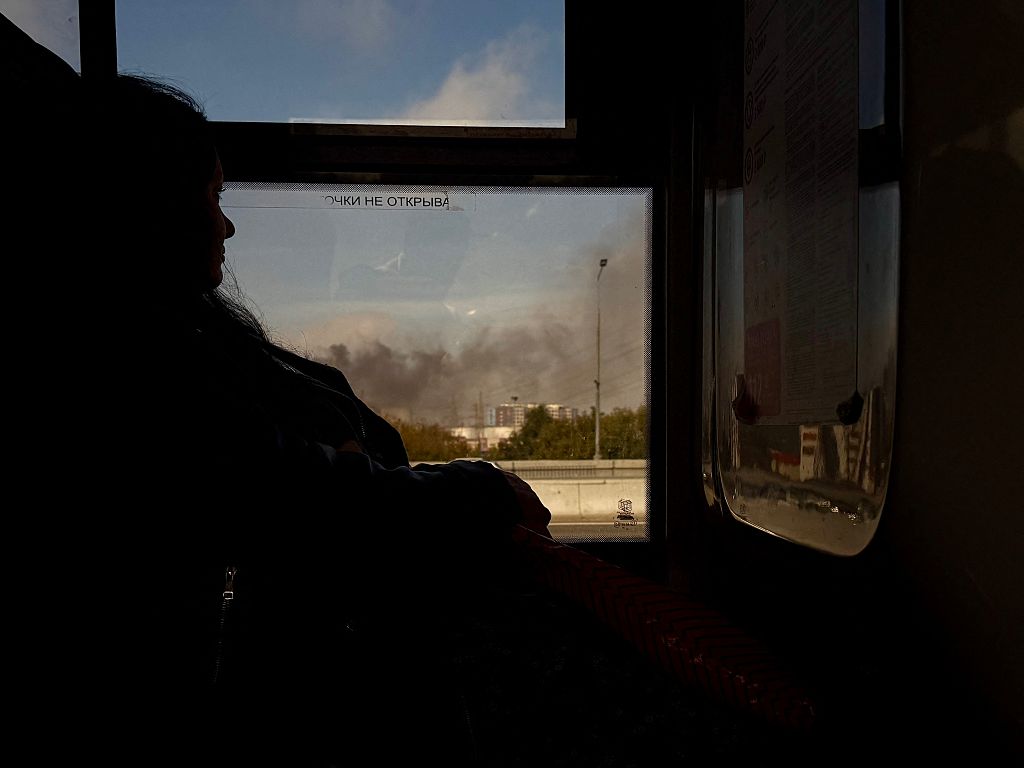 A woman rides in a bus as smoke rises from the area of the Russian oil producer Gazprom Neft’s Moscow oil refinery in Moscow on Sept. 20, 2026. (AFP via Getty Images)
Price spikes, De Haan added, are driven largely by Ukrainian drone strikes on Russia, one of the most significant diesel producers, as well as disruptions in the Strait of Hormuz.
In response to Ukrainian drone attacks, Moscow suspended diesel exports in July, further tightening global supplies.
Ukraine’s expanding campaign against Russian energy infrastructure has drawn criticism from Trump, who has urged Kyiv to stop attacking refineries.
Trump said in mid September that he had asked Zelenskyy to stop attacking Russian refining facilities because the strikes were pushing diesel prices to record highs. He said on Monday that Russia had lost control of its diesel industry because of the war.
 A soldier from the ‘Taifun’ unmanned aerial vehicle unit holding a new model ‘Marsianin’ attack drone in the Kharkiv region of Ukraine on April 7, 2026. (Nikoletta Stoyanova/Getty Images)
Gulf Supplies
Some Gulf producers are increasing exports despite continued tensions in the Middle East.
Iraqi Oil Minister Bassem Mohammed Khudair said on Tuesday that Iraq is exporting more than 3 million barrels of oil per day and expects exports through Turkey’s Ceyhan terminal to exceed 600,000 barrels per day as export capacity expands despite ongoing regional challenges.
Adding to expectations of improving supplies, the ING think tank said in a Sept. 23 market note that Saudi Arabia’s East-West pipeline had restarted operations.
ING analysts said that the pipeline could soon resume exports from the Red Sea port of Yanbu, allowing crude shipments to bypass the Strait of Hormuz.
 A Saudi man looks at the French aircraft carrier Clemenceau arriving at the port of Yanbu, Saudi Arabia, on Sept. 24, 1990. (Pascal Guyot/AFP via Getty Images)
Trump warned on Tuesday that he could annihilate Iran, but he also said his envoys had held productive talks with Iran via mediators.
Iranian Foreign Ministry spokesperson Esmail Baghaei said Tehran had engaged with Washington through a Qatari mediator and conveyed conditions, including an end to the war on all fronts and a halt to US “acts of aggression.”
Reuters contributed to this post.
 Friends Read Free
Copy
Facebook
Tweet
Friends Read Free
Copy
Facebook
Tweet