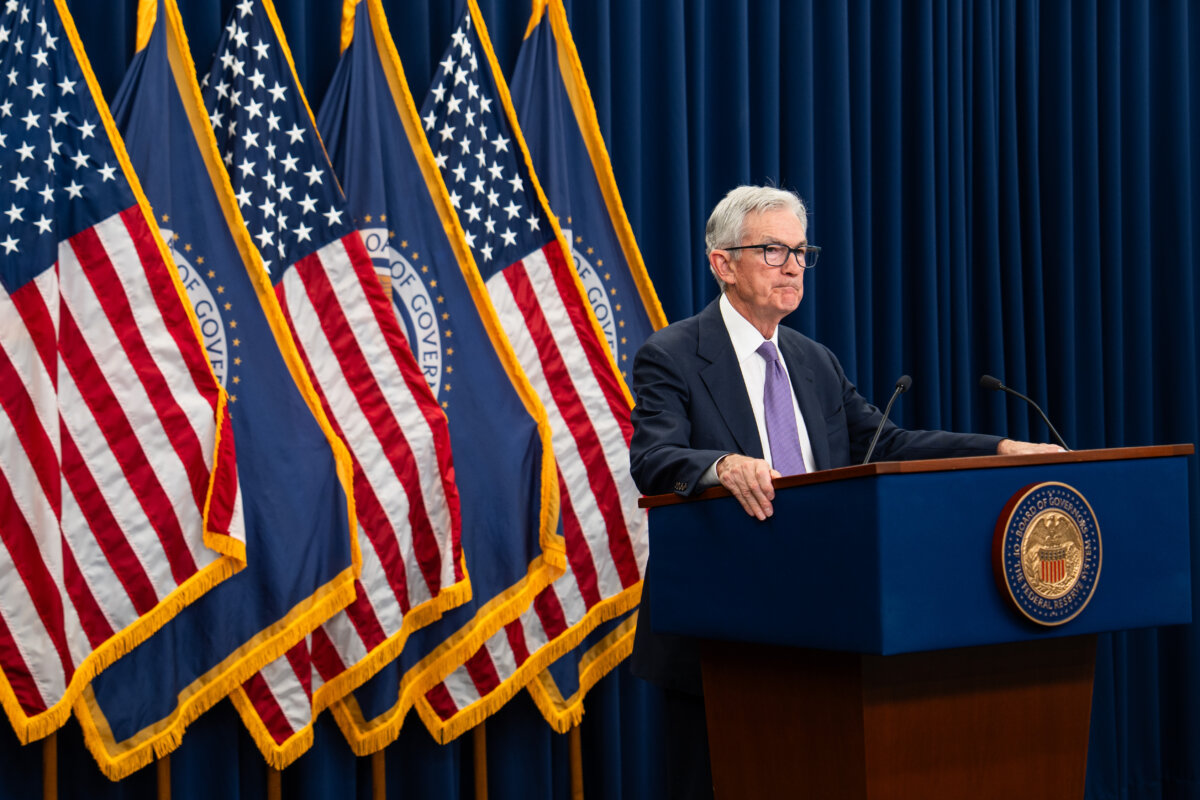

A once-in-a-century pandemic. Global trade strife. War-driven oil price shocks. Bank failures.
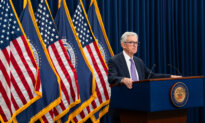
For outgoing Federal Reserve Chairman Jerome Powell—whose term expires on May 15—it was one battle after another, making his job of balancing the central bank’s dual mandate—maximum employment and price stability—harder.
Powell’s predecessors faced challenges, too.
Marriner Eccles confronted the Great Depression. Paul Volcker cleaned up the inflationary mess of his predecessors. Ben Bernanke dealt with the 2007–2009 global financial crisis.
Whether this is on par with what Powell endured will be debated by economists for years to come.
“To me, Powell will be favorably viewed historically but with caveats,” Christopher Hodge, economist at Natixis CIB Americas, told The Epoch Times.
“Policymakers that are at the helm during crises and provide a level of assurance, as Powell did, will generally be regarded with respect and rightly so.”
Still, according to Hodge, Powell’s tenure will be mainly associated with navigating the COVID-19 pandemic, maintaining Fed independence, and failing to respond to the post-crisis inflation acceleration.
Calm Ocean of Stability
In the two years before the global COVID-19 pandemic, Powell had quite a bit on his plate.
Appointed by President Donald Trump, he had the job of keeping the longest economic expansion on record intact. The labor market was strong, and inflation was well below the Fed’s 2 percent target.
Still, even in this type of economic climate—one that any central bank would likely desire to relive after what has transpired over the past six years—Powell warned of “significant risks.”
Then as now, Powell faced direct and public criticisms from the White House.
Trump regularly lambasted his pick for not lowering interest rates.
In his first year, Powell continued where his predecessor, Janet Yellen, left off: tightening monetary policy.
Powell raised the benchmark federal funds rate—a key policy rate that influences business and consumer borrowing costs—four times, overseeing four quarter-point rate hikes. He also continued trimming the balance sheet as part of the Fed’s broader initiative of normalizing policy.
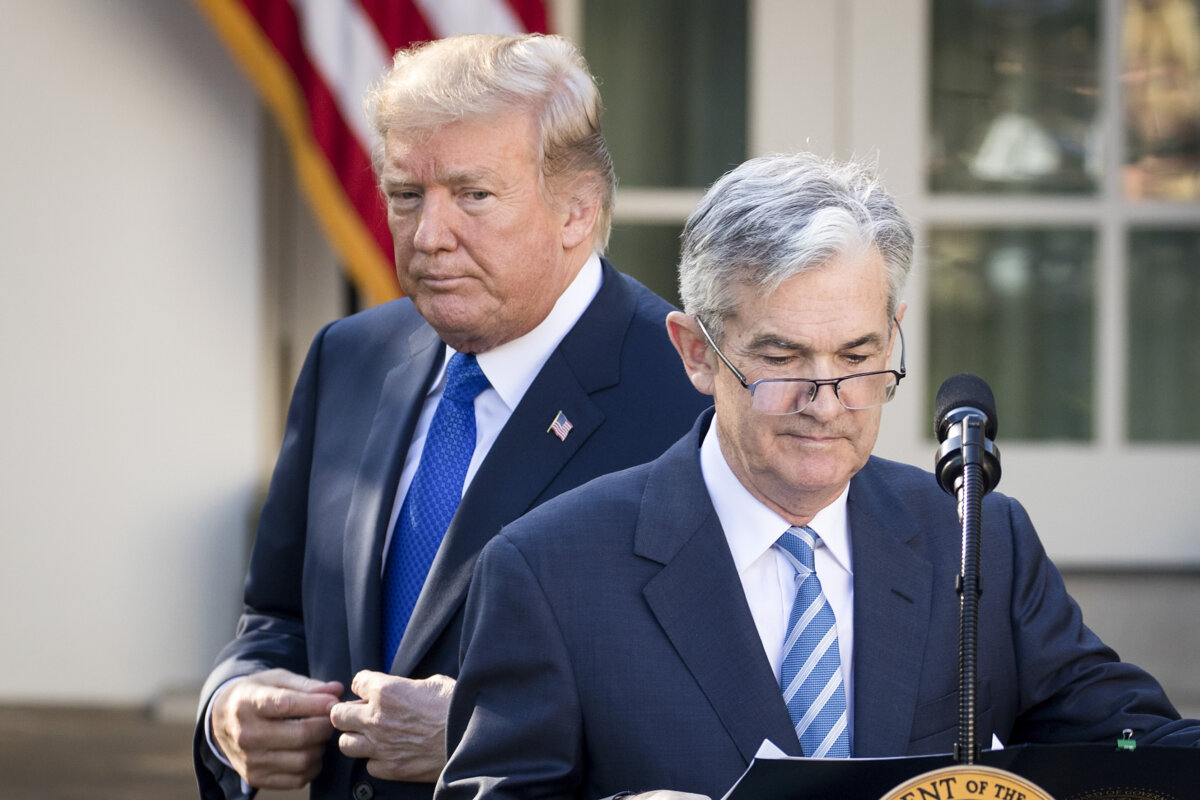
Put together, the Fed’s hawkish stance spooked financial markets, with the S&P 500 falling by almost 7 percent in 2018.
The president told CNBC’s “Squawk Box” in July 2018 that he was “not thrilled” with the rate hikes.
“Because we go up, and every time you go up, they want to raise rates again,” Trump said. “I don’t really—I am not happy about it. But at the same time, I’m letting them do what they feel is best.
“But I don’t like all of this work that goes into doing what we’re doing.”
A month later, Trump said that he “should be given some help by the Fed.”
By 2019, Powell and the Fed restarted a modest easing campaign, pulling the trigger on three “insurance” and “risk management” quarter-point rate cuts (July, September, and October).
Throughout the second half of 2019, Powell regularly cited muted inflation, slowing global growth, and trade policy uncertainty as challenges that monetary policy would have to traverse.
“We also feel like weak global growth and trade tensions are having an effect on the U.S. economy,” Powell told reporters at the post-meeting July 31 news conference.
“You see weak investment, you see weak manufacturing—so support demand there, and also to support the return of inflation to 2 percent. But there’s definitely an insurance aspect of it.”
Several months later, Powell would steer the Fed—and the U.S. economy—through turbulent waters the likes of which had not been seen before by monetary policymakers.
A ‘Transitory’ Haunting
The onset of the COVID-19 pandemic ignited unfathomable economic conditions.
U.S. gross domestic product fell by 5 percent in the first quarter of 2020 and contracted by 33 percent in the second quarter. The unemployment rate shot up to 15 percent in April 2020. The S&P 500 suffered a 31 percent collapse from February 2020 to March 2020.
In the afternoon of Feb. 28, 2020, Powell issued a rare statement addressing the “evolving risks to economic activity” posed by COVID-19.
The Fed then took emergency actions, using what it called its “full range of tools to support the flow of credit to households and businesses,” which could also support its dual mandate.
Interest rates were slashed to zero percent. The Fed took on $6 trillion in Treasury and mortgage-backed securities. It also purchased corporate bonds for the first time. Powell participated in about $500 billion in credit swap lines to address dollar shortages.
These measures helped stabilize the COVID-19 pandemic-era economy and Wall Street. However, as the United States and the rest of the world began reopening, the Fed faced something it had not seen in 40 years: soaring inflation.
The personal consumption expenditures (PCE) price index—the Fed’s preferred measurement of inflation—crossed the 2 percent threshold in March 2021 for the first time since October 2018.
But Powell and his colleagues insisted that they did not see a persistent threat from rising prices.
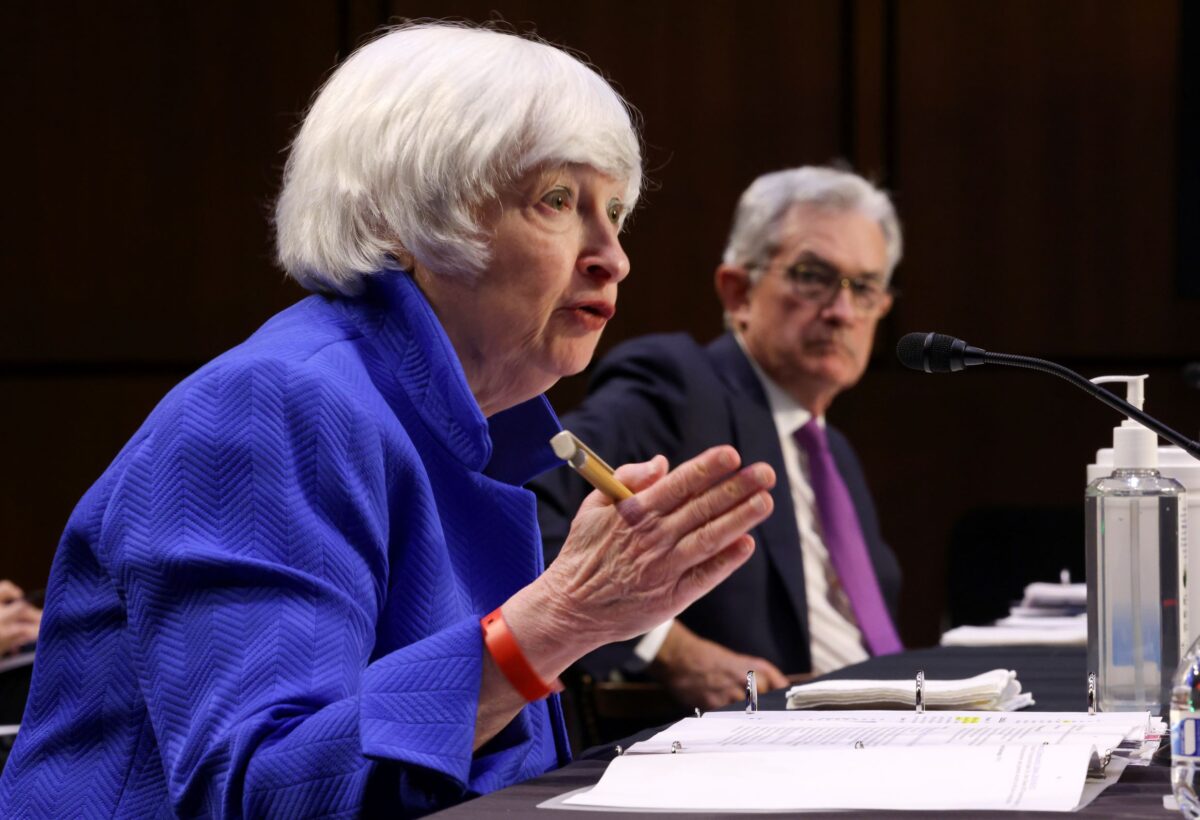
In 2021, the central bank chief spoke a word that may, according to Hodge, haunt his legacy: “transitory.”
He argued that high inflation would be temporary. However, by fall, as the PCE price index reached 6 percent, Powell said he believed that it would be appropriate to retire the 10-letter word.
Appearing before the Senate Banking Committee, Powell was asked how long inflation would need to run above the Fed’s 2 percent target before the central bank decided that it was not transitory.
“The word transitory has different meanings to different people,” Powell said. “We tend to have used it to mean that it won’t leave a permanent mark in the form of higher inflation. It’s probably a good time to retire that word and try to explain more clearly what we mean.”
Despite the descriptor’s retirement, Hodge said he believes that that mischaracterization of inflation will continue to be a “mark against [Powell] and the Fed as price pressures lingered longer than expected.”
Economic observers have debated whether maintaining an accommodative stance longer than necessary caused inflation to run as hot as it did.
Powell, in his public remarks, has regularly asserted that tightening policy several months earlier likely would not have had any meaningful effect on inflation.
The Fed began raising interest rates and incrementally normalized monetary policy by spring 2022. Although progress has been made on inflation, the annual PCE or consumer price index has still not reached the 2 percent level in several years.
Nevertheless, the United States emerged from the COVID-19 pandemic as one of the best Organisation for Economic Co-operation and Development economies despite inflation and supply chain shocks, said Rebecca Homkes, economist and former fellow at the London School of Economics Center for Economic Performance.
“Chairman Powell’s legacy will be one of admirable steering of monetary policy during an increasingly shaky time for the U.S.,” Homkes told The Epoch Times.
“Was it perfect? Of course not, it never was, and assessment is easier after the fact, but Powell’s choices and way of leading the institution were guided by data, steadfast, despite political pressure, and done in ways which commanded respect.”
As the United States closed the chapter on the public health crisis, the country faced a barrage of new challenges that exacerbated inflation challenges and threatened the economy.
Tariffs, Wars, and Politics
In four years, the Fed has had to see the country through two oil price shocks, driven by Russia’s invasion of Ukraine and the joint U.S.–Israeli military operation in Iran.
Officials also had to look past the potential inflation effects of the Trump administration’s sweeping global tariffs, the biggest change in trade policy since the Smoot-Hawley Tariff Act of 1930.
These events are in addition to regional bank failures, an artificial intelligence boom, different labor market signals, continued elevated inflation, and a record-high stock market.
As Powell has steered the Fed through the noise, he has also wrestled with political pressure.
Echoing his interest rate-related complaints from eight years ago, Trump has given Powell various nicknames. The most prominent and widely used, of course, is his “Jerome ‘Too Late’ Powell.”
Since the start of Trump’s second term in the White House, the administration has said the Fed should cut interest rates to bolster growth and reduce debt-servicing payments.
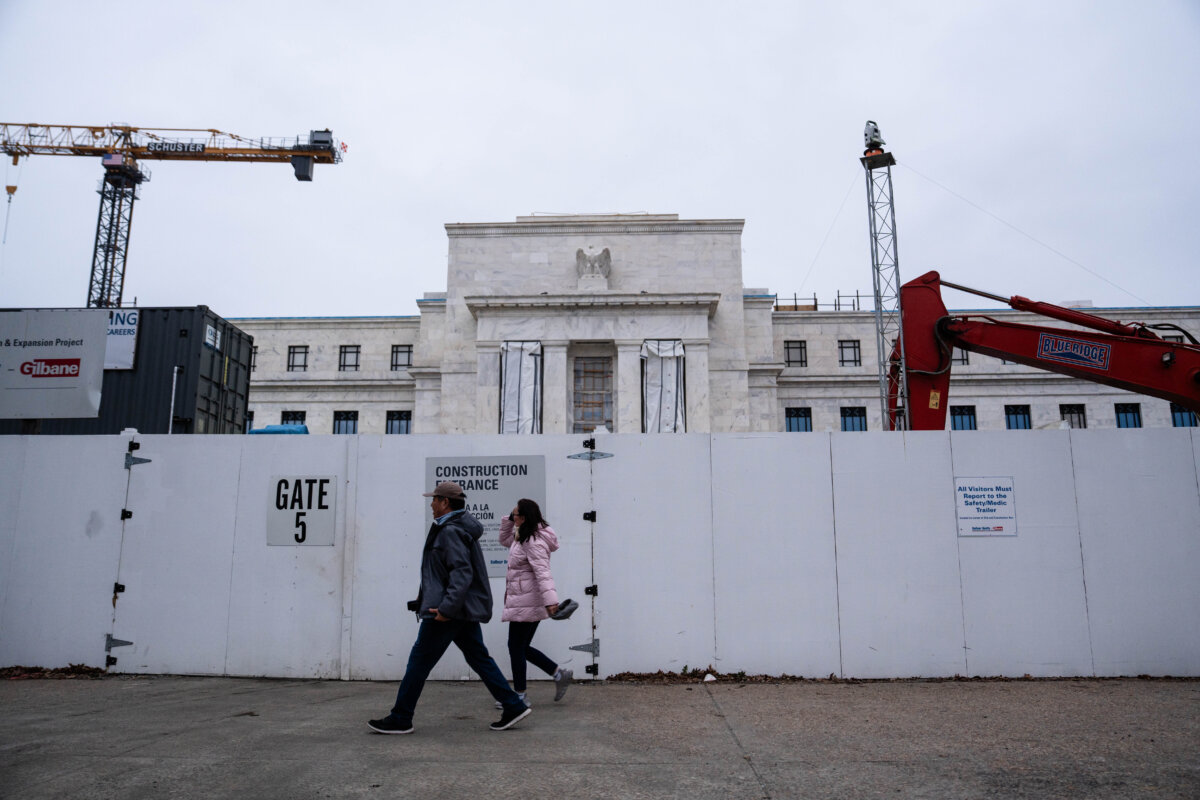
Although Trump has not moved to fire Powell, there have been concerns over the Fed’s independence.
Last year, Trump attempted to remove Fed board member Lisa Cook over mortgage fraud allegations. The Supreme Court ultimately blocked the president’s attempts, holding that Fed governors can be removed only “for cause,” a high legal threshold.
The administration also selected Stephen Miran to the board of governors following Adriana Kugler’s surprise resignation.
Powell revealed in January that the Department of Justice had served the Federal Reserve with grand jury subpoenas, threatening a criminal indictment. The federal probe focused on cost overruns in the hundreds of millions of dollars on renovations to the Fed’s headquarters in Washington, as well as Powell’s congressional testimony in July 2025.
The Justice Department confirmed last month that it dropped its investigation. In its place, the inspector general of the Federal Reserve would conduct a thorough review of the construction project. However, U.S. Attorney Jeanine Pirro said she would not “hesitate to restart a criminal investigation should the facts warrant doing so.”
Although it is tradition for chairmen to resign from the board of governors upon completing their term, Powell announced that he would remain in his position “for a period of time, to be determined.” His term as a member of the board does not expire until 2028.
“I’m waiting for the investigation to be well and truly over with finality and transparency,” Powell told reporters last month. “I’m waiting for that, and I will leave when I think it appropriate to do so.”
Powell said he will have a low profile moving forward.
“I won’t see you next time,” Powell said in his departing remarks to reporters.
However, Homkes said she believes that Powell will continue to have an important presence.
“His voice will carry weight and his influence will remain,” she said.
“While it’s unprecedented for a Fed Chair to remain on the Fed after their chairmanship ends, there are a lot of unprecedented events right now, and I don’t see how that even rises to the top 10 of institutional leadership shake-ups in the first half of this administration if he stays.”
With his successor, Kevin Warsh, now confirmed by the Senate, it is the end of the Powell era.
Efforts to insulate the Fed from political pressures could be a key component of his legacy. However, policy missteps will also be integral to analyzing Powell’s tenure, said Mohamed El-Erian, a top economist and chief economic adviser at Allianz.
“While his tenure is marked by a fierce defense of institutional independence, it is also being analyzed through the lens of missed opportunities to contain inflation, improve operations and culture, have effective communication, and adapt policy frameworks to a world defined by supply-side shocks rather than just demand management,” he wrote on Substack.
 Friends Read Free
Copy
Facebook
Tweet
Friends Read Free
Copy
Facebook
Tweet