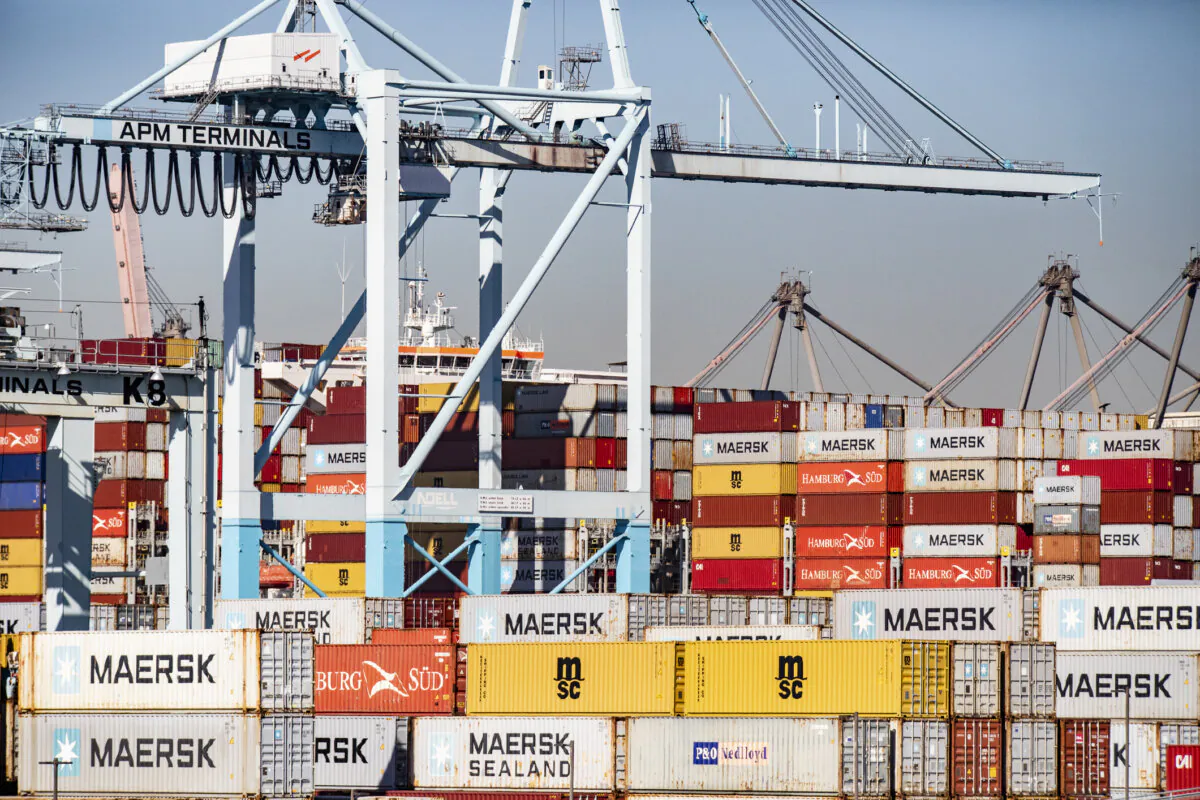

The cost of wholesale goods and services ticked up slightly in November 2025, according to new data, as inflationary pressures continue to stabilize entering the second year of President Donald Trump’s global tariffs.
The producer price index (PPI)—a measure reflecting the prices paid for goods and services by businesses—rose by 0.2 percent in November, up from 0.1 percent in the previous month, according to data from the Bureau of Labor Statistics released on Jan. 14.
This was in line with economists’ expectations.
Core producer inflation, which excludes volatile energy and food prices, was flat and below the market consensus of 0.2 percent.
The PPI excluding energy, food, and trade edged up 0.2 percent in November.
On a 12-month basis, PPI and core PPI inflation jumped to a higher-than-expected 3 percent and 2.9 percent, respectively.
Economists view the PPI as a pipeline indicator of consumer inflation because businesses typically pass costs on to their customers.
The 43-day government shutdown affected the PPI data as price-update requests sent to respondents were postponed, the bureau said in a note attached to the report.
Still, officials confirmed that response rates for the October and November data reflected in the release “are within the normal range, and no modifications to PPI methodology or procedures were necessary.”
Final demand for goods made up much of the increase; it climbed by 0.9 percent, the largest increase since February 2024.
Within this category, energy accounted for more than 80 percent of November 2025’s increase, rising by 4.6 percent.
The indexes for gasoline, diesel fuel, and jet fuel jumped.
Services, meanwhile, were unchanged from October.
Painting the Inflation Picture
Overall, the inflation picture appears to have stabilized in the United States.
The bureau reported on Jan. 13 that the consumer annual inflation rate was unchanged at 2.7 percent—in line with market forecasts.
Core inflation was also flat at a lower-than-expected 2.6 percent.
Trade prices will be the next major inflation report, scheduled for publication on Jan. 15.
Early forecasts suggest import prices fell by 0.1 percent, while export prices rose by 0.2 percent.
Despite the recent positive inflation trajectory, conditions remain “hotter than policymakers would like,” according to Jeffrey Roach, chief economist at LPL Financial.
This could force the Federal Reserve to leave interest rates alone until the spring, he said.
“In the near term, inflation will run hotter than policymakers would like, so we expect the Fed to pause this month and possibly in March,” Roach said in a note emailed to The Epoch Times.
“However, by the time the committee convenes in April and June, conditions will likely warrant another cut in rates.”
Economic risks are tilted toward the labor market, which may force other members of the central bank to keep lowering interest rates.
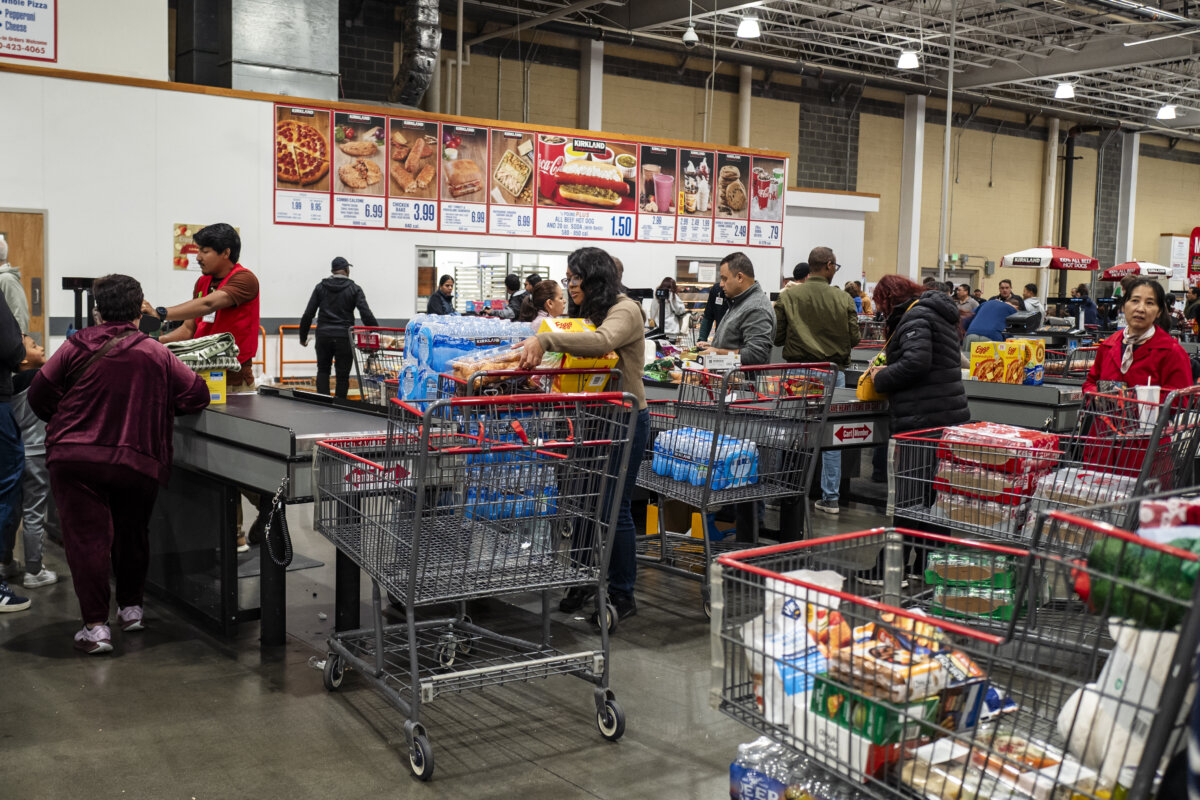
The U.S. economy added 50,000 new jobs in December, falling short of the consensus forecast of 60,000.
The unemployment rate, however, dipped to 4.4 percent, below expectations.
“Investors should brace for weaker payrolls and rising unemployment. My forecast for unemployment reaches 4.6 percent by the end of this quarter,” Roach said.
As for inflation, the Cleveland Federal Reserve’s widely watched model estimates that the annual inflation rate in January will slow to 2.3 percent.
Truflation, an alternative real-time tool that relies on a multitude of data points, says U.S. consumer price index inflation is 1.72 percent, firmly below the Fed’s 2 percent target.
Although price pressures from tariffs are traversing through the U.S. marketplace, they are being offset by the deflationary effects of tighter immigration in the housing market, according to Eric Teal, chief investment officer for Comerica Wealth Management.
“Net immigration is approaching zero this year, and given the supply glut of apartments, vacancy rates are expected to increase and rents to decline,” Teal said in a note emailed to The Epoch Times.
At the same time, inflationary pressures on wages could be seen across industries reliant on immigrant labor, including leisure, hospitality, and restaurants.
“However, significant deflationary pressure from AI on wages is still in the making,” Teal said.
Teal estimated that inflation will range between 2.2 percent and 2.7 percent.
 Friends Read Free
Copy
Facebook
Tweet
Friends Read Free
Copy
Facebook
Tweet