

U.S. export strength further narrowed America’s imbalance with trading partners, according to new government figures released on May 29.
The U.S. international goods deficit narrowed 3.4 percent, or $2.9 billion, to $82.4 billion in April, the Census Bureau reported.
Exports surged 4 percent, or $8.5 billion, to $219.7 billion, fueled by shipments of consumer and capital goods, as well as industrial supplies.
This was partially offset by a 2.8 percent decline in vehicle exports and a 0.3 percent drop in food shipments.
Imports slowed last month as they rose 1.9 percent, or $5.6 billion, to $302.1 billion.
Last month’s jump in imports was driven by a 5.6 percent surge in purchases of capital goods from foreign markets.
Conversely, the bureau reported a 1.9 percent and 1.5 percent drop in imports of industrial supplies and vehicles, respectively.
Imports of consumer goods also fell 1 percent.
If the narrowing of the trade deficit continues, it could bolster America’s economic growth prospects.
In the first quarter, according to the Bureau of Economic Analysis, the trade deficit erased 1.25 percentage points from the gross domestic product (GDP).
Because GDP calculations include net exports, outbound trade boosts the reading, and imports drag down the growth rate.
The U.S. economy expanded 1.6 percent during the January–March period.
This was revised down from the initial estimate of 2 percent but was up from the 0.5 percent growth recorded in the fourth quarter.
Trade Updates
U.S. and Mexican officials began formal talks on the North American trade deal in Mexico City on May 28 to improve the $1.6 trillion trilateral trade.
A key provision of the USMCA is to conduct a joint six-year review of the agreement, and the United States has identified several frustrations.
The latest negotiations surround automotive content rules, with Washington requesting stricter regional rules of origin.
The administration’s trade representatives demand a U.S.-specific minimum level of content for cars and trucks manufactured in Mexico.
Under the deal, at least 75 percent of an automobile’s value must derive from North American sources, such as engines, body panels, and transmissions.
Additionally, 40 percent of the content for North American-made passenger vehicles must be produced in higher-wage plants, meaning the United States and Canada. This level rises to 45 percent for pickup trucks.
The United States and Mexico will hold a second round of negotiations on June 16 and June 17 in Washington.
Talks will focus on agriculture, the U.S. Trade Representative’s Office said in a statement.
A third round of U.S.–Mexico talks will occur in late July in Mexico City.
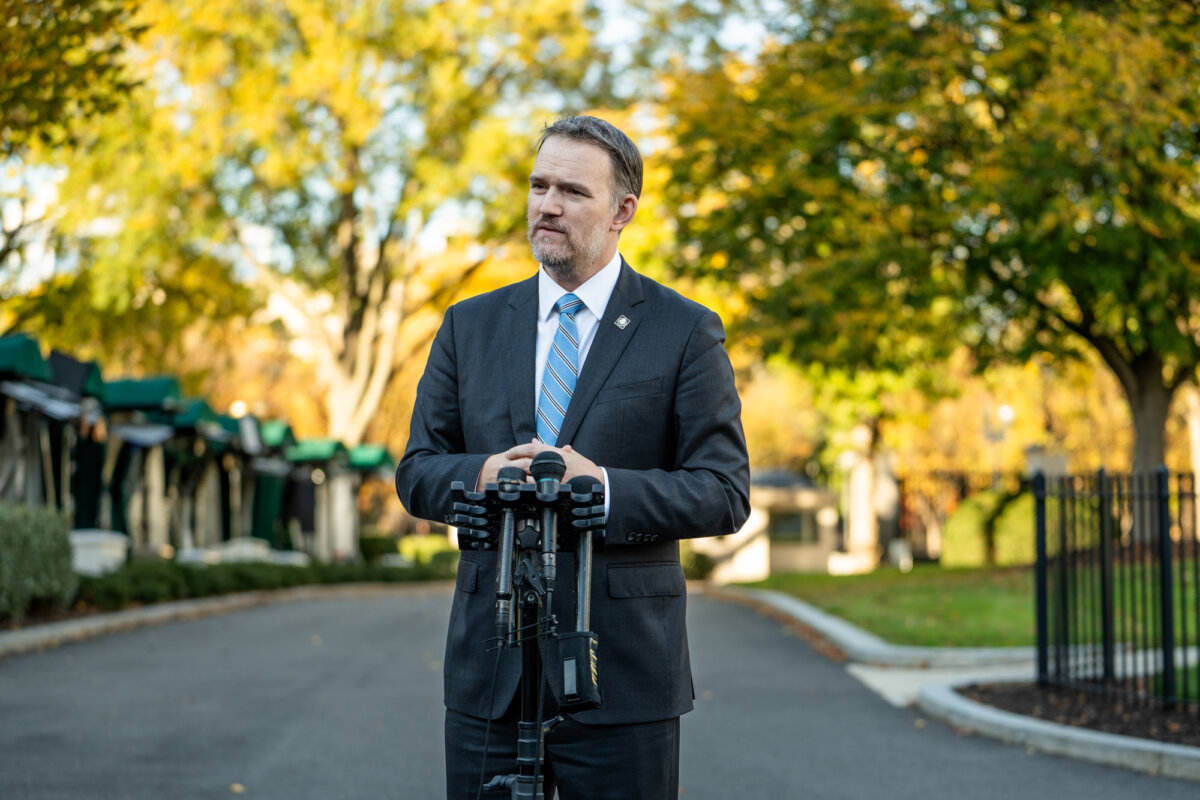
Appearing at a Council on Foreign Relations event on May 26, Trade Representative Jamieson Greer said he aims to have supply chains sourced “from this hemisphere.
“We all lived through COVID, and we couldn’t get certain things from Asia. We want to have supply chains here as much as possible,” Greer said.
Canadian trade officials will travel to Washington next week.
This comes as Canada slipped into a technical recession—back-to-back quarters of negative GDP growth—in the first quarter.
While the auto sector will likely play a role in discussions, the United States will also express grievances over supply chain management policies and bans in several provinces on U.S. alcohol.
Ottawa, on the other hand, has complained about the White House’s tariffs on aluminum, cars, forest products, and steel.
Tariffs are expected to have a sizable part in trilateral talks, Greer noted.
“President [Donald] Trump is concerned about our deficit with Mexico,” he stated. “The United States is going to have tariffs, even with [a country like] Mexico, or another country in our hemisphere.”
Online streaming regulations have also become a sore point in trade negotiations.
U.S. Ambassador to Canada Pete Hoekstra demanded that Canada repeal its law taxing major streaming platforms.
“This unfair tax will drive up costs for Canadian consumers and targets U.S. companies. This law should be immediately repealed,” Hoekstra said in a statement.
Likewise, the administration lamented that Germany is proposing a law mandating that streaming platforms such as Amazon, Disney, and Netflix invest in local productions.
U.S. officials warn that this violates provisions of the trade agreement with the European Union, which finalized the text of its deal with the United States following months of talks.
Matthew Horwood, Jill McLaughlin, and Reuters contributed to this report.
 Friends Read Free
Copy
Facebook
Tweet
Friends Read Free
Copy
Facebook
Tweet