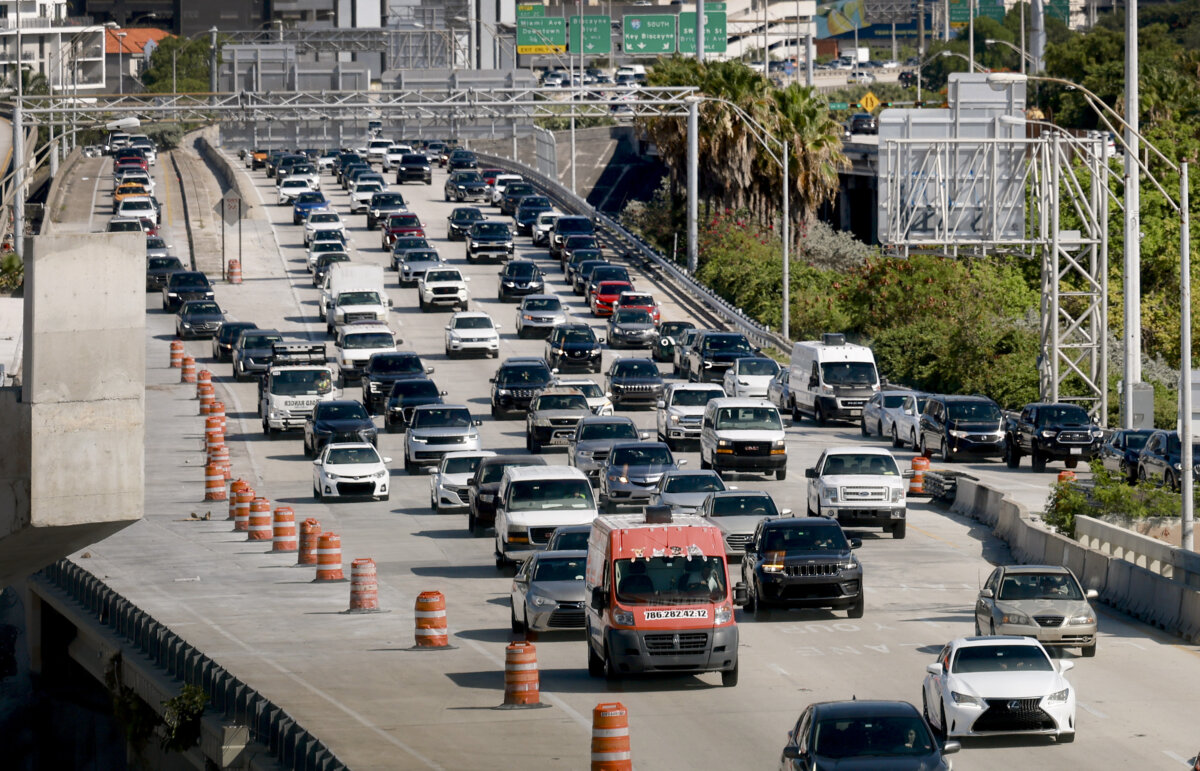

The 2026 summer travel season is expected to remain resilient, although more cost-conscious Americans are scaling back their vacation plans, a pair of new reports has suggested.
In an analysis released Wednesday, Bank of America examined credit and debit card spending data alongside a national survey of 2,004 Americans to assess how consumers are approaching summer travel this year.
Although higher energy costs continue to weigh on the cost of both driving and flying, the bank said overall travel demand still appears strong. Nearly half of survey respondents had already booked a summer trip by early April, up from 38 percent in 2025, while the share of Americans planning not to travel at all this summer was lower than it was last year.
The data also show a clear divide in how travelers are responding to higher costs. While 30 percent of respondents said gas prices would not affect their plans at all, others said they were making adjustments, including taking fewer trips, choosing destinations closer to home, trimming budgets for accommodations, or changing their method of travel.
The divide fits what economists often describe as a K-shaped pattern in consumer spending, in which high earners spend more while low earners pull back. About 38 percent of lower-income households told Bank of America they had no summer travel plans, more than five times the share among higher-income households, the report said.
That pattern also appears in Bank of America’s card spending data. Spending by lower-income households on airlines, lodging, and tourism was down through April compared with a year earlier. By contrast, middle- and higher-income households are seeing “stronger travel spending,” according to the report.
The overall resilience may be explained in part by timing. Bank of America said many consumers likely booked trips before this spring’s global oil shock pushed up travel-related costs. Larger tax refunds from the One Big Beautiful Bill Act also gave many households extra cash this year to spend on airline tickets and hotel bookings, the report said.
A separate report released Wednesday by global insurance giant Allianz painted a similar picture: Most Americans still yearn for a summer getaway, although many are cutting back elsewhere to make travel possible.
The Allianz survey, conducted by polling company Ipsos among 2,001 Americans, found that 74 percent of respondents plan to travel this summer. Among those planning to do so, 85 percent said they “desperately” need a vacation this year, with women and Generation X respondents expressing the strongest sense of urgency, at 90 percent and 91 percent, respectively.
Still, those plans are shaped by economic realities. Nearly eight in 10 respondents said they are concerned about rising travel costs, while 49 percent said they have scaled back their plans as a result. Another 59 percent said they have cut nonessential daily expenses to help fund their trips.
Both reports suggest domestic travel will dominate Americans’ summer plans. Allianz found that 51 percent of respondents plan to stay within the United States, with 36 percent favoring scenic destinations such as beaches, mountains, or countryside locations.
Bank of America’s transaction data, meanwhile, found that over 40 percent of respondents across all income cohorts said they plan to travel in the United States but outside their home state. Florida overtook California as the top domestic destination so far in 2026 for trips more than 500 miles from home, followed by Texas and New York.
The FIFA World Cup is also expected to influence travel this summer, with games scheduled across host cities in the United States, Canada, and Mexico. About 40 percent of Bank of America survey respondents said they were planning a trip tied to the tournament.
The findings point to a U.S. travel market that is still growing, but at a slow pace. The U.S. Travel Association’s latest forecast projects overall U.S. travel spending will increase by a modest 1 percent this year to $1.37 trillion, as domestic leisure and business travel spending rise and international inbound travel continues to recover.
Domestic leisure travel remains the only major segment currently exceeding pre-pandemic spending in real terms, according to the association.
Globally, the World Travel & Tourism Council’s 2026 Economic Impact Research projects the travel and tourism sector will grow 3.2 percent this year, outpacing broader global economic growth of 2.4 percent.
 Friends Read Free
Copy
Facebook
Tweet
Friends Read Free
Copy
Facebook
Tweet