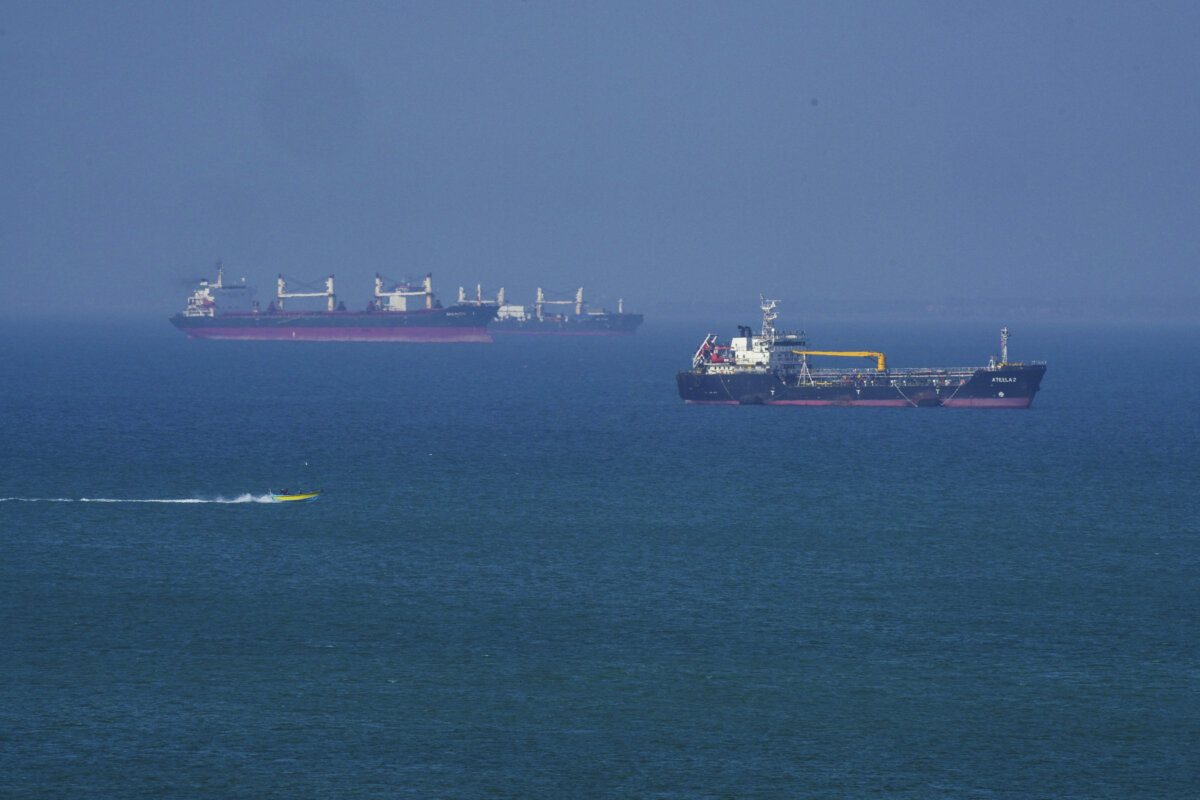

U.S. forces shot down two Iranian one-way attack drones on June 6.
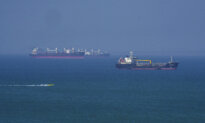
The U.S. Central Command (CENTCOM) said that the Iranian drones threatened international maritime traffic in the Strait of Hormuz.
“American forces remain postured and ready to continue defending against Iranian aggression,” CENTCOM wrote in an X post on Saturday.
The Strait of Hormuz is a crucial waterway located south of Iran. Before the war broke out on Feb. 28, a fifth of the world’s oil and gas was transported through it to global markets. The disruption of that shipping has had a deep impact on many economies around the world.
Saturday’s incident happened just hours after CENTCOM confirmed it had struck four Iranian drones and surveillance radar sites located in the regime’s coastal city of Goruk and Qeshm Island in the Strait of Hormuz.
Iran’s Revolutionary Guard separately targeted U.S. bases with strikes on the Ali Al Salem air base, which hosts U.S. forces in Kuwait, and the U.S. Navy’s 5th Fleet in Bahrain, according to the state-run IRNA news agency.
Iranian Foreign Minister Seyed Araghchi defended the regime’s continued strikes in the region on June 3.
“Our Armed Forces are conducting self-defense strikes on sites the U.S. is permitted to use to attack civilian shipping and violate the ceasefire,” Araghchi wrote in an X post. “Any hostile act will be met with an immediate, decisive response. What sanctions and war failed to achieve won’t be won with more war.”
The attacks from the Iranian regime come amid a tentative ceasefire with the United States, which started in April.
The United States and Iran are negotiating a peace deal to end the war in the Middle East, which has caused global gas prices to reach painfully high prices.
The World Food Programme, the U.N. food agency, said on June 5 that the war threatens to push millions of people in Somalia, Afghanistan, and Sri Lanka “into acute hunger due to the crisis.”
Pakistani Interior Minister Mohsin Naqvi visited Tehran on Sunday to push for lasting peace in the war.
Naqvi was allegedly delivering a message from Pakistan’s army chief, Field Marshal Asim Munir, to Iranian leader Mojtaba Khamenei, according to the Iranian state-run IRNA news agency.
Khamenei was named the Islamic Republic’s leader after his father was killed when the conflict broke out, but he has not been seen in public since he took over the position.
The newly appointed leader may have been “wounded and likely disfigured” in the early days of the conflict, U.S. Secretary of War Pete Hegseth suggested in mid-March.
Jackson Richman and The Associated Press contributed to this report.
 Friends Read Free
Copy
Facebook
Tweet
Friends Read Free
Copy
Facebook
Tweet