
President Donald Trump said Thursday he warned the European Union it must follow through on what he described as a trade agreement reached in Scotland or face sharply higher tariffs from the United States.
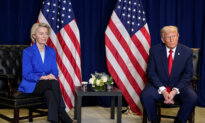
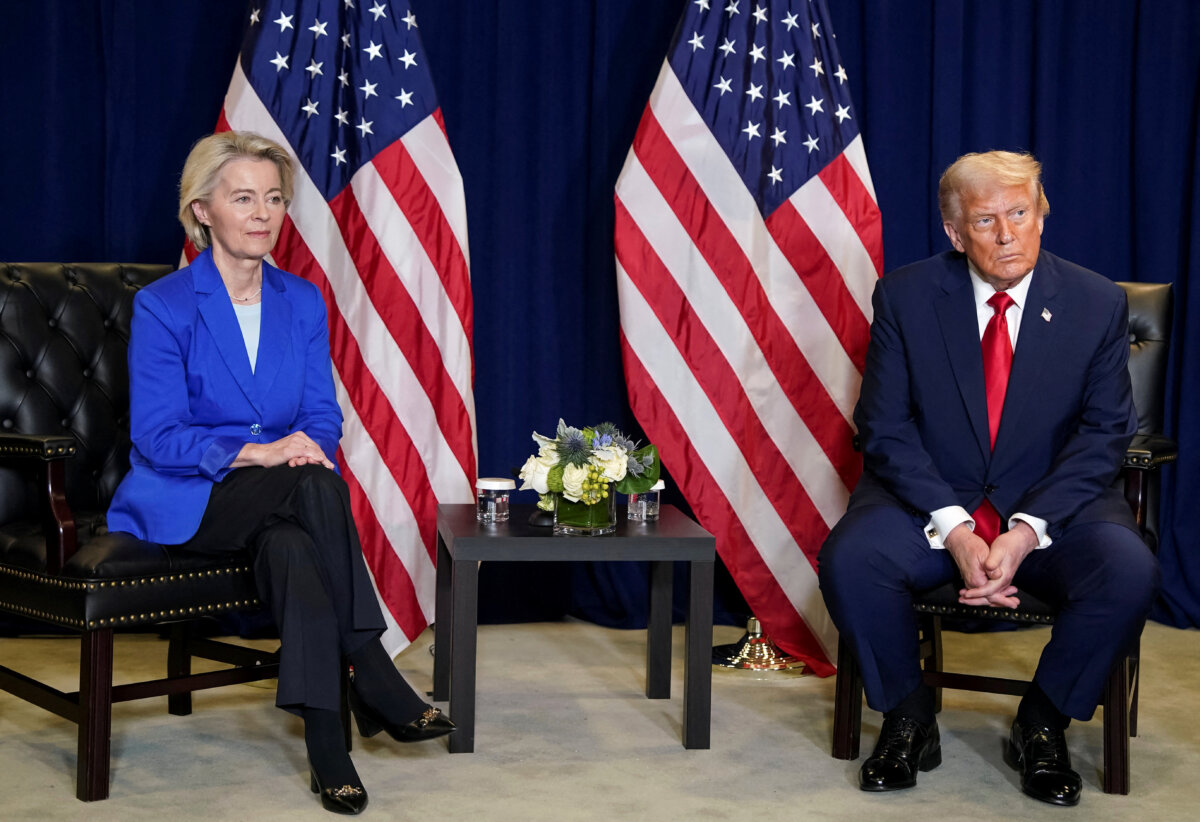
In a post on Truth Social, Donald Trump said he spoke with Ursula von der Leyen, president of the European Commission, and discussed both trade and Iran’s nuclear ambitions.
“We are completely united that Iran can never have a Nuclear Weapon,” Trump wrote. “We agreed that a regime that kills its own people cannot control a bomb that can kill millions.”
Trump then shifted to trade, saying he had been “waiting patiently” for the EU to fulfill its side of what he called a “Historic Trade Deal” agreed to in Turnberry, Scotland.
According to Trump, the agreement called for the EU to reduce tariffs to zero. He said he gave the EU until July 4—the 250th anniversary of American independence—to comply.
Trump warned that if the EU failed to meet the deadline, tariffs would “immediately jump to much higher levels.”
Von der Leyen said she had a “very good call” with Trump in a post on X. She said she agreed with Trump that Iran must never have a nuclear weapon.
“Recent events have clearly shown that the risks to regional stability and global security are too great,” she said. “We also discussed the EU–U.S. trade deal. We remain fully committed, on both sides, to its implementation. Good progress is being made towards tariff reduction by early July.”
In November 2025, Trump said the levies would generate trillions of dollars and be used to pay off “our enormous debt.” He said at the time that tariffs would possibly create a $2,000 dividend for every U.S. citizen.
Tariffs and certain other excise taxes have generated an estimated $110 billion in revenue this year as of May 6, according to the Bipartisan Policy Center.
Trump has frequently used tariffs as a foreign policy tool to address trade imbalances, immigration, drug trafficking—including fentanyl—and other political disputes.
Trump had proposed a 25 percent tariff on automobile imports from the European Union, according to U.S. Trade Representative Jamieson Greer.
Greer said May 4 that he had spoken with European and German trade officials over the weekend to explain the administration’s position and discuss compliance concerns related to last year’s trade agreement between Washington and the EU.
Trump announced the higher tariff rate last week, accusing the European Union of failing to uphold parts of the agreement reached in 2025 that capped most tariffs at 15 percent. The president said the increased tariffs would apply to imported cars and trucks, but not vehicles manufactured in the United States.
European officials rejected the accusations and warned the EU could respond if the United States violated the trade agreement.
In February, the United States Supreme Court struck down the use of Trump’s global tariffs invoked last year under the International Emergency Economic Powers Act. The Supreme Court’s ruling did not affect tariffs imposed under other statutes.
 Friends Read Free
Copy
Facebook
Tweet
Friends Read Free
Copy
Facebook
Tweet