
U.S. energy exports have hit record highs as the world navigates the uncertainty surrounding oil and gas shipments through the Strait of Hormuz.
U.S. exports of crude and petroleum products surged to a record 12.9 million barrels per day last week, according to data from the U.S. Energy Information Administration.
The Energy Information Administration predicted, in a separate analysis, that net exports of U.S. liquefied natural gas (LNG) would grow by 18 percent this year and by another 10 percent in 2027.
The Department of Energy stated that the United States is the “world’s number one exporter of LNG” and is the first country to have exported more than 100 million metric tons of LNG in a single year, according to a post on X.
LNG export terminals are in states such as Georgia, Texas, and Louisiana, according to the Sierra Club export tracker.
Exports of liquefied natural gas are expected to rise even more in the coming years, with more than a dozen terminals being constructed or planned in the South.
“Thanks to President Trump’s energy agenda, [the U.S. Energy Department] has approved over 19 billion cubic feet a day of new LNG export authorizations—more than America’s entire export capacity upon inauguration last January,” Energy Secretary Chris Wright shared on April 22.
“This is a win for America, our allies, and for global energy security.”
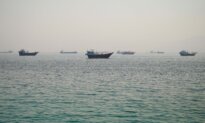
The skyrocketing energy demand comes as countries attempt to replace supply disruptions in the Hormuz Strait, located just south of Iran.
The Strait of Hormuz was used to transport about one-fifth of the world’s oil and gas before the United States and Israel began strikes on the Iranian regime on Feb. 28, after which Tehran retaliated by striking Gulf neighbors and closing the crucial waterway.
The Trump administration has issued a blockade against ships entering or exiting Iranian ports.
As of April 25, U.S. Central Command reported that U.S. forces have redirected 37 Iran-linked vessels, including a ship called the M/V Sevan on April 25 that was among 19 “shadow fleet” sanctioned vessels.
“Sevan was intercepted in the Arabian Sea by a U.S. Navy helicopter from guided-missile destroyer USS Pinckney (DDG 91), and the merchant vessel is currently complying with U.S. military direction to turn back to Iran under escort,” the U.S. Central Command posted on X.
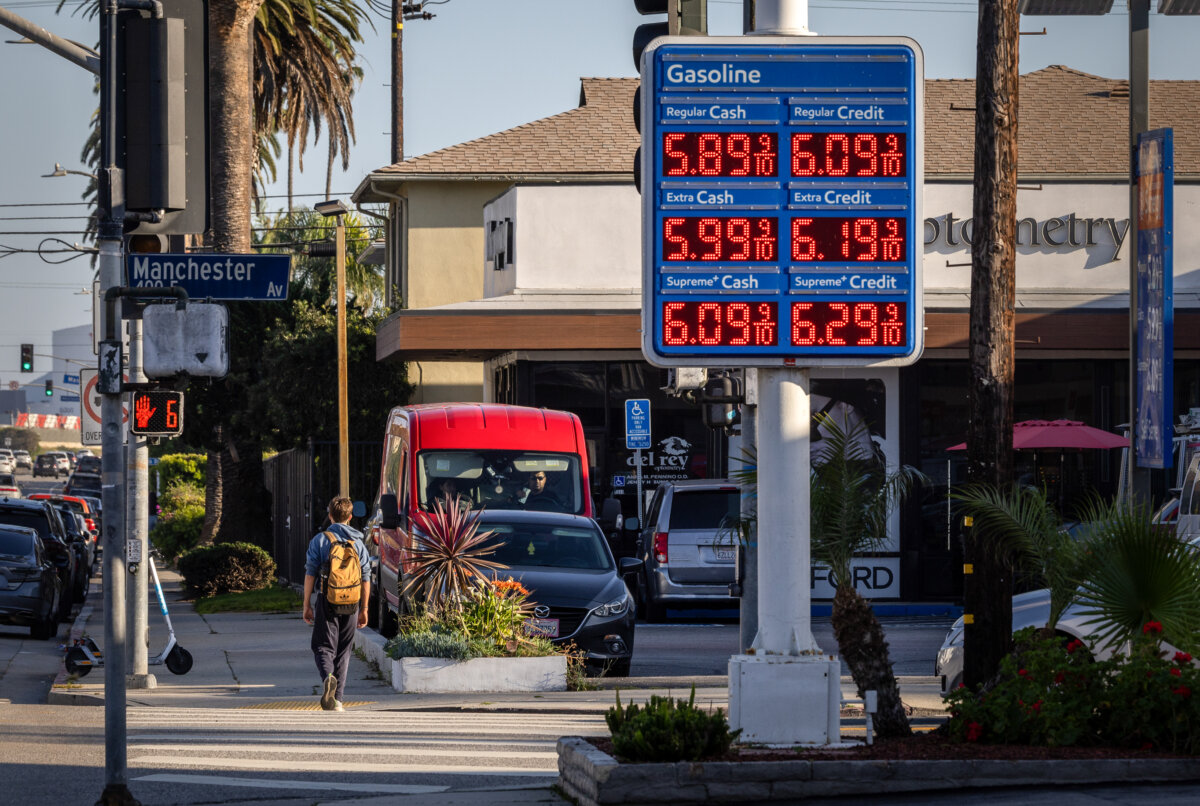
Americans haven’t yet seen much relief at the pump, despite the surge in energy exports.
As of April 26, the average price for a gallon of regular unleaded gasoline in the United States is $4.09, according to AAA.
A gallon of regular gas averaged only $2.98 before the conflict started in late February.
The Energy Information Administration doesn’t expect prices to dip much in the short term. An analysis by the agency within the Department of Energy predicted that the price of a gallon of gasoline would average about $3.70 in 2026 and drop to $3.46 in 2027.
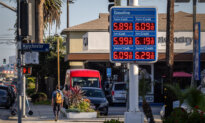
The delayed relief could keep gasoline prices high in states such as California, Hawaii, and Washington, which are already seeing prices above $5 per gallon.
One Epoch Times editor spotted Chevron charging $6.19 for a gallon of regular gas on April 19 in Fillmore, California, a city located northeast of the Los Angeles metropolitan area.
States with the least expensive gasoline markets last week included Oklahoma, Kansas, and Texas, which all charged less than $3.60 on average for a gallon of regular gas, according to AAA.
The global energy climate may shift once again after scheduled peace talks between the United States and Iran collapsed on April 25.
“I just cancelled the trip of my representatives going [to] Islamabad, Pakistan, to meet with the Iranians,” Trump wrote in a Truth Social post on April 25.
“Too much time wasted on traveling, too much work! Besides which, there is tremendous infighting and confusion within their ‘leadership.’ Nobody knows who is in charge, including them.”
The cancellation was announced after Iranian Foreign Minister Abbas Araghchi was already in Pakistan.
Araghchi still went on X to share that he had a “very fruitful visit to Pakistan, whose good offices and brotherly efforts to bring back peace to our region we very much value.”
The foreign minister said that he has “yet to see if the U.S. is truly serious about diplomacy.”
Monica Seeley and Reuters contributed to this report.
A previous version of this article misspelled the name of Iranian Foreign Minister Abbas Araghchi. The Epoch Times regrets the error.
 Friends Read Free
Copy
Facebook
Tweet
Friends Read Free
Copy
Facebook
Tweet