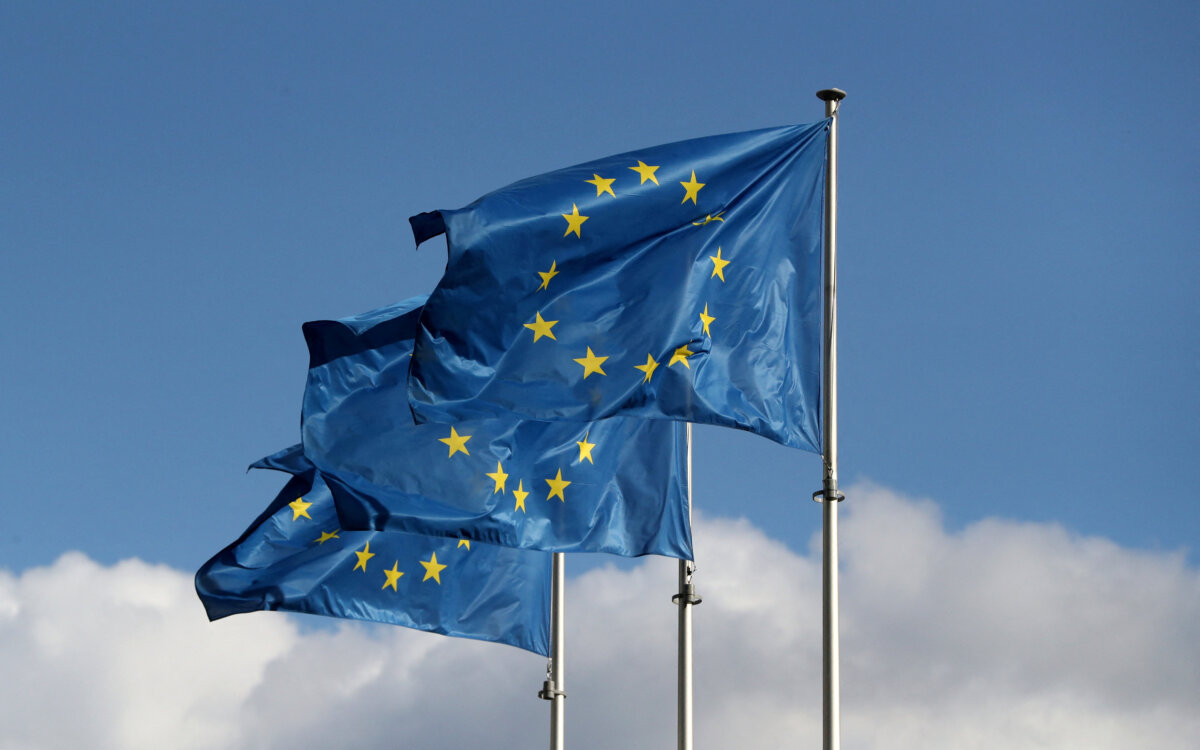

European Union leaders will meet in Cyprus on April 23–24 for a summit as the region works to navigate the energy crisis caused by the war in Iran.
The meeting will happen in the capital city, Nicosia, and the southeastern coastal city of Ayia Napa.
“The focus of our informal European Council meeting will be twofold: we will address the challenging geopolitical environment and Europe’s response to it, and we will also provide political guidance for the work on the Multiannual Financial Framework (MFF) for 2028–2034,” European Council President António Costa wrote in an invitation letter.
Ukrainian President Volodymyr Zelenskyy is expected to begin the summit by sharing the latest developments regarding his country’s ongoing war with Russia, which entered its fifth year in February.
It’s not clear whether Zelenskyy will be in person or enter via livestream.
The Epoch Times has reached out to Zelenskyy’s office for clarification and separately contacted the Council of the European Union for a list of leaders who plan to attend.
Leaders will discuss the issues caused by the war in Iran, which started on Feb. 28 when the United States and Israel targeted the Iranian regime in Operation Epic Fury.
The war sparked lingering uncertainty about how safe passage could be achieved through the Strait of Hormuz, a crucial passageway located just south of Iran.
On April 22, Iranian forces fired on two commercial vessels near the Strait of Hormuz hours after U.S. President Donald Trump extended a ceasefire and naval blockade that targeted Iranian-linked ships.
No injuries were reported in the incidents.
The waterway was used to transport around one-fifth of the world’s oil and gas before the conflict.
EU leaders plan to discuss the energy crisis that the war has caused and how to work toward de-escalation and freedom of navigation.
“The effects of high fossil fuel prices are already visible in the everyday lives of our citizens and companies,” Costa’s letter states.
“Given the potential further negative economic consequences of a prolonged conflict, we will discuss the instruments at our disposal, building on the decisions taken at the March European Council, and on measures proposed by the Commission in follow-up to them.”
The Dutch government estimated on April 20 that the EU has reserves and production for a five-month supply of jet fuel.
The European Commission proposed national emergency measures on April 21 aimed at keeping jet fuel and diesel available.
The proposal included refilling underground gas storage sites, establishing a Fuel Observatory to track imports and exports, targeted income support schemes, and attempting to quickly shift away from oil and gas to alternative energy sources.
Military planners from 30 countries traveled to London on April 22 to discuss how to safely open the Strait of Hormuz.
“I am confident that, over the next two days, real progress can be made,” British Defence Minister John Healey said.
Reuters contributed to this report.
 Friends Read Free
Copy
Facebook
Tweet
Friends Read Free
Copy
Facebook
Tweet