
The Iranian regime does not intend to close the Strait of Hormuz, according to Iran’s U.N. Ambassador Amir Saeid Iravani.
“We are not going to close the Strait of Hormuz,” Iravani told reporters at the United Nations on March 12. “But it is our inherent right to preserve the peace and security in this waterway.”
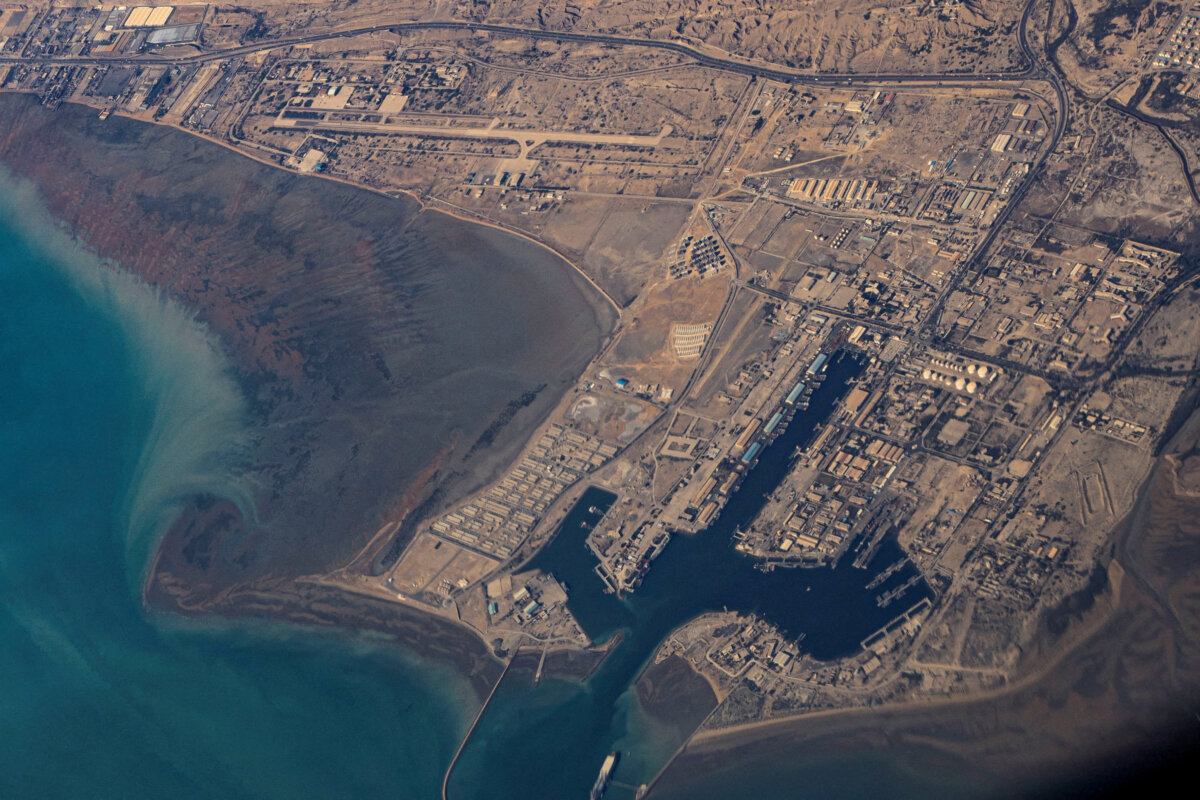
The Strait of Hormuz is a crucial passageway located just south of Iran that’s used to transport a fifth of the world’s oil and gas.
“Iran fully respects and remains committed to the principle of freedom of navigation under the law of the sea,” Iravani added.
While Iravani spoke on Thursday, he accused the United States of “destabilizing” the region by “launching aggression against Iran and undermining regional security.”
Iravani’s denial about closing the important waterway came hours after the regime’s new leader, Mojtaba Khamenei, suggested a halt could be used for leverage in the war, which started on Feb. 28 when the United States and Israel struck the country during Operation Epic Fury. The United States has said that the operation is a preemptive attack on Iran to prevent the Islamic regime, which has long supported various terrorist groups, from obtaining nuclear weapons by destroying its nuclear facilities and military capabilities.
Iran has retaliated by striking targets across the Middle East, including, most recently, crude oil tankers and commercial vessels transiting the Strait of Hormuz.
U.S. Energy Secretary Chris Wright said the United States is looking to use its military to escort oil tankers through the strait, adding that the Navy will likely be able to do so by the end of March.
Khamenei, the son of assassinated leader Ali Khamenei, did not appear on camera when he floated using the waterway as leverage. Instead, he wrote a speech and had a middleman deliver it to somebody else to read, on his behalf, during a televised broadcast, according to Iranian state media.
Khamenei, who did not have support from U.S. President Donald Trump to take power, may have suffered a leg injury during attacks targeting his father’s bunker, an Israeli security official told Epoch Magazine on March 11. The severity of his injury is unclear.
The uncertainty in the region amid the conflict has caused oil and gas prices to surge.
Iran’s military command warned on Wednesday that the world needed to be prepared to pay $200 a barrel for crude oil.
The national average price for a regular gallon of gas sat at $3.59 on Thursday, with Brent crude trading around $100 a barrel.
Trump suggested on March 11 that oil companies should still use the Strait of Hormuz despite military operations in the region.
“We took out just about all of their mines,” Trump told reporters as he left the White House on Wednesday.
The White House has considered other ideas to cut prices at the pump.
“The White House is considering waiving the Jones Act for a limited period of time to ensure vital energy products and agricultural necessities are flowing freely to U.S. ports,” White House press secretary Karoline Leavitt shared in a statement to The Epoch Times on March 12.
If the Jones Act is waived, it would lift restrictions on foreign-owned and crewed ships that can transport goods between ports in the United States.
 Friends Read Free
Copy
Facebook
Tweet
Friends Read Free
Copy
Facebook
Tweet