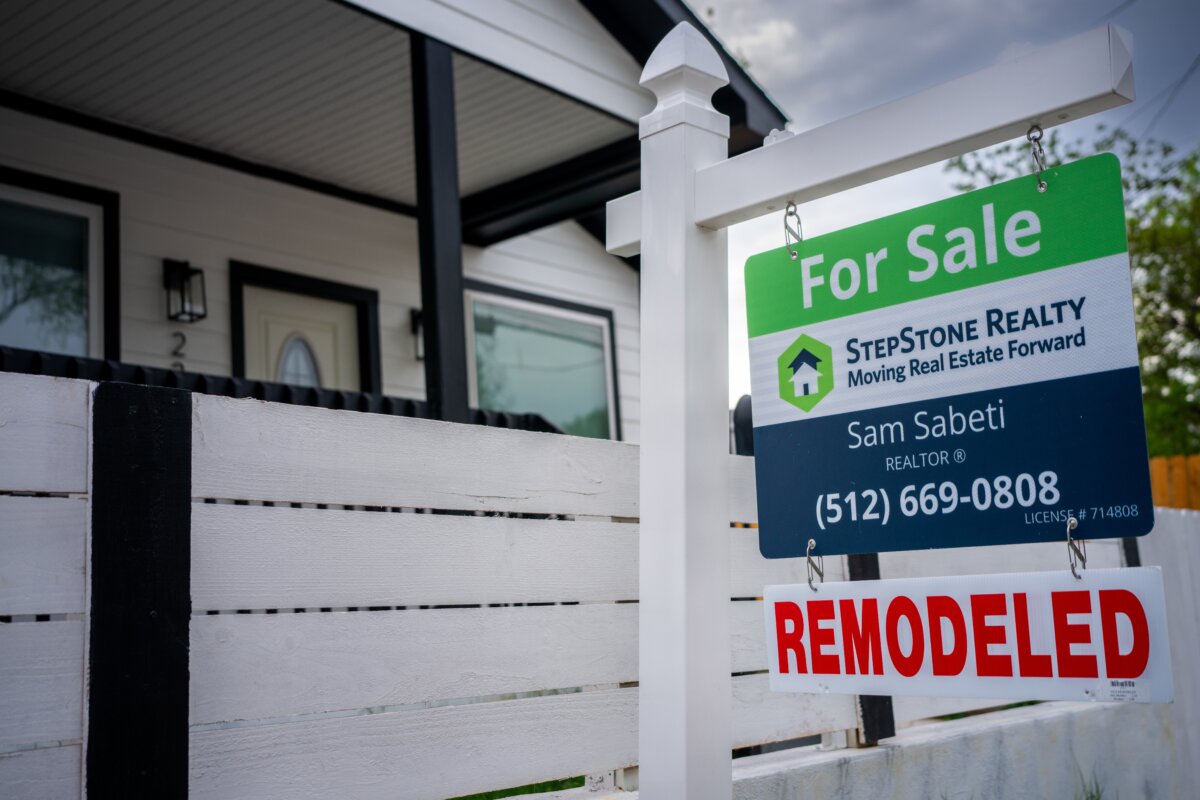

Years ago, buying a “fixer-upper” house to upgrade and resell was often seen as a viable means of earning quick money. Today, however, home flippers have seen their investments shrink to the lowest gross profit percentage since 2008.
In its 2025 year-end Home Flipping Report, ATTOM announced a significant drop in gross profit margins, with a return on investment of just 25.5 percent—the lowest rate recorded since 2008 and down from 32.1 percent the year before. A typical 2025 flip netted $65,981 in gross profit, compared to $77,000 in 2024.
Last year, buyers purchased homes intended for flipping at a median price of $259,019, with a median sale price after renovation at $325,000, according to ATTOM.
The property data provider also reported that 297,045 single-family homes and condos were flipped nationwide during 2025, representing the fewest home flips in a year since 2020, and a 3.9 percent decline from 2024’s total of 309,050.
ATTOM attributes the decline to the nation’s soaring median home prices.
“Competition for homes remains strong in many markets due to constrained supply,” ATTOM CEO Rob Barber said in the report.
“With prices staying elevated, investors are finding it harder to secure deals that deliver strong returns.”
Following the 2008 financial crisis, when home prices plummeted, typical home flippers were able to purchase homes for less than $150,000, with profit margins usually exceeding 50 percent. In 2012, that margin climbed to 61.1 percent, the report said.
“Flippers are having to get more creative to maintain profitability,” Barber said.
“That could include taking on older homes, as the median flipped property in 2025 was built in 1978—the oldest since we began tracking, along with tighter cost control and more disciplined renovation strategies.”
According to the report, homes flipped by investors accounted for 7.4 percent of all home sales in 2025, down slightly from 7.6 percent in 2024. As a percentage of overall sales, the home-flipping rate experienced year-over-year declines in 142 of 215 metros with populations of at least 200,000 and at least 100 home flips in 2025.
Salisbury, Maryland, experienced the largest decline in home flipping last year with a drop of 42.2 percent compared to 2024. Tallahassee, Florida, dropped by 37.5 percent, and Lafayette, Indiana, by 36 percent. Both Evansville, Indiana, and Warner Robins, Georgia, saw home flips decrease by more than 32 percent.
Conversely, Binghamton, New York, saw home flips surge by 136.4 percent from 2024, followed by Boulder and Greeley, Colorado, with 72.4 percent and 49.4 percent increases, respectively. Lexington, Kentucky, and Scranton, Pennsylvania, saw home flips advance by more than 30 percent.
The share of flipped homes that investors purchased through financing grew from 36.9 percent in 2024 to 37.7 percent in 2025.
In its analysis of profit margins, ATTOM found that the largest declines occurred in Ocala, Florida, down from an outlying 492.5 percent in 2024 to 124.1 percent in 2025. Erie, Pennsylvania, and Little Rock, Arkansas, experienced declines of nearly 50 percent.
The largest increases in profit margins occurred in Peoria, Illinois, up from 61.2 percent in 2024 to 91.4 percent last year, and Huntington, West Virginia, up from more than 50.6 percent in 2024 to 77.2 percent.
Among metros with at least 1 million people, Louisville, Kentucky, flippers saw the largest profit margin drop from 66.6 percent in 2024 to 40.2 percent last year.
In 2025, the average home flip took 163 days to renovate and sell from the time it was purchased, just one day longer than 2024’s average. More than 11 percent of buyers of flipped homes used loans backed by the Federal Housing Administration (FHA).
Nearly 69,000 homes were flipped nationwide during the fourth quarter of 2025, and close to 40 percent of those were financed.
 Friends Read Free
Copy
Facebook
Tweet
Friends Read Free
Copy
Facebook
Tweet