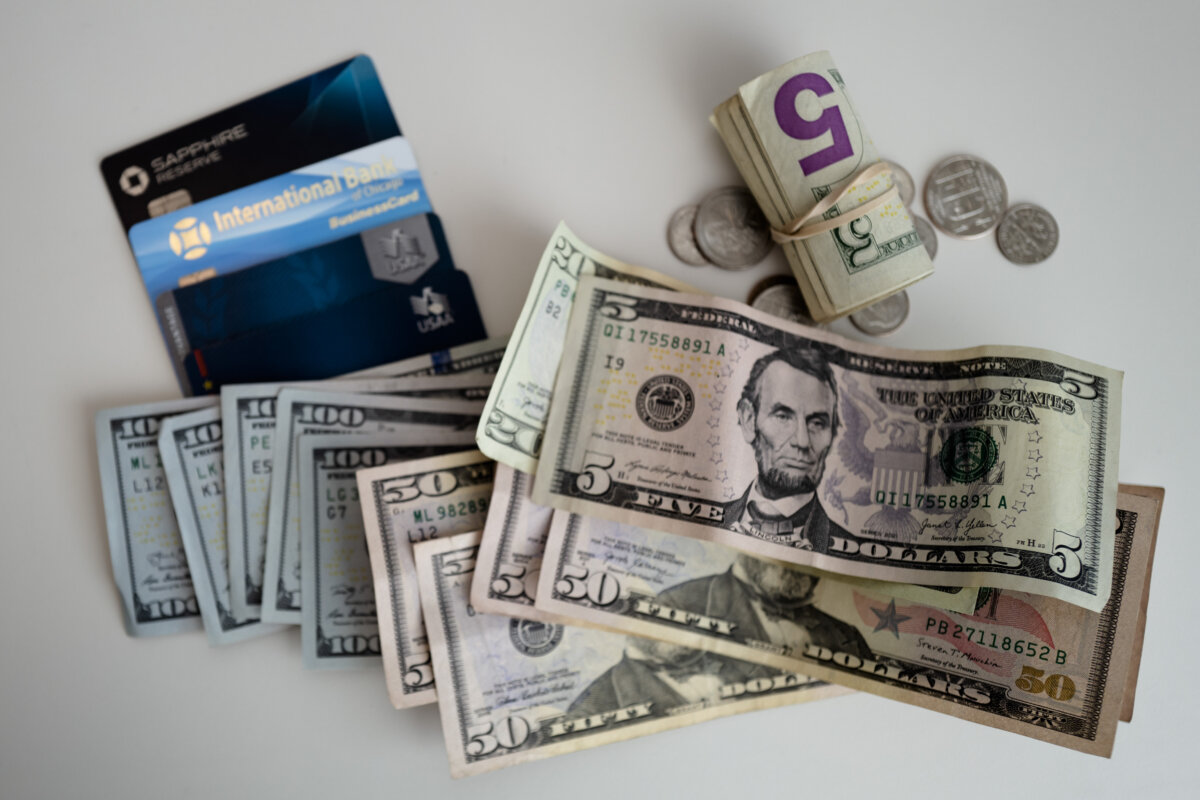

Americans’ household debt levels, ranging from credit card balances to auto loans, reached a new record high last quarter.
Total household debt in the United States surged by $197 billion in the third quarter to $18.59 trillion, according to the New York Federal Reserve.
Despite the latest Household Debt and Credit Report highlighting an ocean of red ink among consumers, conditions are moderating, according to Donghoon Lee, Economic Research Advisor at the New York Fed.
“Household debt balances are growing at a moderate pace, with delinquency rates stabilizing,” he said in the report. “The relatively low mortgage delinquency rates reflect the housing market’s resilience, driven by ample home equity and tight underwriting standards.”
Mortgage balances increased by $137 billion to $13.07 trillion during the third quarter—up by $478 billion from a year ago. Additionally, the pace of mortgage originations climbed to $512 billion for the quarter.
The rate of serious mortgage debt delinquency—90 days or more delinquent—edged up to 1.28 percent from 1.08 percent in the third quarter of 2024.
Credit card balances jumped by $24 billion to $1.23 trillion, while serious delinquency rates declined to 7.05 percent from 7.1 percent.
Total auto loan debt held steady at $1.66 trillion. Delinquencies rose by about 0.1 percent.
While the figures might seem concerning at first glance, they are better than they appear, Ted Rossman, senior industry analyst at Bankrate, said.
“It’s worth pointing out that we would expect these numbers to grow over time as the population grows and the economy expands,” Rossman said in a statement to The Epoch Times. “The household debt-to-income ratio is lower now than it was from the late 1990s to the late 2010s. It has risen over the past five years, but not in a particularly worrisome fashion.”
Student loan balances, meanwhile, swelled by $15 billion to $1.65 trillion.
With the current administration resuming student loan collections, borrowers may be having a challenging time finding the money to repay the loans, most of which are backed by the U.S. government.
During the July-to-September period, the student loan serious delinquency transition rate increased to an all-time high of 14.3 percent, describing new accounts flowing into serious delinquency, up dramatically from 0.77 percent in the third quarter of 2024, a period that saw the expiration of COVID-19 pandemic-era forbearance.
Previously unreported missed payments on federal student loans from the second quarter of 2020 to the fourth quarter of 2024 are now being reflected in borrowers’ credit files, the regional central bank stated. This shift has sustained elevated delinquency levels after a notable surge earlier in 2025.
“Student loan delinquencies are at a record high, but auto loan and credit card delinquencies aren’t as high as they were in the middle of 2024,” Rossman added.
K-Shaped Economy
In recent months, economic observers and monetary policymakers have discussed signs of K-shaped conditions popping up across the United States.
A K-shaped economy—also called a two-speed climate—highlights diverging economic outcomes. This situation features high-income earners maintaining robust spending, while lower- and middle-income groups wrestle with tighter budgets and reduced consumption.
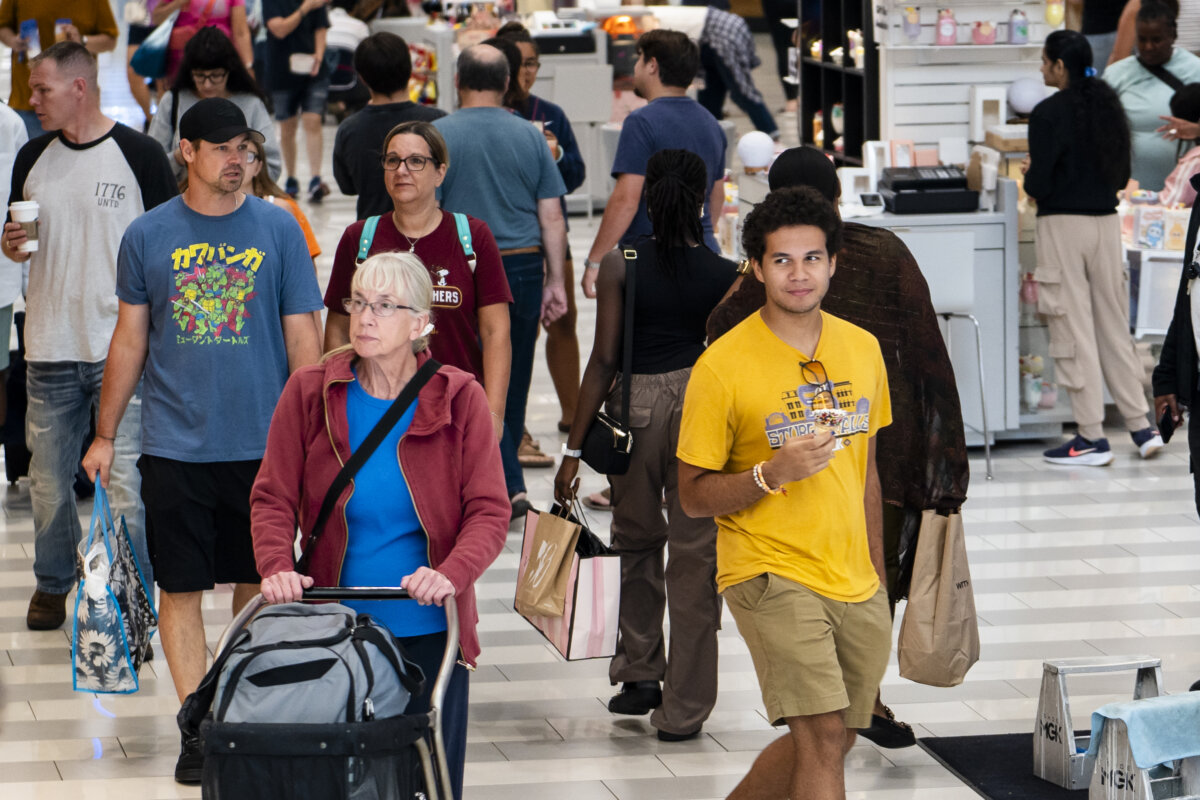
“The consumption data’s been pretty healthy. We definitely are seeing this K-shaped or two-speed economy, however you wanna think about it,” Cleveland Fed President Beth Hammack said at the Evolving Landscape of Bank Funding Research Conference in Dallas on Oct. 31.
“And a lot of the consumption that we’re seeing, a lot of that is coming from the higher-income families. And that’s been really sustaining the growth in GDP.”
Estimates from the Atlanta and New York Federal Reserve banks suggest growth rates remaining strong in the third and fourth quarters.
In September, analysis by Mark Zandi, chief economist for Moody’s Analytics, found that the bottom 80 percent of Americans are spending in line with inflation. The top 20 percent, however, are growing their spending. If the affluent were to stop consuming, the economy would face challenges.
“The data also show that the U.S. economy is being largely powered by the well-to-do. As long as they keep spending, the economy should avoid recession, but if they turn more cautious, for whatever reason, the economy has a big problem,” Zandi wrote in a Sept. 16 post on X.
Some of this can be attributed to the record stock market run, according to Federal Reserve Chair Jerome Powell.
Powell, speaking at the post-meeting press conference last month, said that even if the market dipped, consumer spending would not tank. In fact, consumption levels would only take a substantial hit if the market were to crash.
“I think it’s certainly a factor supporting consumption right now,” he told reporters.
“It would affect spending if the stock market went down, but it wouldn’t drop sharply unless there were quite a sharp drop in the stock market.”
The blue-chip Dow Jones Industrial Average has surged 11 percent this year, while the tech-heavy Nasdaq Composite Index has advanced 22 percent. The broader S&P 500 has climbed 16 percent.
Due to the government shutdown—now in its 36th day—it has been challenging to gauge the economy’s health. However, based on the available data, Rossman says the broader economic landscape is in good shape.
“While there is some distress at the household level—in line with that K-shaped economy where the rich get richer and the poor get poorer—the macro picture is fairly bright,” Rossman said.
 Friends Read Free
Copy
Facebook
Tweet
Friends Read Free
Copy
Facebook
Tweet