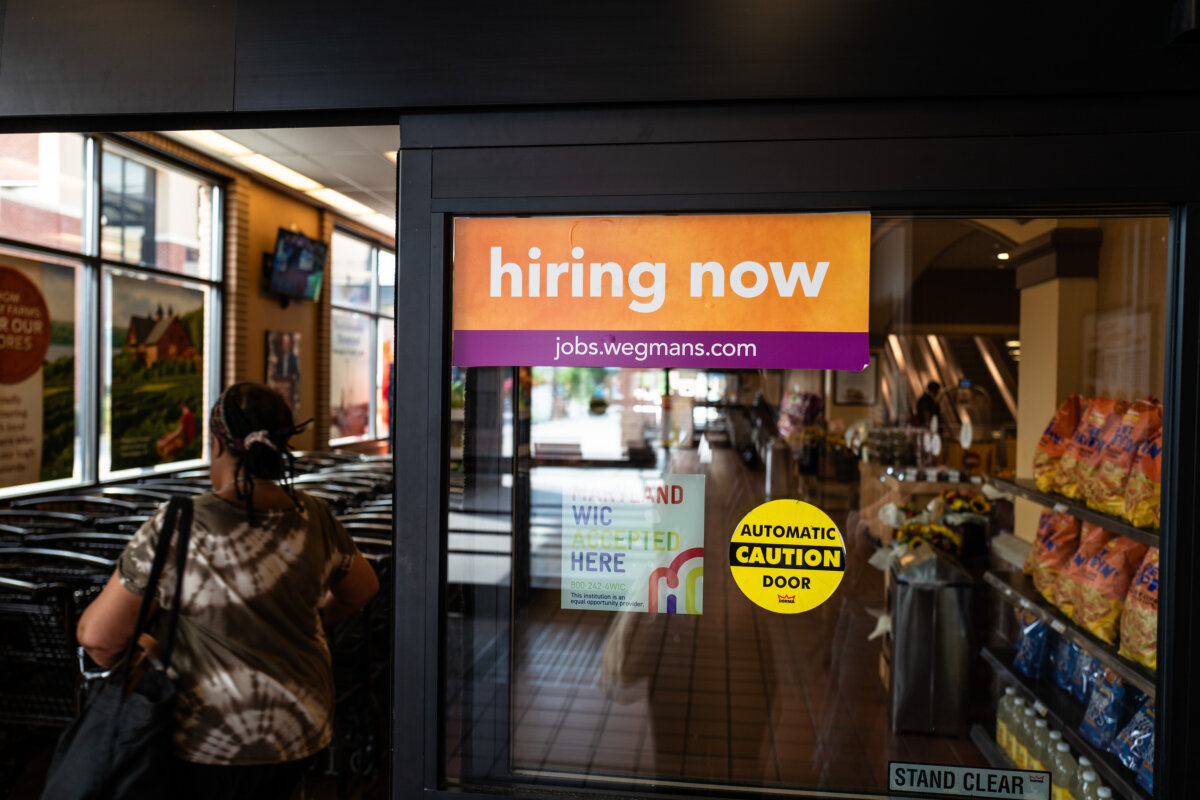

U.S. workers observed fewer “now hiring” signs in June as the number of job vacancies unexpectedly declined.
According to the Bureau of Labor Statistics, the number of job openings fell by 275,000 to 7.43 million. This is down from the previous month’s upwardly revised 7.71 million.
The market had forecast 7.55 million employment vacancies.
Last month’s decline was driven by accommodation and food services (negative 308,000), health care and social assistance (negative 244,000), and finance and insurance (negative 142,000).
Conversely, three sectors accounted for most gains: retail trade (190,000), information (67,000), and state and local government education (61,000).
Job quits—a measure of the number of individuals voluntarily leaving their positions—fell by 128,000 to 3.14 million. This was driven by quits in professional and business services (negative 114,000), state and local government education (negative 20,000), and federal government (negative 5,000).
Economists closely monitor the quits rate because it can signal the level of confidence workers have in the broader economy and their ability to find a new job.
Hiring efforts were little changed at 5.2 million in June, data from the Job Openings and Labor Turnover Summary showed. At the same time, the number of layoffs was unchanged at 1.6 million.
This has been a consistent theme in the labor market over the past several months, as employers remain cautious about wider economic conditions.
Still, job vacancies remain above their pre-pandemic levels, signaling the challenges employers have in finding workers to fill their positions.
In February 2020, nearly 7 million positions were unfilled. After tanking at the onset of the pandemic, job vacancies rocketed to an all-time high of 12.13 million.
Employers have struggled with multiple labor developments, particularly the “great resignation”—millions of people voluntarily leaving their jobs—and early retirements.
Scores of surveys, including the National Federation of Independent Business’s Small Business Optimism Index, suggest that labor quality remains one of the chief hurdles for employers.
Experts have attributed this to an intensifying labor shortage, which they say threatens economic growth and global competitiveness.
“With slowing labor force growth and an aging population, the US needs a comprehensive strategy to address labor shortages,” The Conference Board said in a June report.
“This agenda should maximize labor force participation, strategically increase immigration, reduce barriers to work and entrepreneurship, and address educational and skills mismatches.”
For now, economic observers are concentrating on the short-term trends in the labor market.
Slow and Steady
Employment conditions remain resilient despite broader economic uncertainty.
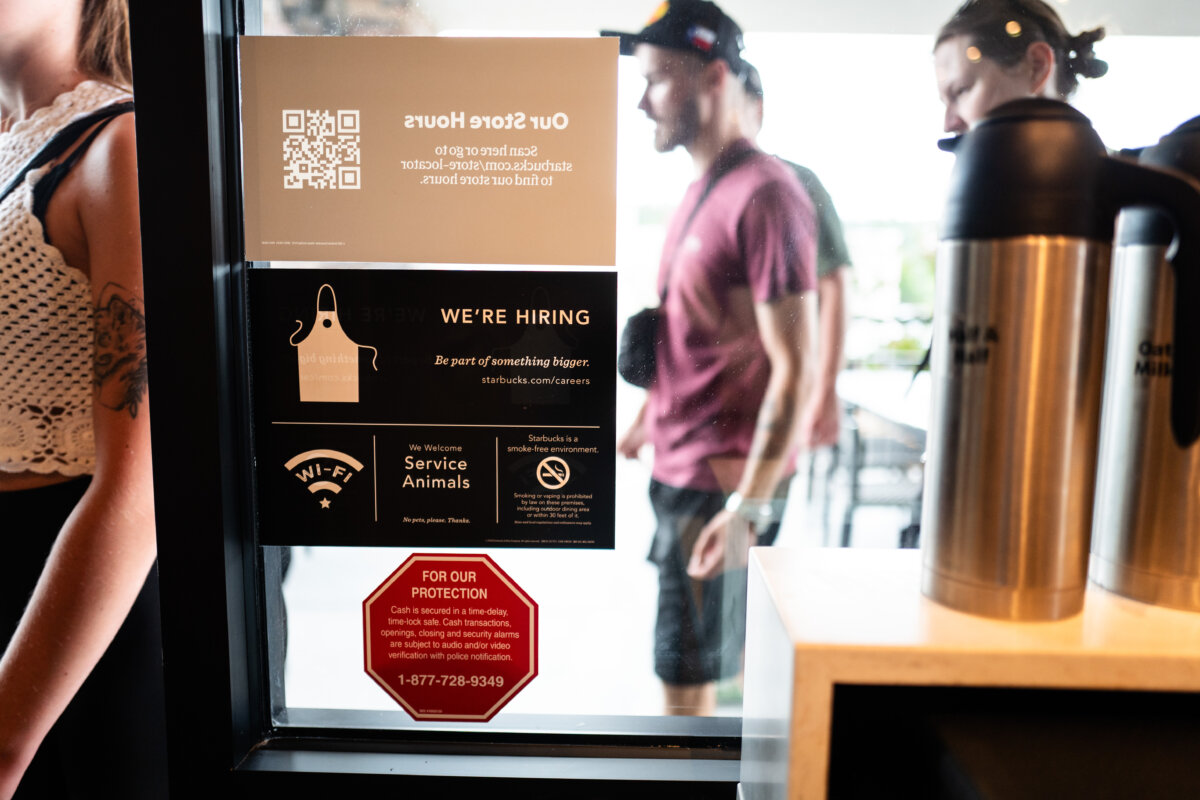
Last week, initial jobless claims—the number of individuals filing for unemployment benefits—declined for the sixth consecutive week to a three-month low.
“While hiring is slow, initial jobless claims are holding stable,” Bill Adams, chief economist at Comerica Bank, said in a note emailed to The Epoch Times.
“Labor supply is growing much more slowly in 2025 due to immigration policy changes, so the unemployment rate can likely hold steady, even if payrolls increase much more slowly in the second half of 2025, than in 2023 or 2024.”
The unemployment rate eased to 4.1 percent last month.
This week, the Bureau of Labor Statistics will release the July jobs report. Early estimates suggest the U.S. economy created 110,000 new jobs and the unemployment rate ticked up to 4.2 percent.
“Looking ahead to the July employment report, we expect to see further evidence of the labor market settling into a more (hopefully) sustainable rhythm,” Mark Hamrick, senior economic analyst at Bankrate, said in a statement to The Epoch Times.
Market watchers suggest that the labor market is showing signs of cooling, pointing to anemic private sector payroll growth.
The Bureau of Labor Statistics reported last month that private payrolls rose 74,000, the fewest since October. Additionally, payroll processor ADP said in its National Employment Report for June that private businesses eliminated 33,000 jobs, the first decline since March 2023.
“While the labor market looks fine on the surface, once we account for expected data revisions, private-sector payroll growth is near stall speed, and other data suggest that the downside risks to the labor market have increased,” Federal Reserve Governor Christopher Waller said in a July 17 speech.
The economy has averaged 130,000 new jobs per month this year, which is below last year’s monthly average of 168,000.
Despite the apprehension about expanding personnel and the reluctance to trim headcount, pay growth has remained unaffected.
Average nominal (non-inflation-adjusted) wage growth continued hovering close to 4 percent year over year. In addition, data compiled by the Treasury Department found that year-to-date real (inflation-adjusted) wages have increased by 1.7 percent, the largest increase since 1968.
“The slowdown in hiring has yet to disrupt pay growth,” said Nela Richardson, chief economist at ADP.
 Friends Read Free
Copy
Facebook
Tweet
Friends Read Free
Copy
Facebook
Tweet