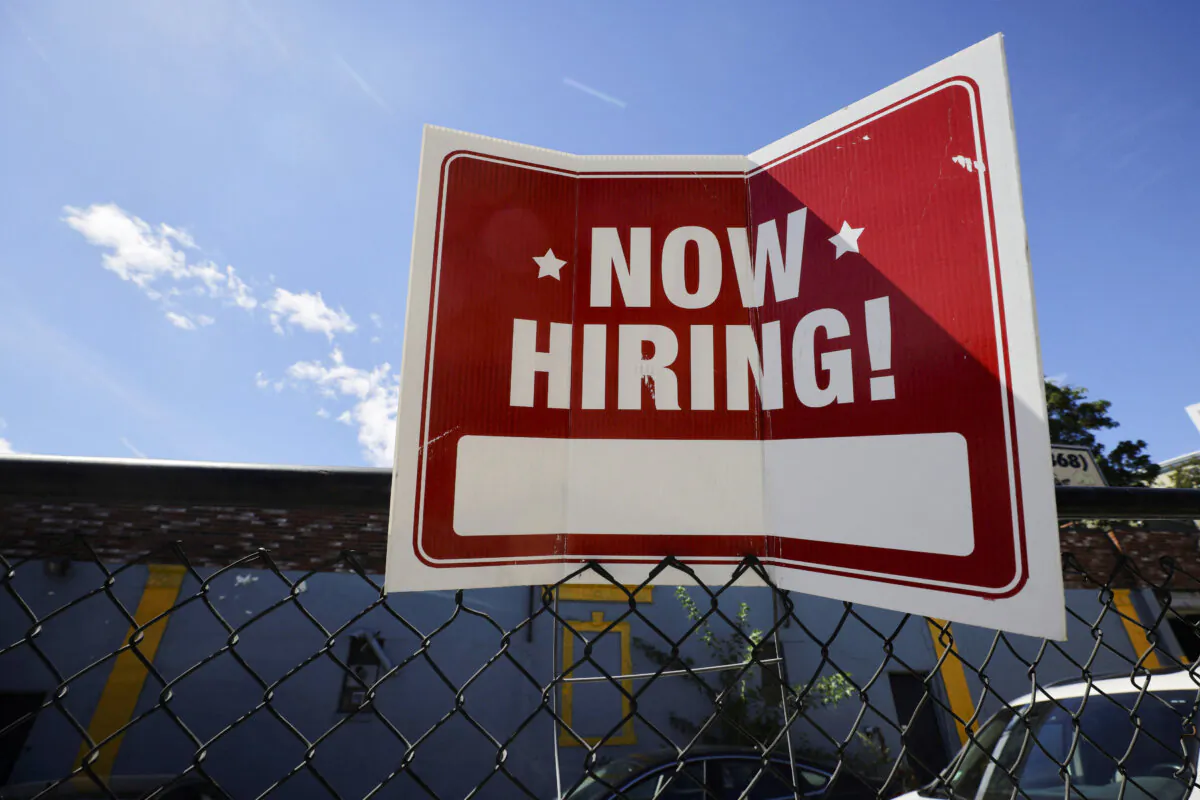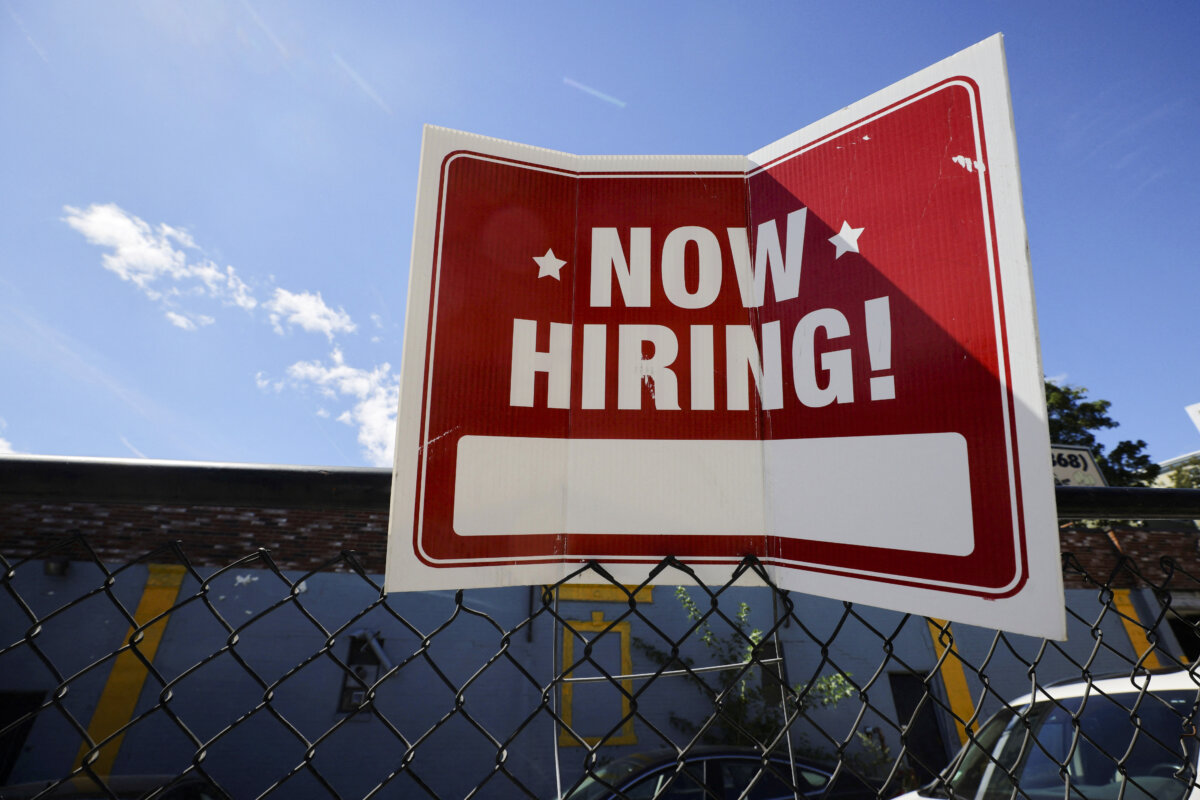

The number of Americans filing for unemployment benefits edged up last week, but the total remained below this year’s high amid a steady job market.
For the week ending April 18, initial jobless claims rose by 6,000 to 214,000, according to Department of Labor data released on April 23. This is up from the previous week’s upwardly revised 208,000 and slightly more than the 210,000 new applications that analysts who were surveyed by the data firm FactSet were expecting.
Despite all the noise in the U.S. and global economies—high gasoline prices, the war in Iran, and growth risks—the national labor market has been a source of stability.
“If I had one piece of economic data to describe conditions across the American economy, it would be the 13-week moving average of initial jobless claims,” Joseph Brusuelas, chief economist at RSM, said in an April 23 research note.
“Initial claims, when smoothed out over three months to account for noise in the data, continue to signal a remarkably stable domestic labor market despite a lower pace of hiring.”
In February, initial jobless claims surged to 230,000, driven by the severe winter storm that blanketed many parts of the country. As conditions normalized, the number of people claiming unemployment benefits began to sink to historically low levels of about 200,000.
The four-week average, which strips out week-to-week volatility, ticked up to 210,750.
These numbers “reaffirm the low-fire, low-hire narrative across the U.S. economy,” Brusuelas said.
Although economic observers have used this “low-fire, low-hire” description of employment conditions since the summer, data revisions suggest that the U.S. labor market has been growing at an anemic pace for at least two years.
There is cautious optimism that the U.S. labor market could be staging a hiring comeback.
In the four weeks ending April 4, private employers added an average of nearly 55,000 jobs per week, a new high since the series started in September 2025, according to payroll processor ADP.
The reading is up from the 40,250 new jobs in the previous period, and the week of the latest data is the fifth consecutive week of rising hiring activity.
This comes after the Bureau of Labor Statistics reported that the country added a much larger than expected 178,000 jobs in March, driven entirely by the private sector.
Early estimates suggest that the April nonfarm payrolls report will register a gain of 95,000 jobs and the unemployment rate will hold steady at 4.3 percent.
Stability in employment could afford the Federal Reserve the luxury of waiting to pull the trigger on the next rate action, allowing monetary policymakers to concentrate on inflation.
The central bank will hold its next two-day Federal Open Market Committee meeting next week. Investors overwhelmingly expect the institution to keep interest rates unchanged, and traders do not anticipate that the Fed will lower the benchmark federal funds rate at all this year, according to the CME FedWatch Tool.
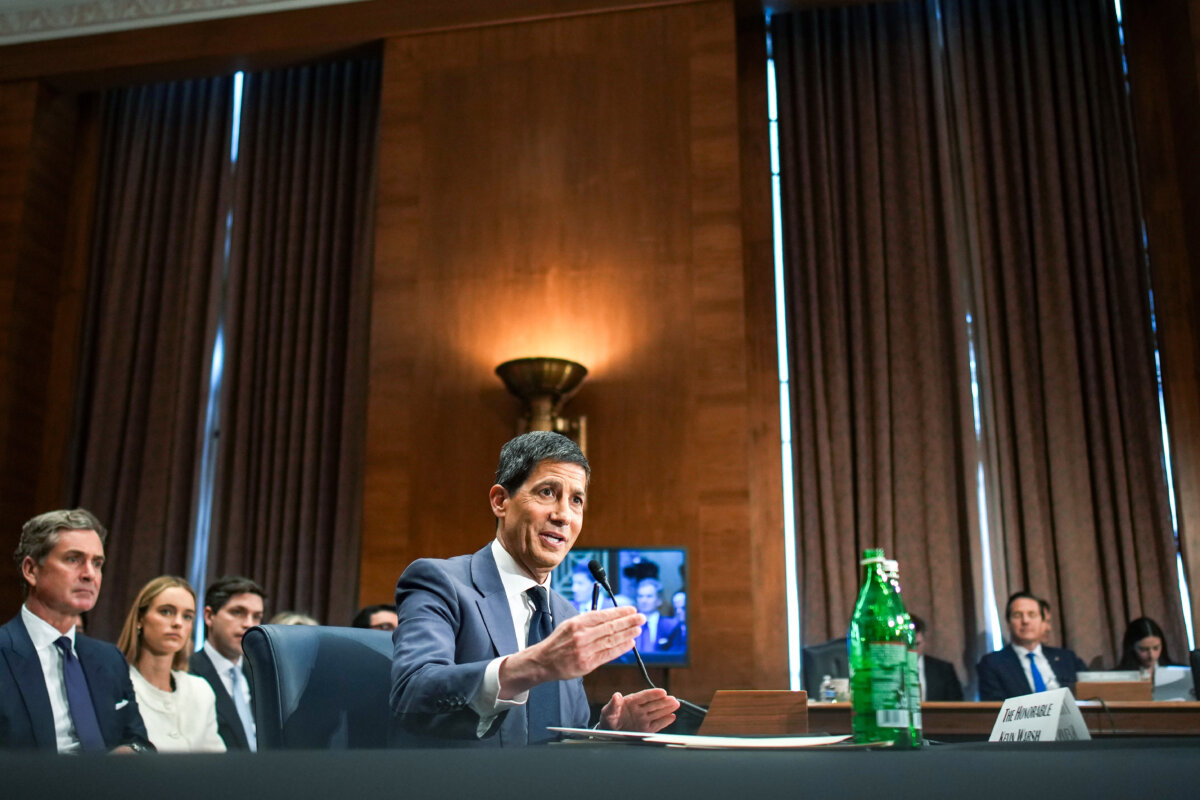
Appearing before the Senate Banking Committee for his confirmation hearing, Fed chair nominee Kevin Warsh stated that the labor market was at full employment.
“The job you gave to the Federal Reserve is to ensure we’re at maximum sustainable employment,” Warsh told lawmakers on April 21. “Broadly speaking, the economy is running about close to full employment, though we never know what the right number is. So if Americans that want a job can find a job, then by the Fed’s metric, we’re at full employment.”
The number of job vacancies currently stands at close to 7 million.
State of Jobseekers
Job hunters could be exploring a better labor market.
Continuing jobless claims—a gauge for the number of individuals currently receiving unemployment benefits—rose to 1.821 million, from 1.81 million in the prior week.
Recurring claims continue to stay below 1.9 million this year after hovering about this threshold for much of 2025.
Economists use this statistic to gauge the difficulty workers may have in finding employment.
The improving trend could also reflect exhausted unemployment benefits, since many states set eligibility at 26 weeks.
Job postings on Indeed have fallen sharply over the past month, sliding to their lowest levels since the middle of November, according to the Fed’s economic data.
A new Gallup poll, released on April 23, found that 63 percent of U.S. adults say it is a bad time to find a quality job. Thirty-three percent said it was a good time.
 Friends Read Free
Copy
Facebook
Tweet
Friends Read Free
Copy
Facebook
Tweet