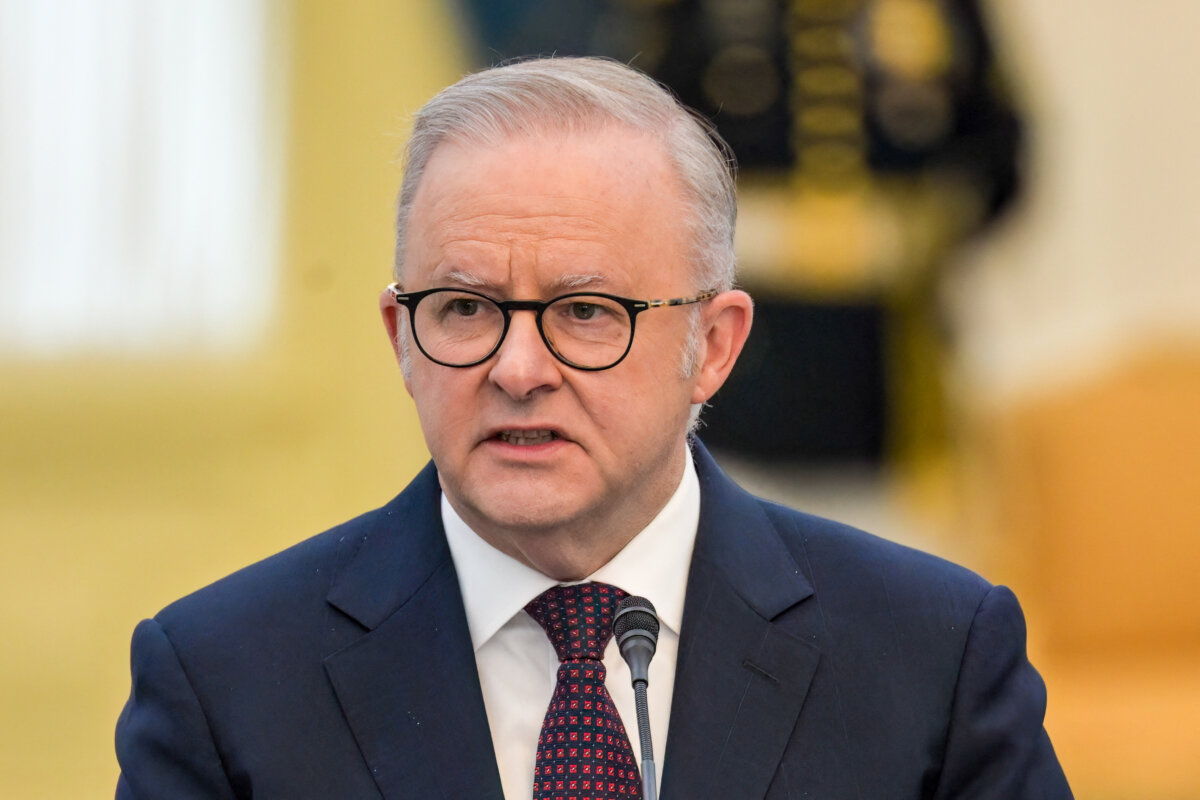

Prime Minister Anthony Albanese and CCP Premier Li Qiang discussed regional energy stability during a phone call ahead of the Australian leader’s planned trip to Singapore later this week.
According to a read-out from the prime minister’s office cited by the ABC, both sides agreed to step up engagement between Australia and China to ensure they are “both working in support of regional energy security.”
Speaking to Sky News, Albanese declined to go into specifics about the discussion, describing it as a “positive and constructive” exchange.
“It went across the full range of topics. I don’t go into all of the detail of private conversations that I have with leaders, but it was a very constructive conversation,” he said.
He added the talks were “primarily” focused on the broader Australia–China relationship.
Separately, a spokesperson for Premier Li confirmed via social media that, amid current global economic pressures, China is willing to deepen cooperation with Australia, particularly in free trade.
Government figures show China remains Australia’s largest two-way trading partner, accounting for 24 percent of total goods and services trade in 2024–25, worth $309 billion.
Exports to China reached $189 billion over the same period, making up 29 percent of total exports.
Singapore Trip Targets Fuel Supply
The call comes a day after Albanese confirmed plans to travel to Singapore for talks aimed at securing additional fuel supplies, as disruptions linked to tensions surrounding the Iran conflict continue to pressure global markets.
He is expected to meet Singapore Prime Minister Lawrence Wong, with the visit framed as part of a broader push to bolster Australia’s energy security.
Australia’s fuel position remains heavily import-dependent, with around 90 percent of supply sourced from overseas.
Data from the NRMA shows Singapore is the dominant supplier of unleaded petrol to Australia, accounting for 54.7 percent (5,974.7 megalitres). This is followed by South Korea at 22.5 percent, India at 11.5 percent, and Malaysia at 10 percent.
Diesel imports are slightly more diversified but still concentrated in the region, led by South Korea (28.8 percent), Singapore (15.4 percent), and Malaysia (14.4 percent), alongside contributions from Taiwan, Brunei, and India.
China remains a major supplier of jet fuel to Australia, though exports have recently tightened as Beijing prioritises domestic demand.
 Friends Read Free
Copy
Facebook
Tweet
Friends Read Free
Copy
Facebook
Tweet