
The Chinese communist regime is issuing a blatant challenge to the United States and the West through the Shanghai Cooperation Organization, experts warn, while leveraging security ties with member states to push them further toward authoritarianism.
The Shanghai Cooperation Organization, a Eurasian bloc led by China and Russia, was established in 2001 and has expanded beyond what analysts view as its original goal of countering U.S. influence in Central Asia. It has 10 member states, including Egypt, Iran, and Kyrgyzstan, along with 17 dialogue partners and observers.
Chinese leader Xi Jinping arrived in the Kyrgyz capital of Bishkek on Aug. 30—his second overseas trip this year—to attend the Shanghai Cooperation Organization Summit 2026, according to China’s state-run Global Times.
The summit runs from Aug. 30 through Sept. 3, with the agenda focused on deepening bloc cooperation, reforming global governance, and addressing major international issues, China’s foreign ministry said on Aug. 26.
“By pushing for global governance reform at the summit, the Chinese regime is issuing a blatant challenge to the United States and the West,” Frank Tian Xie, the John M. Olin Palmetto chair professor in business and marketing at the University of South Carolina–Aiken, told The Epoch Times.
“There’s no doubt that upending the global status quo is a core objective for Beijing.”
Shen Ming-shih, research fellow at Taiwan’s Institute for National Defense and Security Research, said Beijing has been deepening its military and security footprint across the Global South through multilateral and bilateral channels.
“The Chinese Communist Party (CCP) is steadily building a security network centered on itself, combining joint drills, arms exports and military training with the grouping,” Shen told The Epoch Times.
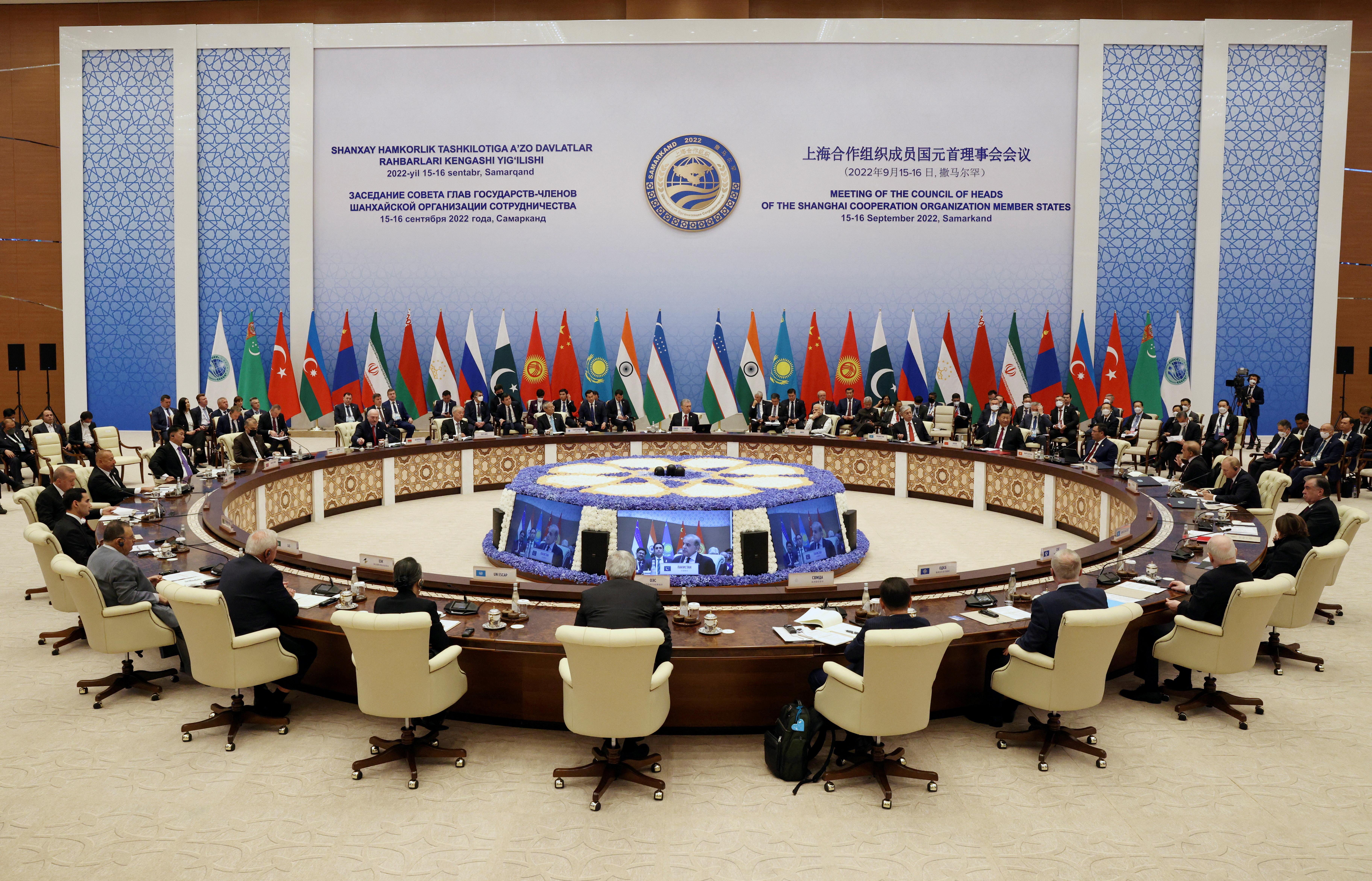 Participants of the Shanghai Cooperation Organization summit attend an extended-format meeting of heads of Shanghai Cooperation Organization member states in Samarkand, Uzbekistan, on Sept. 16, 2022. (Sputnik/Sergey Bobylev/Pool via Reuters)
Shen said China aims to fill power vacuums left by Washington and Western allies across Central Asia, the Middle East, and Africa, expanding geopolitical reach while exporting an authoritarian model.
“Such joint drills and security pacts likely involve sharing ‘stability maintenance’ tactics and cyber surveillance technologies,” he said.
“Beijing’s security ties essentially help stifle democracy and human rights in those regions, driving them further toward autocracy.”
On July 23, Shanghai Cooperation Organization member states sent delegations to Urumqi, Xinjiang, for the “Tianshan-2026” joint cyber anti-terrorism exercise, according to China’s state-run Xinhua News Agency.
Xinjiang is one of the few ethnic minority autonomous regions under Beijing’s rule, where critics say authorities criminalize Muslim Uyghurs under the guise of “fighting terrorism.” U.S. authorities have designated the regime’s repressive campaign as “genocide.”
Consensus Remains Elusive
Xie said that with Iran facing U.S. and Israeli strikes since February and Russia waging war in Ukraine since 2022, Beijing is capitalizing on their diplomatic isolation to solidify mutual interests via the bloc.
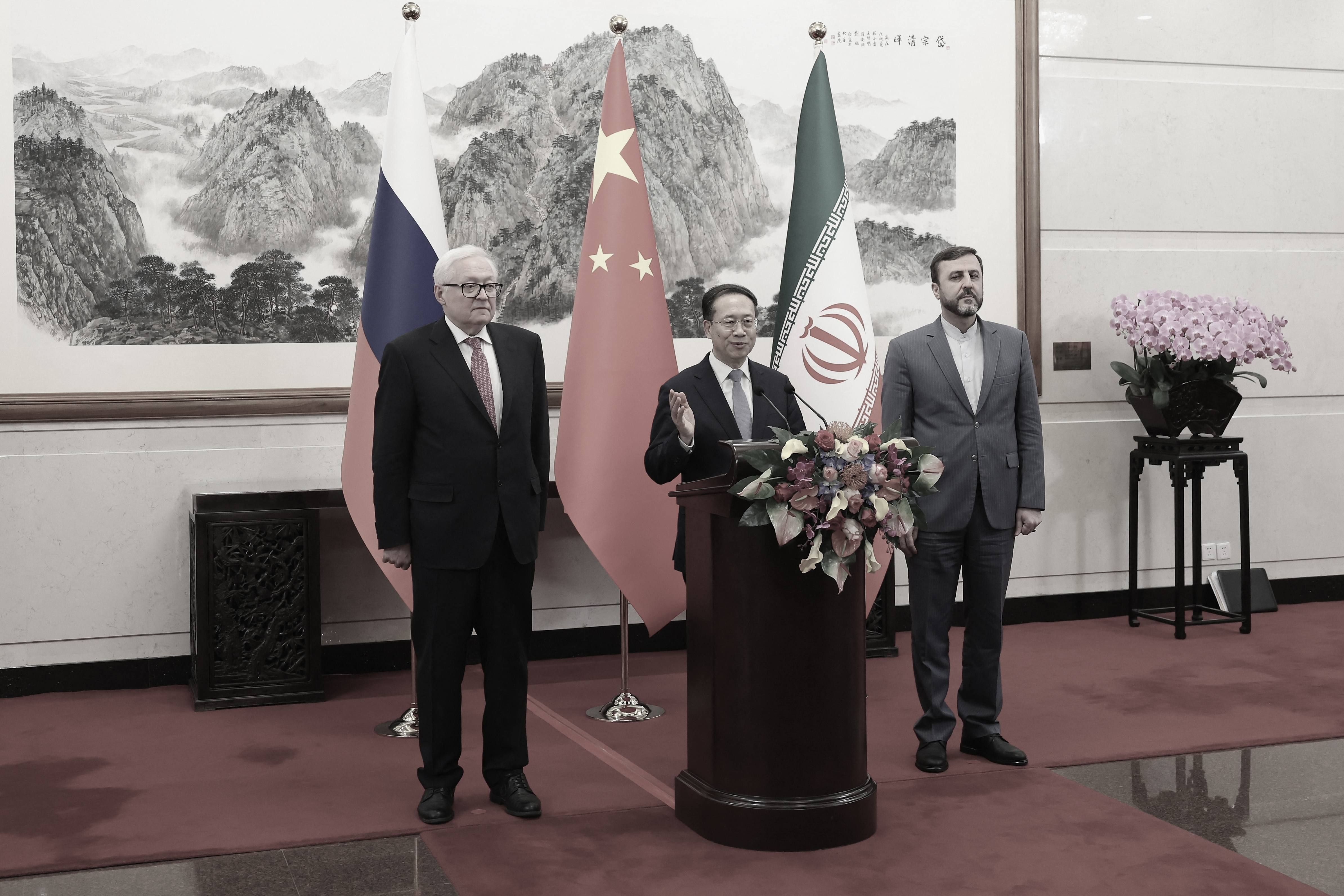 (L-R) Russia’s Deputy Foreign Minister Sergei Ryabkov, China’s Executive Vice Minister of Foreign Affairs Ma Zhaoxu, and Iran’s Deputy Foreign Minister Kazem Gharibabadi hold a press conference after their meeting at the Diaoyutai State Guesthouse in Beijing on March 14, 2025. (Lintao Zhang/POOL/AFP via Getty Images)
However, Shen said backing the two regimes has instead become a diplomatic burden for Beijing, adding that its underlying rifts with participating states make consensus difficult to achieve.
“Members from Central Asian nations must weigh the stances of the U.S. and Europe, so they essentially play a balancing act between major powers,” Shen said.
“As a result, China will struggle to turn the organization into a primary anti-U.S. platform, as these hurdles cannot be resolved overnight.”
‘Diplomatic Symbolism’
Shen said Central Asian nations joined the bloc eager for Beijing’s financial backing, but China’s weakening economy threatens to derail the Belt and Road Initiative (BRI)—an infrastructure mega-project analysts view as a tool for projecting global influence—and could bring other drawbacks.
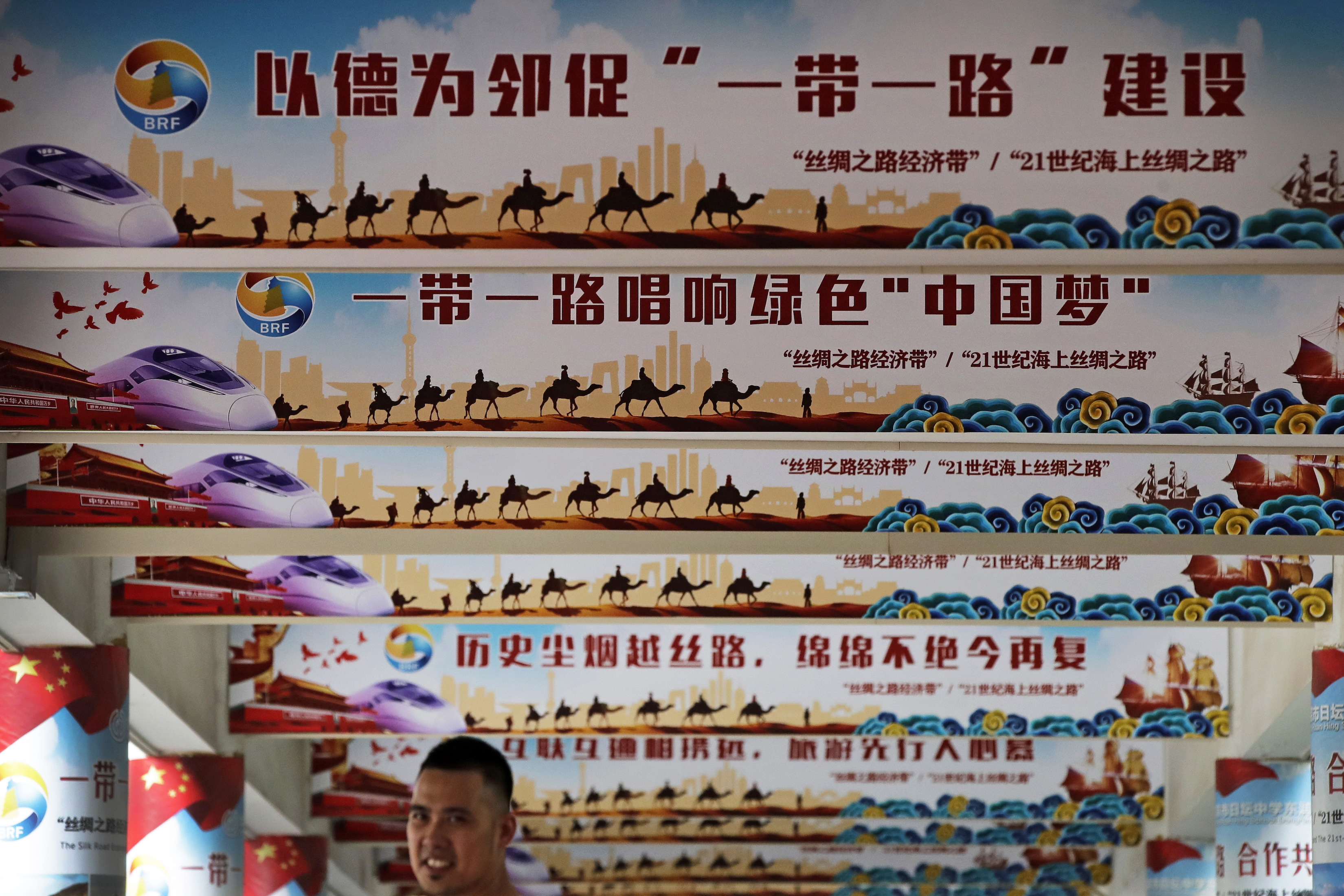 A man stands underneath the pillars displaying Chinese leader Xi Jinping’s signature “China Dream” and “One Belt, One Road” foreign policy plan during an event in Beijing on June 29, 2018. (Andy Wong/AP)
“For member states with fragile economies, such as Kyrgyzstan, the BRI poses severe debt risks,” Shen said.
“Moreover, if these projects lack transparency, partner nations could lose control of their infrastructure to Beijing.”
While some cash-strapped members might risk debt traps to secure a quick economic boost from the Chinese regime, the long-term payoff could prove negligible, according to Shen.
“With capital continually tightening in the Chinese market, Beijing has drastically reduced lending for large-scale overseas infrastructure,” he said.
“As a result, these scaled-down projects carry mere diplomatic symbolism.”
Broader Confrontation
Shen said that as Beijing continues to pull nations into its orbit, the risk of geopolitical conflict could escalate.
“The regime could use the summit partnerships to bolster its military presence around vital waterways like the Suez Canal,” he said.
“If conflicts erupt in the Taiwan Strait or the South China Sea, Beijing will possess greater strategic leverage to counter the West, which explains its recent assertiveness.”
China has intensified its gray zone operations—aggressive and coercive actions designed to intimidate an opponent yet remain below the threshold of warfare—in the Taiwan Strait and the South China Sea in recent years, drawing condemnation from the international community.
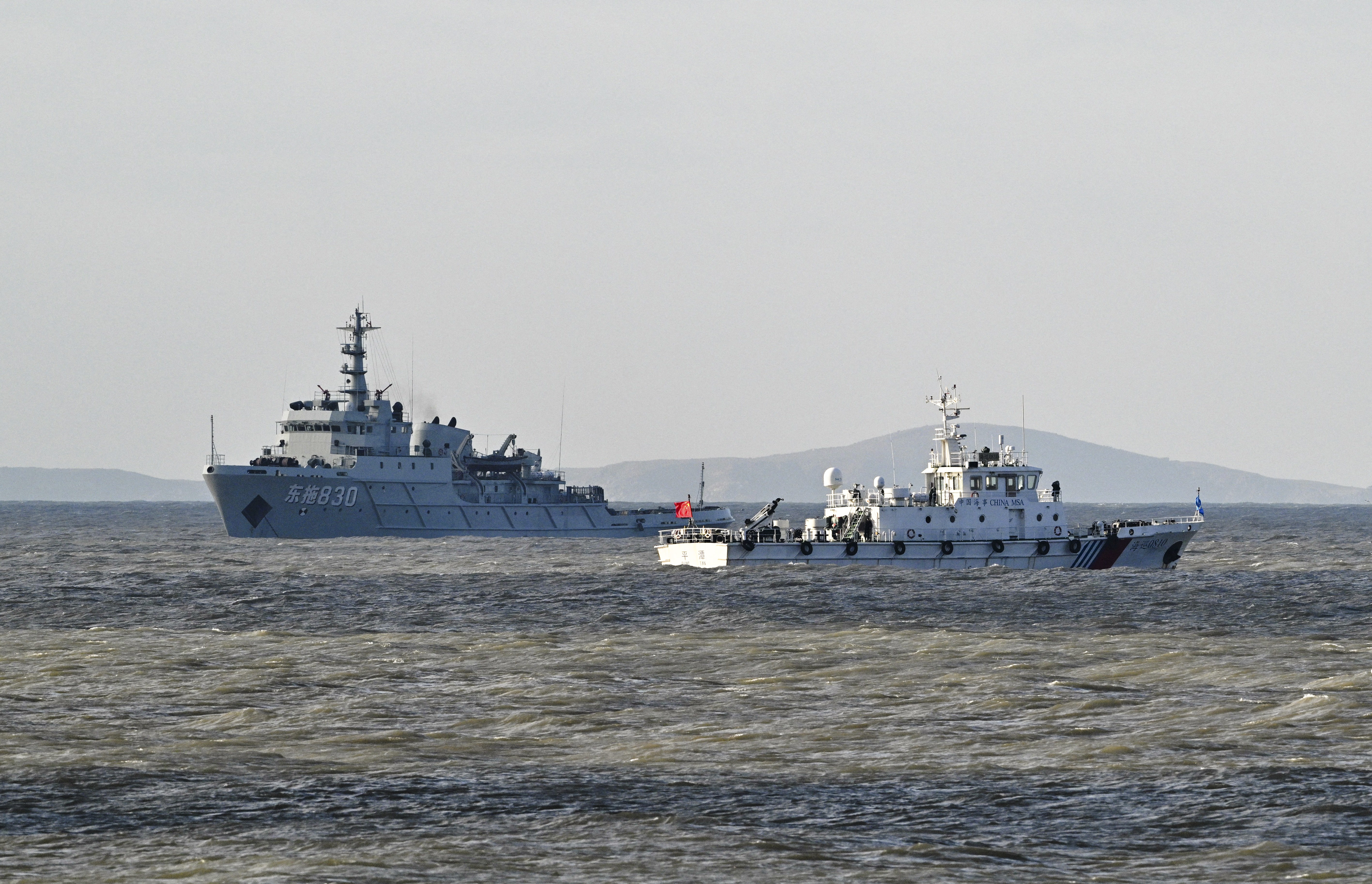 Chinese ships patrol as the People’s Liberation Army (PLA) conduct military drills on Pingtan island—the closest point to Taiwan—in eastern Fujian Province, China, on Dec. 30, 2025. (Adek Berry/AFP via Getty Images)
On July 6, China and Russia launched the annual “Joint Sea-2026” naval exercise in the Yellow Sea. Analysts told The Epoch Times that the move appears aimed at projecting Beijing’s military reach into the western Pacific.
“Such an alignment illustrates the broader confrontation unfolding globally,” Xie said.
“It represents a direct challenge posed by communist authoritarian regimes against Western civilization, freedom, and democracy.”
 Friends Read Free
Copy
Facebook
Tweet
Friends Read Free
Copy
Facebook
Tweet